Practical guides · decision
Choosing a Sump Pump: Submersible, Pedestal and Backup Options
The right sump pump depends on more than horsepower. Compare physical fit, flow at discharge head, float operation and backup battery needs before choosing a system.
What you’ll learn
- Choose pump style around basin dimensions, float travel, overhead space and service access.
- Compare usable flow at the installation's total dynamic head, not horsepower or maximum-flow claims alone.
- Distinguish alternate power for the primary pump from a separate battery-powered backup pump.
- Battery compatibility, testing and eventual replacement are part of owning backup protection.
- A sump pump removes collected water; other moisture sources and collection problems need separate attention.
Choosing a sump pump means matching several pieces of a system—not simply replacing an old unit with a stronger motor. The pump must fit the basin, its float must move freely, and its capacity must suit the discharge route. Backup protection introduces another set of choices about power, controls and battery care. For homeowners comparing Sump Pumps in West End and Moore County, this guide explains which differences matter and what to ask before approving an installation or replacement.
First, confirm what the pump needs to solve
Start with where the water appears and whether it reaches a collection basin. A sump pump removes collected water; it does not seal foundation walls, repair a leaking supply pipe or control condensation. Poor grading and roof runoff can also send water toward the foundation, adding to the problem rather than being corrected by a larger pump.
For a West End or Moore County property, useful observations include whether water appears only after rain, whether the basin fills before the floor becomes wet and where the discharge ends. Water elsewhere while the basin stays low is a reason to investigate the collection path and moisture source before buying equipment.
If water is rising around electrical equipment, avoid entering or handling equipment in the wet area. How to Identify a Plumbing Emergency offers related guidance for deciding when a plumbing problem needs urgent attention.
Submersible or pedestal: choose around the space
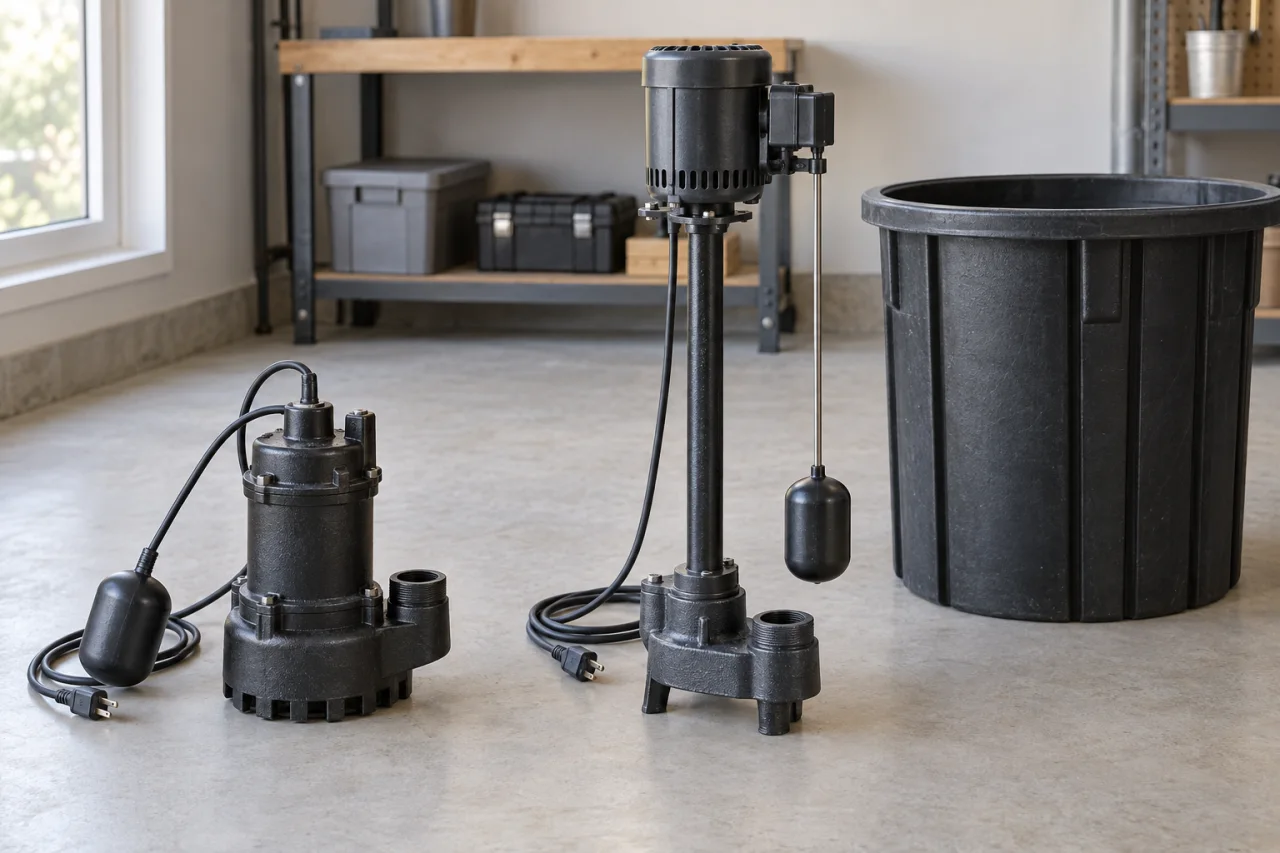
The main distinction is motor location. A submersible pump sits inside the basin and is designed for immersion. A pedestal pump has its pumping section at the bottom and its motor elevated above the water; that motor must stay dry.
Neither design is automatically the right answer for a small pit. Compare the complete installed dimensions, float travel and space above the basin. A pedestal's visible switch can be convenient to observe, while a submersible avoids an elevated motor assembly. Cover compatibility deserves attention with either style, especially where the basin is part of a sealed moisture-control system.
Pump style is a fit decision, not a guarantee of flood protection.
| Design | Arrangement | When to consider it | Important limitation |
|---|---|---|---|
| Submersible | Motor and pump sit inside the basin | Useful where an elevated motor would interfere with the space | Confirm basin clearance, float movement and access for removal |
| Pedestal | Motor stands above the basin water | Useful where the elevated assembly fits and visible switch action is helpful | Motor must remain dry; check overhead space and cover compatibility |
Look beyond the housing material
Housing material is a separate choice from pump style. Cast iron, polymer and metal-and-polymer combinations appear in sump-pump product lines. Material descriptions may refer to the motor housing, base or impeller—not the entire assembly.
Ask which components use each material and what that means for handling, corrosion protection and replacement parts. Cast iron adds weight; some designs instead use finned metal housings to transfer heat. A polymer component alone does not establish the quality of the complete pump, and a heavy housing does not prove that its capacity suits your discharge route.
Compare the complete model specification rather than a material badge. Plumbing Materials & Options provides a broader starting point for evaluating plumbing choices without treating one material as universally best.
Treat float clearance as part of basin fit
A float needs room to move through its entire operating range. Vertical floats move along a relatively compact path; wide-angle tethered floats need room to swing. Manufacturer specifications can assign different minimum basin diameters to otherwise similar pumps because of the switch arrangement.
Measure basin diameter and depth, but also account for incoming pipes, discharge piping and any second pump. A pump body that fits can still leave its float obstructed. Confirm the switch-on and switch-off levels, particularly if water could reach a vulnerable opening before the float activates.
Also ask whether the switch is separately replaceable and whether its operating range is fixed or adjustable. Do not assume a different switch can be substituted without checking the pump manufacturer's requirements.
Compare flow at discharge head—not horsepower alone
Horsepower describes motor output, not the amount of water a particular installation will discharge. Pump selection needs both a target flow and total dynamic head: the lifting requirement plus resistance through the discharge system.
A useful assessment considers water inflow, vertical lift, pipe size, horizontal run, fittings and any discharge back pressure. The performance curve then shows the flow a candidate pump can deliver against that head. Maximum-flow and maximum-head figures are different endpoints, not a single operating condition.
Ask to compare primary and backup pumps at the same calculated head. A backup's headline capacity may not match the primary pump under the property's actual conditions. If the existing pump cannot keep up, investigate the discharge route and inflow before assuming the solution is simply more horsepower.
Choose backup protection for the failure you are planning around
Backup power and a backup pump solve different problems. Supplying alternate power to the primary pump still depends on that pump and its controls working. A dedicated battery backup adds a separate pump and control arrangement, giving another route for removing water when the primary cannot operate.
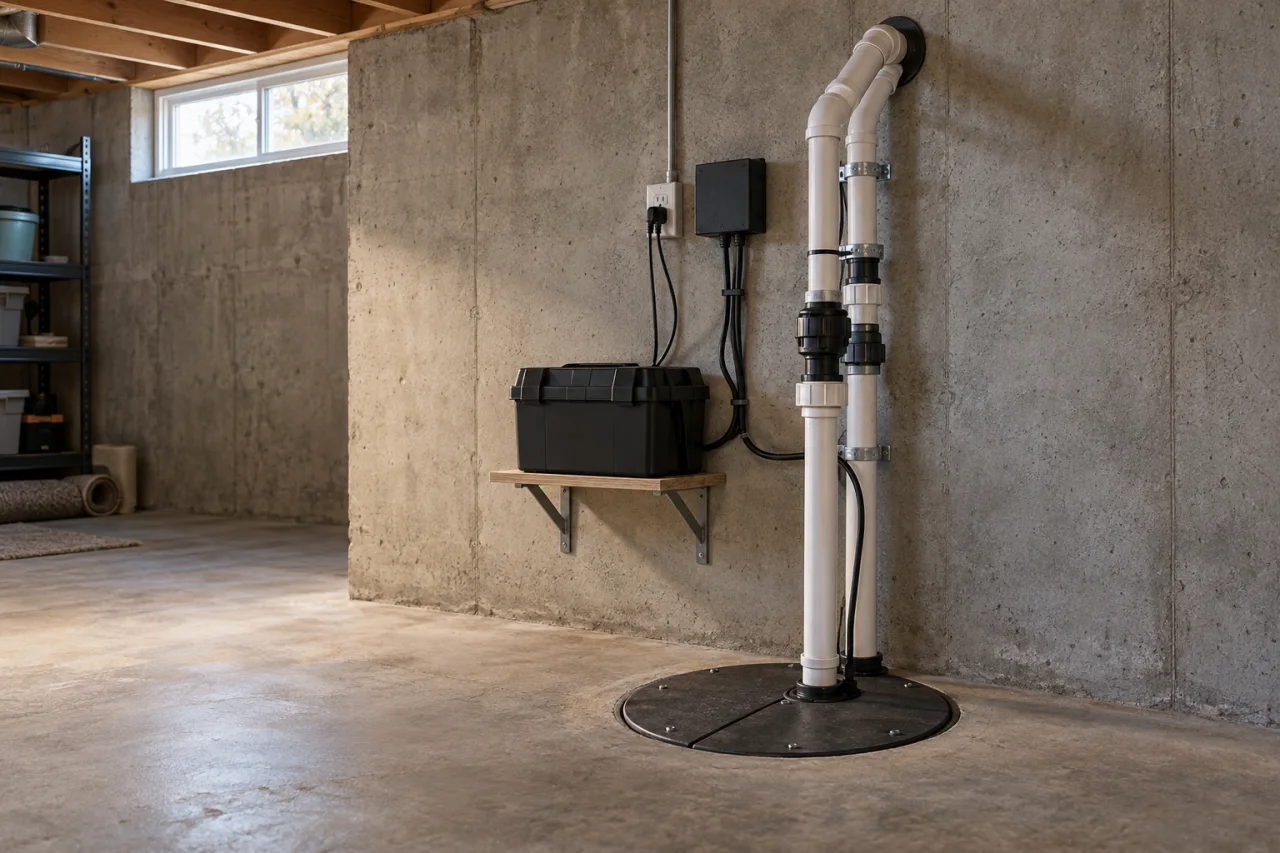
Confirm what is included: secondary pump, float, controller, charger, check valves, battery enclosure and battery. Some packages sell the battery separately. The second pump also needs physical clearance and a discharge arrangement compatible with the installation.
Evaluate runtime carefully. Continuous pumping and intermittent operation can produce very different advertised durations. Ask which battery, pumping head and duty cycle support the estimate. A heavily filling basin can consume stored energy much faster than one that triggers occasional cycles.
Audible alarms and remote notifications are useful options, but they do not add pumping capacity. Ask what happens to remote alerts if household power or internet service fails, and who will respond when an alert arrives.
Plan for battery upkeep and whole-system testing
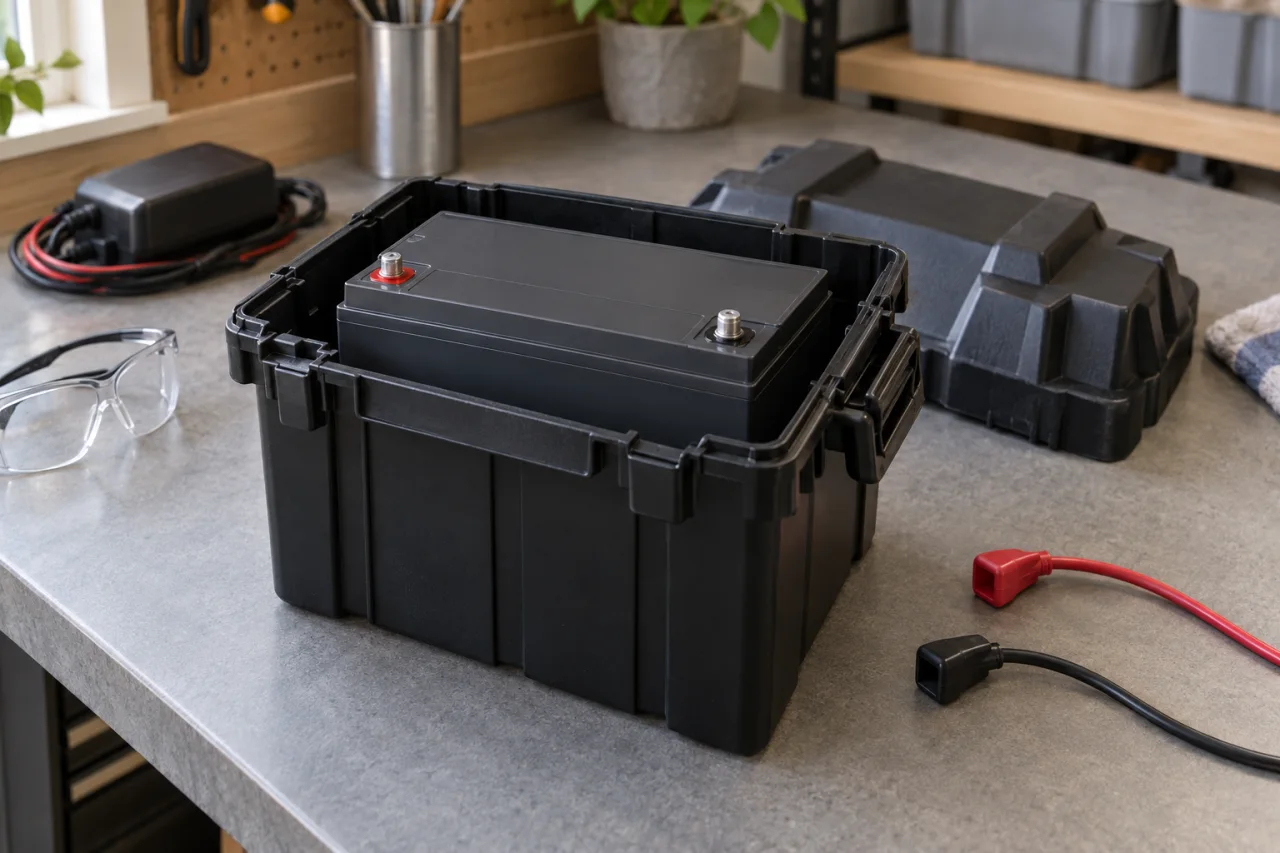
Use only battery types approved for the specific charger and controller. A battery that physically fits is not necessarily compatible. Deep-cycle and AGM recommendations differ by system, so avoid substituting automotive or other batteries based only on voltage.
A maintenance-free battery still requires attention to condition, charging and eventual replacement. Follow the system's prescribed test schedule and battery instructions. Flooded batteries may have different maintenance needs from sealed AGM batteries; never add water to a sealed battery.
Pump maintenance also includes keeping debris from interfering with the inlet or float and checking that discharge water can escape. A check valve limits water returning after shutdown, but an obstructed outlet can still prevent effective pumping. Follow the manual's safety precautions and disconnect applicable power sources before handling equipment.
Before Heavy Rain: A Sump Pump Readiness Checklist is a useful companion once the equipment has been selected.
Ask for a complete proposal and clear warranty terms
Compare complete installation scopes rather than pump prices alone. Access, basin changes, discharge modifications, backup equipment and electrical requirements can change the work involved. A replacement in an existing suitable basin is not the same project as adding a collection system where none exists.
Warranty length is only one question. Ask when coverage starts, whether the battery has separate terms, what proof of purchase is needed and which costs remain the owner's responsibility. A product warranty should not be read as a promise that a basement cannot flood.
The Plumbing Knight offers Sump Pumps installation, replacement and repair for Moore County homes and businesses. Bring your observations about water entry, pump cycling and past outages to the discussion so the proposed work addresses the property—not just the old pump's label.
- Identify the proposed primary and backup models and their flow at the same calculated discharge head.
- Confirm basin dimensions, float clearance, operating levels and access for future removal.
- List included piping, check valves, battery, charger, alarm and electrical work.
- Ask for the approved battery type, testing instructions and replacement guidance.
- Request the written warranty, including exclusions and responsibility for labor, removal and reinstallation.
Questions & answers
Is a submersible sump pump always better than a pedestal pump?
No. Either design can work when properly selected and maintained. A submersible keeps the motor inside the basin; a pedestal places it above the water. Basin dimensions, overhead space, cover requirements and service access help determine the better fit.
Should I buy more horsepower for extra protection?
Not without checking the system requirements. Compare the pump's flow at the calculated total dynamic head with the water entering the basin. Horsepower alone does not establish usable pumping capacity or suitable cycling.
How long will a battery backup run?
There is no universal runtime. It depends on the approved battery's capacity and condition, discharge head and how often the pump operates. Ask for the exact system's continuous-pumping rating and the assumptions behind any intermittent-runtime claim.
Does a maintenance-free battery mean the backup needs no attention?
No. It may eliminate water additions, but the system still needs the manufacturer's prescribed testing, battery-condition checks and eventual battery replacement. Follow the instructions for both the controller and the approved battery.
Will a sump pump stop every basement or crawl-space moisture problem?
No. It removes water collected in its basin. Condensation, plumbing leaks, poor surface drainage and water that never reaches the basin require separate evaluation and may need different corrections.
Sources & further reading
- North Dakota State University Extension: Check Your Sump Pumps Now
Explains pedestal and submersible motor arrangements, the need to keep pedestal motors dry, visible float action, check valves, discharge obstructions and basic operational testing. Supports the pump-style comparison table. ([ag.ndsu.edu](https://www.ag.ndsu.edu/waterquality/documents/check-you-sump-pumps-now))
- University of Minnesota Extension: Moisture in basements—causes and solutions
Explains distinct basement moisture sources, condensation, grading and gutter problems, collection drainage and sump systems. Supports investigating the water source rather than assuming a pump corrects every moisture problem. ([extension.umn.edu](https://extension.umn.edu/garden-and-home/home-maintenance/caring-for-a-home/moisture-in-basements-causes-and-solutions))
- Liberty Pumps: Sump Pump Brochure
Documents cast-iron and polymer/finned-aluminum construction, vertical and wide-angle float choices, differing minimum sump diameters and model performance curves. Supports model-specific material and float-fit comparisons. ([libertypumps.com](https://www.libertypumps.com/Portals/0/Files/Flipbook/Sump_Pump_Brochure.pdf))
- Liberty Pumps: Pump Sizing
Uses required flow and total dynamic head to select pumps and review performance curves. Distinguishes groundwater sump applications from sewage and effluent applications. ([libertypumps.com](https://www.libertypumps.com/wholesale/pump-sizing/))
- Zoeller Pump Company: Product Support and Frequently Asked Questions
Lists pump-sizing inputs including system flow, pipe size, vertical lift, horizontal run, fittings and discharge back pressure; also discusses backup types and high-water alarms. ([zoellerpumps.com](https://zoellerpumps.com/product-support/?utm_source=openai))
- Zoeller at Home: STBC101 Battery Backup Combo System Instructions
Documents separate primary and DC backup equipment, package components, differing performance at discharge heights, electrical safety precautions, debris removal, testing and limited-warranty terms. Supports maintenance and scope questions without applying this model's instructions universally. ([zoellerathome.com](https://zoellerathome.com/wp-content/uploads/sites/5/2024/02/SW1474-STBC101-Battery-Backup-Combo-Instructions.pdf))
- Zoeller Pump Company: Aquanot 508 Installation Instructions, FM2769
Explains approved deep-cycle and AGM battery choices, battery-condition and terminal maintenance, and runtime variation with head, inflow and battery condition. Supports checking compatibility and distinguishing battery maintenance requirements. ([zoellerpumps.com](https://zoellerpumps.com/resource/installation-instructions-aquanot-508-fm2769-60-hz/))
- Zoeller Pump Company: Aquanot Fit 508
Documents a dedicated backup pump, controller, floats, monitoring options, a separately sold battery and different continuous versus intermittent runtime ratings. Supports comparing backup package inclusions and runtime assumptions, not a universal runtime promise. ([zoellerpumps.com](https://zoellerpumps.com/product/aquanot-fit-508/?utm_source=openai))
Prepared and automatically checked on . Conditions, costs and requirements can change. Ask about the details that apply to your situation.
Continue reading