
Practical guides · process
What a Sewer Camera Inspection Can—and Cannot—Tell You
A camera can reveal roots, buildup and visible pipe damage—but blind spots matter. Learn what evidence to request before approving sewer repairs.
What you’ll learn
- A sewer camera documents visible interior conditions in the sections it can reach; it does not certify the entire line.
- Cleaning may improve travel and visibility, but its purpose and any follow-up inspection should be clear before approval.
- Footage distance and above-ground locating provide different references; ask how each was established.
- Repair proposals should explain the visible evidence, inspection limitations and reasons for the recommended scope.
Before approving sewer repairs, you need more than a statement that the line looks bad. You need to understand what was seen, where it was found and how much of the pipe was actually examined. A sewer camera can provide useful visual evidence, but its value depends on access, visibility and interpretation. For homeowners and business owners in West End and Moore County, the practical goal is to connect the footage to a defensible next step—not mistake a video for a complete diagnosis of everything underground.
1. Define what the inspection needs to answer
Start with the decision you need to make: Is a recurring blockage caused by removable buildup, a damaged section or something the inspection has not yet established? Tell the plumber which fixtures are affected, when symptoms occur and what previous clearing accomplished.
Before approving an inspection, ask which line will be examined, where the camera will enter and what endpoint the inspection is intended to reach. A view of one branch is not automatically a view of the entire building sewer.
Also clarify the deliverables. Watching a monitor, receiving a recording and receiving a written findings summary are different things. Ask whether locating, cleaning and a return inspection would be separate work. Those distinctions make proposals easier to compare.
2. Understand access and camera travel
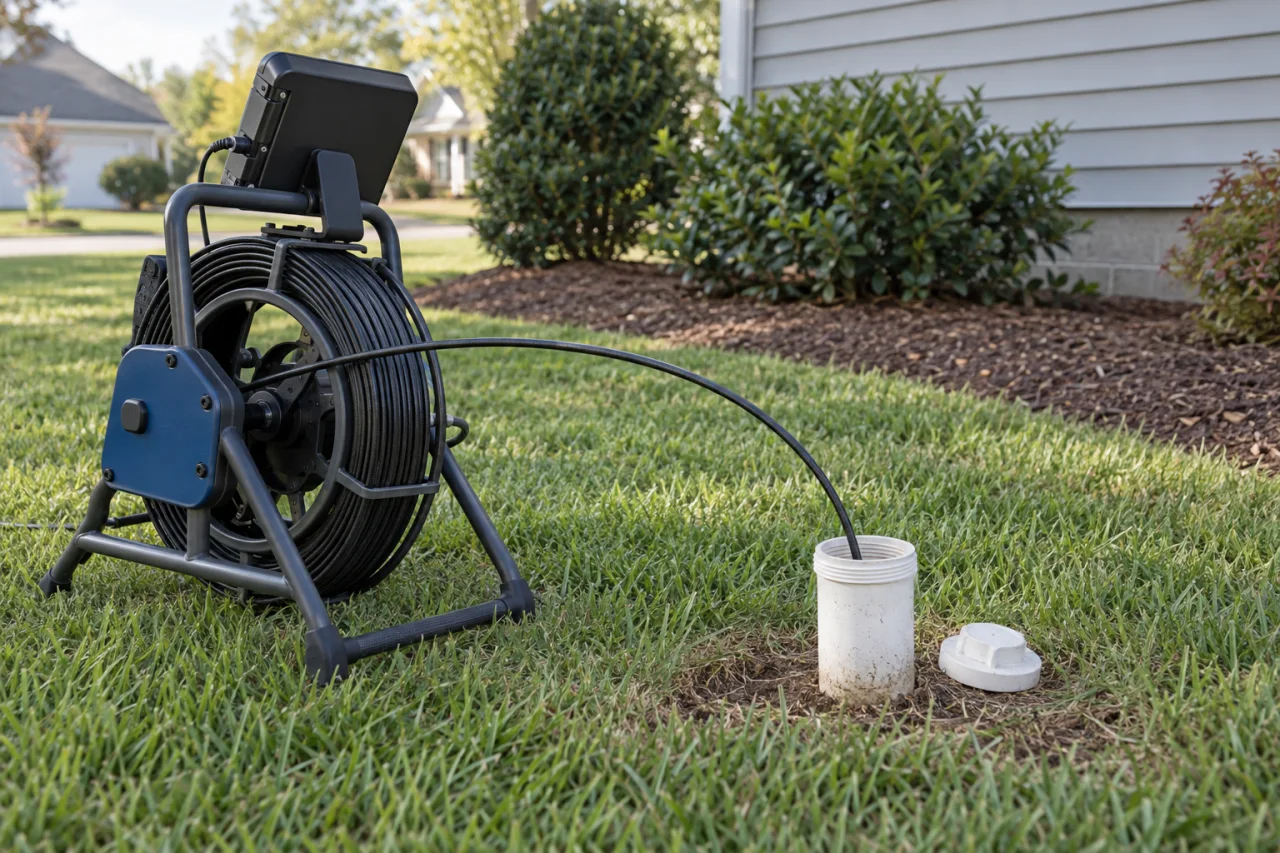
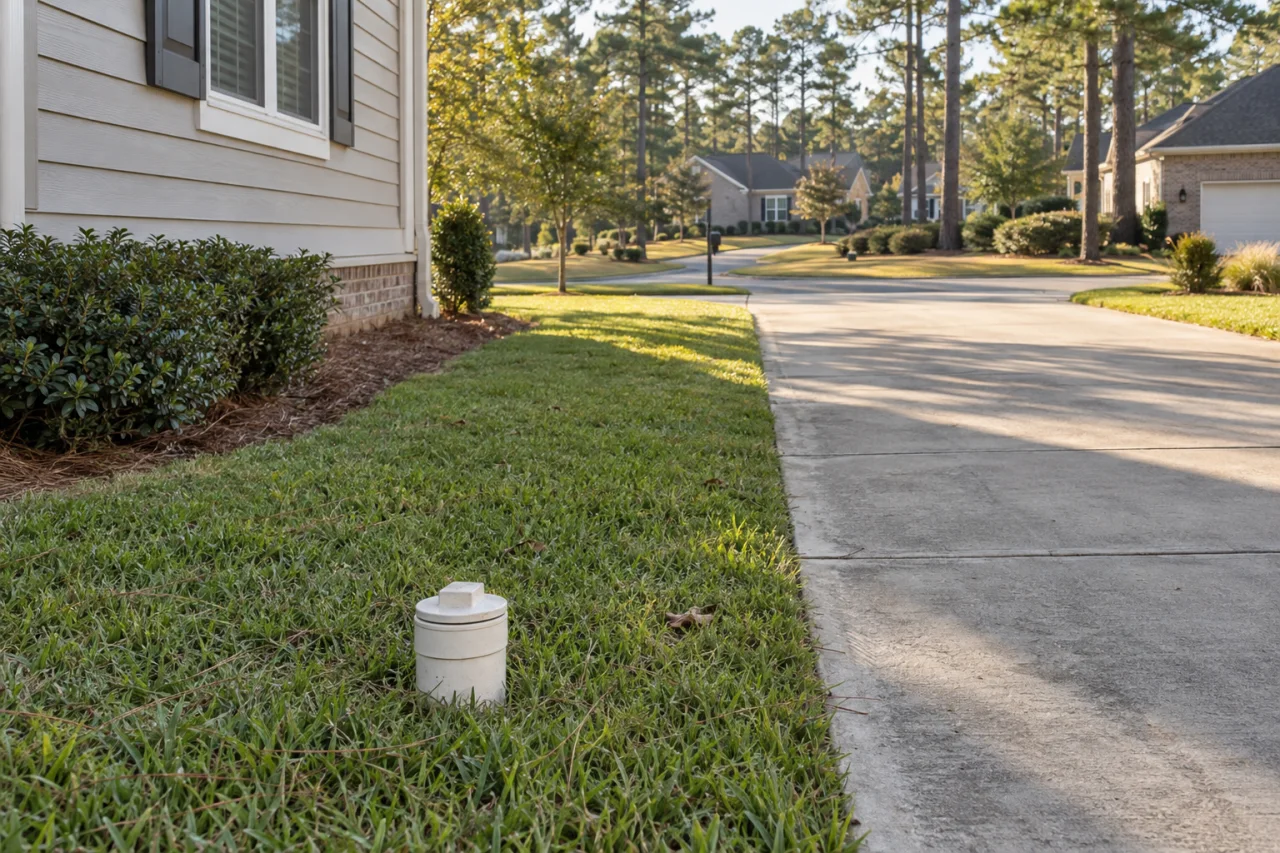
In a typical small-pipe inspection, a lighted camera attached to a push cable enters through a suitable access point, often a cleanout. The operator advances it while viewing the interior on a monitor. Lighting, camera position and lens cleanliness all influence the usefulness of the picture.
Access and pipe layout matter. Bends, fittings and resistance may prevent the equipment from reaching the intended endpoint. A camera should not be forced through an obstruction or used as a drain-clearing tool. Another entry point may provide a better approach when one is available.
Ask the inspector to identify the entry point, direction of travel and stopping point. Those references help distinguish a complete examination of the intended section from a useful but limited look.
3. Decide whether cleaning is needed for a useful view
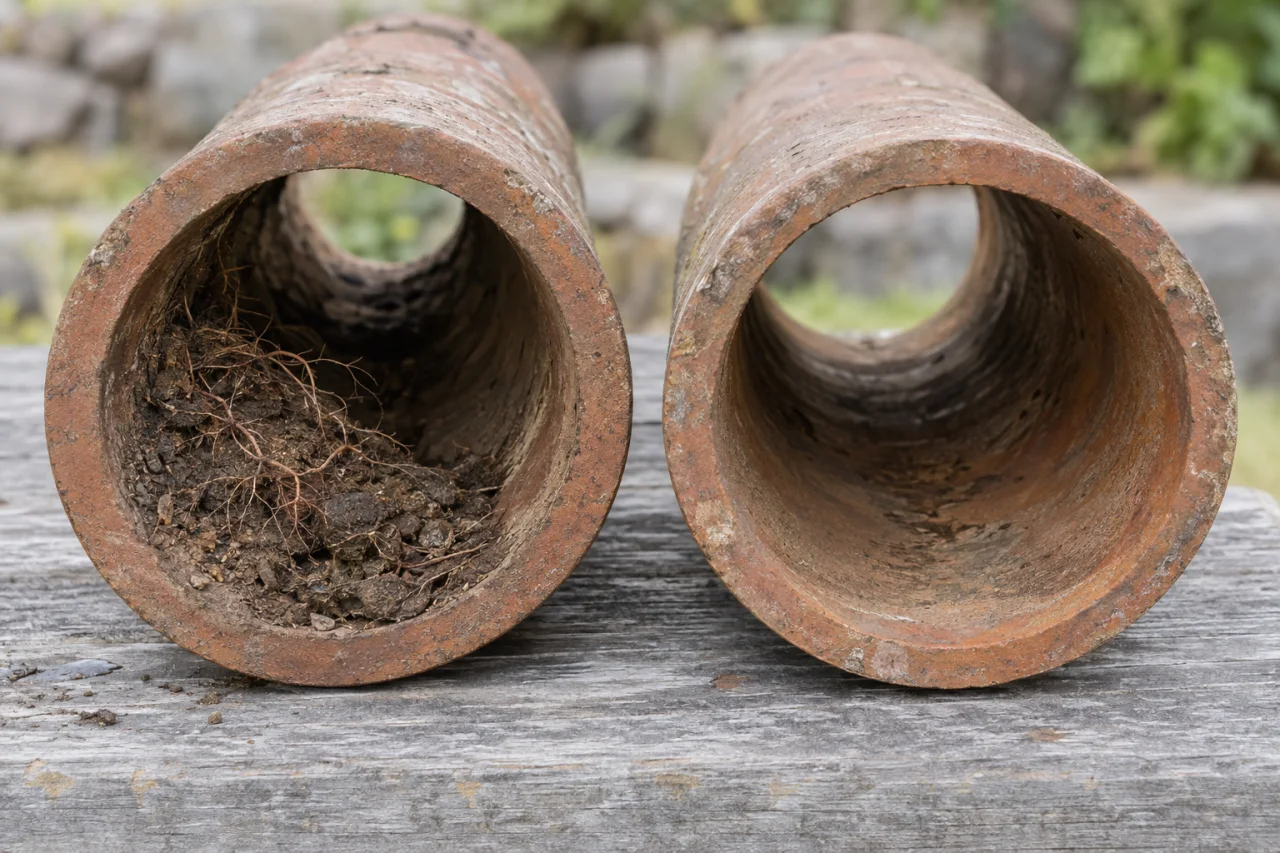
A camera can identify a blockage without providing a clear assessment of the pipe behind it. Roots, sediment, grease and other deposits can obstruct travel or hide surfaces. An initial look may help establish what is in the way; suitable cleaning may then improve access and visibility.
That does not mean every inspection needs the same cleaning treatment. Ask what material needs removal, why the proposed method fits the apparent pipe condition and whether footage afterward will document the newly exposed area.
Drain Cleaning and inspection answer different questions: clearing addresses an obstruction, while the camera documents visible conditions. For the cleaning-method discussion, Drain Snaking vs. High Pressure Drain Cleaning explains the relevant tradeoffs. Do not treat restored flow alone as proof that the underlying pipe is sound.
4. Read visible defects in context
Useful footage separates observations from conclusions. An inspector should be able to point to the visible condition and explain what remains uncertain. A single dramatic still image may omit the surrounding pipe and the extent of the finding.
These examples explain what common observations can contribute to a repair discussion. They are not automatic instructions to clean, repair or replace.
Common camera observations and the limits of what they establish
| Visible observation | Useful evidence | Important limitation |
|---|---|---|
| Roots, grease or debris | Shows material restricting the passage or covering the interior. | Does not by itself establish the condition of the covered wall. |
| Cracks, broken pipe or offset joints | Documents visible structural damage or misalignment. | Does not reveal the full exterior condition or establish leakage rate. |
| Water visibly entering the pipe | Provides evidence of infiltration occurring during the inspection. | The absence of visible entry does not prove watertightness. |
| Standing water or apparent sag | Highlights an area needing closer drainage and condition assessment. | Submerged surfaces remain obscured; ordinary video is not a precise elevation survey. |
5. Treat blind spots as unanswered questions
Ordinary CCTV provides its clearest view above the waterline. When standing water submerges the lens or covers the pipe bottom, that area cannot be assessed with the same confidence as an exposed surface. Deposits and poor lighting create additional blind spots.
Nor can an internal camera see through the pipe wall. It cannot fully describe exterior deterioration or defects that have not reached the visible interior. Interpretation also depends on picture quality and the inspector’s judgment.
Request a clear statement of limitations: where visibility deteriorated, where travel stopped and which sections were never reached. A partial inspection can still provide valuable evidence, but the report should not turn an unseen section into a clean bill of health.
6. Connect the footage to a location above ground
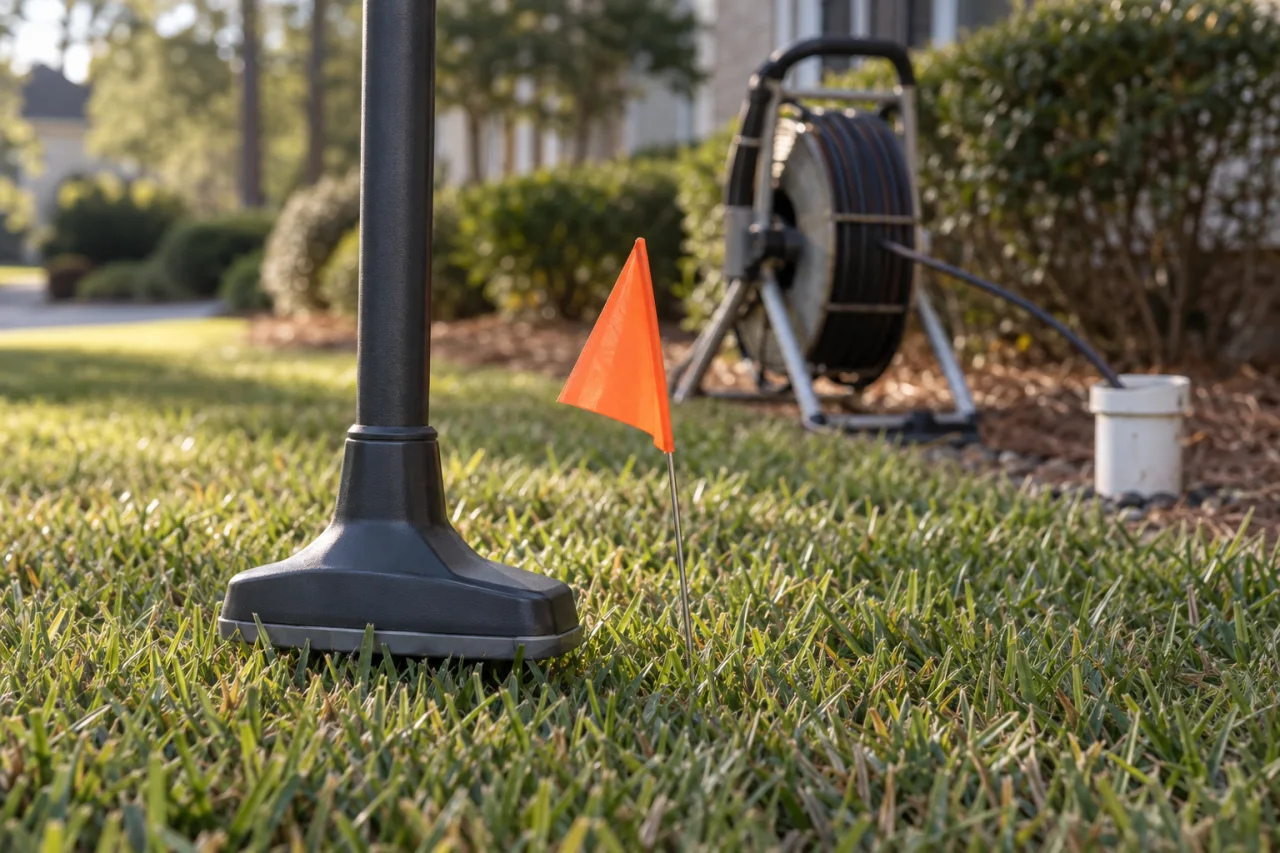
A distance counter provides a reference along the camera’s travel path. Its usefulness depends on setup and a clearly identified starting point. It is not the same as measuring a straight line across the lawn.
With compatible equipment, a transmitter called a sonde near the camera sends a signal that an above-ground receiver can detect. Positioning the camera at a finding and locating it connects the footage with a surface reference.
Ask which findings were located, how the surface references were recorded and how confident the operator is in the result. Metallic pipe, depth, buried metal and electrical interference can affect signal detection. Keep uncertainty in the discussion rather than treating a ground mark as an exact picture of the buried system.
7. Make the repair recommendation match the evidence
The strongest recommendation explains why the observed condition supports a particular scope. Removable deposits, an isolated structural defect and damage across multiple sections raise different questions. Footage informs that decision; it does not select a repair method on its own.
Ask why cleaning alone would or would not address the problem, whether a localized repair is worth evaluating and what evidence supports a broader replacement. If a trenchless option is proposed, ask what additional suitability checks are necessary. Do not assume that avoiding excavation makes every pipe a candidate.
For a fuller planning discussion, Sewer Line Repair or Replacement explores scope and cost factors. Any proposal should distinguish the documented problem, unresolved conditions and work needed to reach or restore the affected area.
8. Keep a practical approval checklist
Before approving repairs, ask to review the finding in its surrounding footage, not just an isolated image. Keep the recording and written scope together so future maintenance decisions have a usable baseline. Ask whether follow-up should depend on recurring symptoms, the observed condition or a specific maintenance need; one inspection does not establish a universal cleaning schedule.
The Plumbing Knight offers Main Sewer Line services, including video camera inspections, for homes and businesses in West End and Moore County. When discussing an assessment, explain the symptoms and ask which inspection scope would help answer your particular repair question.
- Which access point, direction and endpoint does the footage cover?
- Can I receive the recording and a plain-language findings summary?
- Where did visibility become limited or the camera stop?
- What starting reference was used for distance measurements?
- Which findings were located above ground, and what uncertainty remains?
- What evidence supports the proposed scope rather than a smaller alternative?
- Are cleaning, locating and post-work inspection included or separate?
Questions & answers
Does a clear camera inspection prove the sewer line has no leaks?
No. A camera may show visible water entering through a defect, but an ordinary visual inspection is not a watertightness test. Hidden defects, submerged surfaces and the outside of the pipe remain limitations. Ask what additional assessment would resolve any suspected leakage.
Does the line always need cleaning first?
Not always. The useful question is whether deposits prevent travel or conceal important surfaces. Ask whether an initial look is practical, what cleaning would accomplish and whether a second camera pass is included.
Does standing water mean the pipe must be replaced?
Not by itself. Standing water can indicate a low section or restricted drainage, but it also limits visibility. Ask how the cause was distinguished, how much pipe was affected and what further evidence supports the recommendation.
Can the camera find the problem’s location in my yard?
A camera equipped with a compatible sonde can be located using a receiver above ground. This is separate from the footage distance counter. Pipe material, burial depth and interference can affect locating, so ask about confidence and remaining uncertainty.
What if the camera cannot reach the end?
The result is a partial inspection. Request the stopping location, reason for stopping and uninspected length if known. Another access point, suitable cleaning or a different assessment may help; unseen pipe should not be described as defect-free.
Sources & further reading
- NASSCO: Assessment
Describes CCTV assessment uses, including structural and maintenance defects, roots, grease, debris and infiltration; explains the importance of appropriate equipment, lighting, centering and focus, and using assessment findings to inform maintenance or rehabilitation. ([nassco.org](https://nassco.org/trenchless-technology/assessment))
- NASSCO: CCTV Inspection Quality in Sewer Cleaning
Supports the relationship between pipe diameter, material, flow conditions, equipment configuration, lighting and inspection image quality. It does not establish this business’s certifications or procedures. ([nassco.org](https://www.nassco.org/resource/cctv-inspection-quality-in-sewer-cleaning/?scLang=en))
- NASSCO: Inspection Technology for Outfalls, Siphons, and Force Mains
Supports the limitation that conventional CCTV clearly examines the pipe interior above the waterline, relevant to standing water and submerged surfaces. ([nassco.org](https://nassco.org/resource/inspection-technology-for-outfalls-siphons-and-force-mains/))
- SeeSnake: Sonde Locating with a SeeSnake Inspection System
Explains positioning a camera at a point of interest and locating its integrated sonde with a compatible receiver. ([support.seesnake.com](https://support.seesnake.com/sonde-locating/))
- SeeSnake Support: Troubleshooting – Sonde & Locator
Identifies locating limitations related to transmitter output, pipe material, line depth, buried metallic objects and interference from adjacent power lines. ([help.seesnake.com](https://help.seesnake.com/support/solutions/articles/150000184634-troubleshooting-sonde-locator))
- RIDGID: SeeSnake Standard and Mini Pipe Inspection Systems Operator’s Manual
Supports camera and push-cable operation, lens and lighting considerations, alternate entry when travel is restricted, not using the camera to clear obstructions, and distance-counter reference and accuracy considerations. ([cdn2.ridgid.com](https://cdn2.ridgid.com/resources/media?countryCode=US&key=25fe8b7f-8905-41b0-b7eb-2e5c3c19b884&languageCode=en&type=document))
- U.S. EPA: Field Demonstration of Condition Assessment Technologies for Wastewater Collection Systems
The July 2011 research report describes CCTV identification of active leaks, cracks, offset joints, sags, sediment and roots; limitations concerning hidden and exterior defects and technician interpretation; and cleaning to enable camera advancement. Municipal research informs general technology capabilities, not a residential service specification. ([nepis.epa.gov](https://nepis.epa.gov/Exe/ZyPURL.cgi?Dockey=P100C8E0.TXT))
Prepared and automatically checked on . Conditions, costs and requirements can change. Ask about the details that apply to your situation.
Continue reading
Helpful next reads
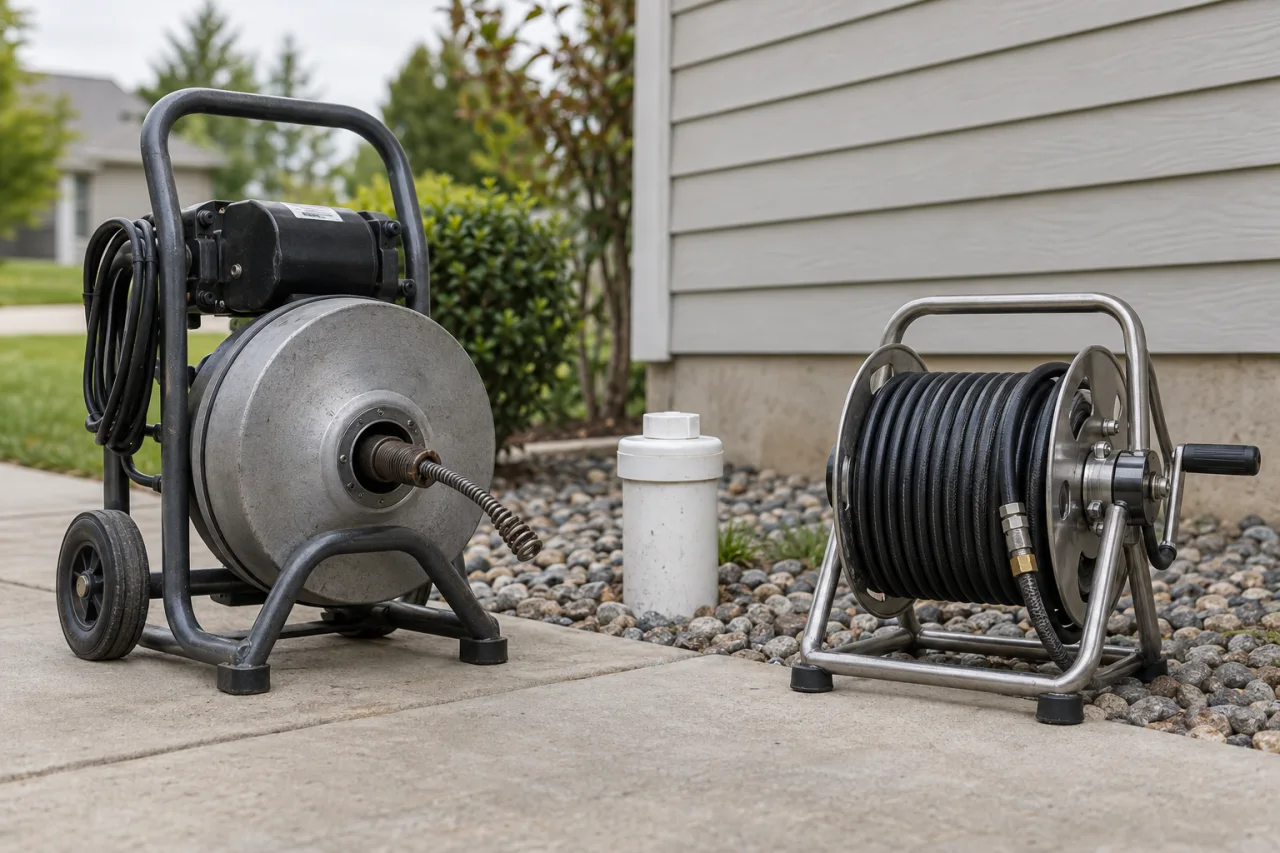
Drain Snaking vs. High Pressure Drain Cleaning: Which Fits the Problem?
A drain that flows again is not necessarily fully cleaned. Compare cable cleaning, cutting attachments, and water jetting—and learn why pipe condition matters more than pressure alone.
Sewer Line Repair or Replacement: What Drives the Scope and Cost?
The damaged pipe is only part of a sewer estimate. Learn how defect extent, excavation conditions, utility responsibility and restoration determine the complete scope.