Practical guides · comparison
Drain Snaking vs. High Pressure Drain Cleaning: Which Fits the Problem?
A drain that flows again is not necessarily fully cleaned. Compare cable cleaning, cutting attachments, and water jetting—and learn why pipe condition matters more than pressure alone.
What you’ll learn
- An initial opening is not necessarily the same as removing accumulated material along a pipe.
- Cable equipment can use different attachments for concentrated clogs, roots, grease, and hard deposits.
- Jetting can loosen and flush buildup, but suitability depends on access, equipment, and pipe condition.
- Neither method repairs cracks, offset joints, sags, or the openings that admit roots.
- Compare estimates by the cleaning scope, inspection inclusions, and next steps if defects are found.
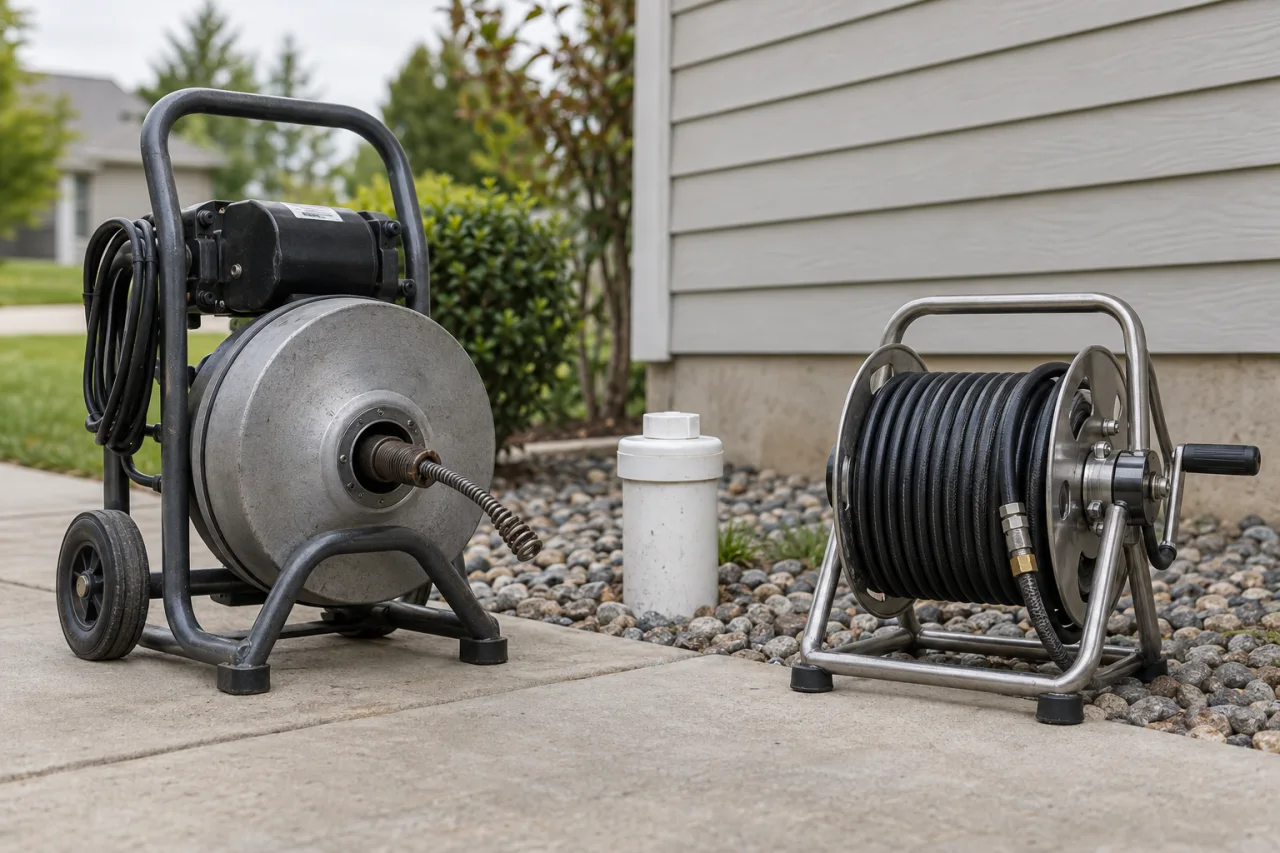
When a drain backs up, getting water moving again is the immediate goal. But opening a passage through a clog and removing buildup along the pipe are not always the same job. Cable cleaning may suit a concentrated obstruction, while high-pressure cleaning may be considered for accumulated material that needs loosening and flushing. Neither is automatically the better choice. For homeowners and property managers comparing options, the decision starts with the obstruction, access, and structural condition—not the machine’s power.
Opening a passage and cleaning a line are different goals
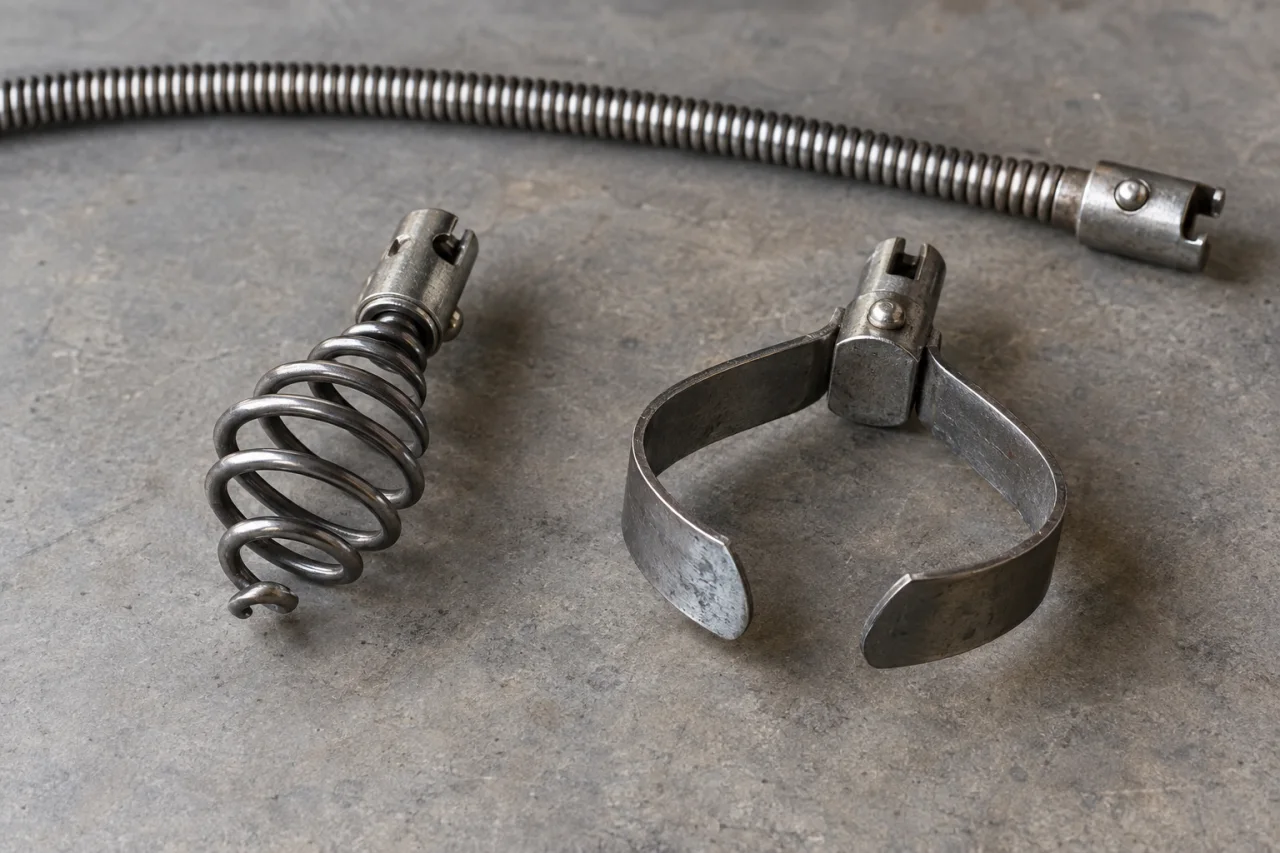
Cable cleaning uses a flexible rotating cable with an auger or cutting attachment to engage an obstruction. A small tool may first establish a passage; another attachment may then break up or remove more material. Professional cable equipment includes tools for grease, roots, and deposits clinging to pipe walls.
High-pressure cleaning, also called hydro jetting, uses a hose and nozzle to loosen material with water and flush debris along the line. It can be particularly useful where grease or sludge extends beyond one concentrated clog.
The distinction is therefore not simply “snaking opens; jetting cleans.” Both can clean, depending on the equipment. The useful distinction is how each reaches, dislodges, and moves the particular obstruction.
Compare the options by the obstruction
There are more than two practical choices. Cable cleaning with a small auger differs from mechanical cutting with a larger attachment, and some restrictions call for a combination of mechanical work and water flushing.
These are treatment options, not interchangeable service packages. A camera inspection helps evaluate the problem but does not remove it. Repairs belong in a separate discussion when the pipe itself is defective.
Drain-cleaning options: where each can fit and what limits it
| Option | When it may fit | Benefits | Tradeoffs and limitations |
|---|---|---|---|
| Cable cleaning with an auger | A concentrated stoppage requiring exploration or an initial opening | Can engage and break up an obstruction with a suitably sized tool | An initial opening may leave surrounding buildup; tool reach and size matter |
| Cable cleaning with a cutting attachment | Roots, hardened deposits, or adhering material suited to the selected cutter | Provides targeted mechanical removal beyond a small pilot opening | Requires appropriate cutter selection; does not repair root entry points or damaged pipe |
| High-pressure water cleaning | Grease, sludge, and other deposits in a line suitable for jetting | Combines loosening material with water flow to move debris | Requires suitable access and water supply; poor pipe condition can make cleaning damaging or ineffective |
| Mechanical cleaning followed by jetting | Mixed obstructions or hardened grease requiring breakup and flushing | Combines different removal actions where one method is insufficient | Adds equipment and work steps; both methods must suit the line |
Grease, roots, and scale need different reasoning
Soft grease can yield around a cable and close behind it. That helps explain why a kitchen drain may run briefly after an opening is made yet remain restricted. Jetting may be considered when the objective is to loosen and flush accumulated grease rather than simply penetrate it. Hardened grease can require mechanical breakup followed by flushing.
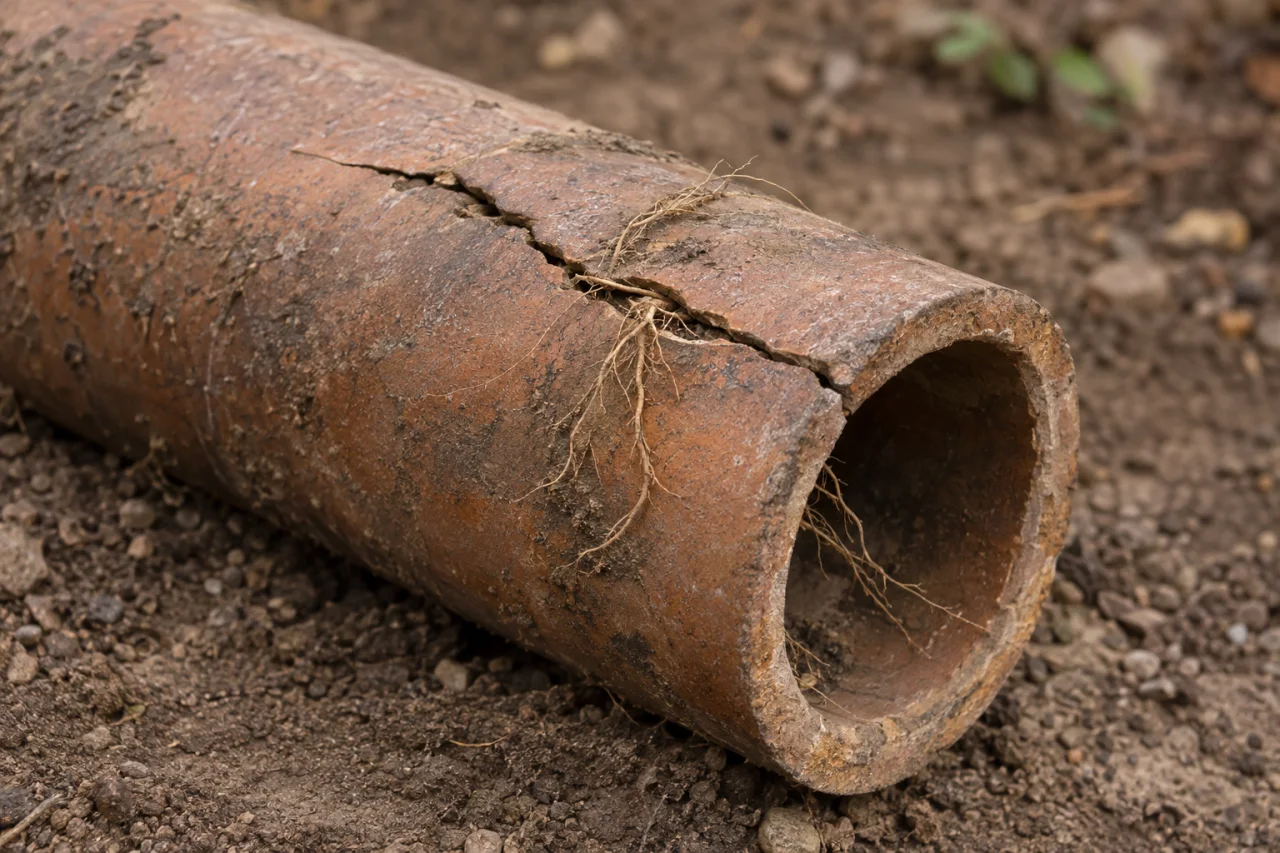
Roots present a different problem. Cable-mounted cutting blades and specialized water-powered tools can remove root obstructions, but neither seals the opening through which roots entered.
Scale also deserves a specific explanation. Mechanical attachments exist for hard deposits, so “scale” does not automatically mean jetting. Ask whether the visible restriction is removable buildup, deterioration of the pipe wall, or both. Cleaning cannot replace material lost to corrosion.
Let structural condition set the limits
High pressure is not automatically suitable for every line. A deteriorated or poorly constructed drain may be damaged by cleaning, and a blocked line is not necessarily structurally sound simply because water eventually passes through it.
A camera inspection can help assess accessible interior surfaces before choosing equipment. However, cleaning may be needed to expose surfaces hidden by debris. That can make assessment and cleaning a staged decision rather than a rigid inspection-first sequence.
Understanding what a sewer camera inspection can—and cannot—tell you is especially useful when visibility is limited. Ask which sections were actually seen and what remains uncertain.
Neither cable cleaning nor jetting repairs a broken pipe, corrects a sag, or realigns an offset joint. Significant defects may require a repair plan instead of repeated attempts to clear the same obstruction.
Access and preparation can change the recommendation
A suitable access point, pipe diameter, length, and bends influence which tools can reach the restriction. Jetting also requires an adequate water supply and room to position equipment safely. Access through a fixture may require its removal rather than feeding equipment through it.
These details explain why a recommendation cannot reliably come from the symptom “slow drain” alone. Share previous inspection findings and repair information, if available, rather than assuming the last cleaning method remains appropriate.
High-pressure equipment presents injection and hose-whip hazards. This comparison is a guide to discussing professional work, not instructions for adapting a household pressure washer to a drain.
- Describe which fixtures are affected and how quickly the problem returned after previous cleaning.
- Identify any known cleanout and keep the route to it accessible.
- Disclose drain-cleaning chemicals already used, including the product name if known.
- Ask whether restricted visibility requires staged cleaning and reassessment.
Compare estimates by scope, not machine size
Compare the work included, not just the equipment name. Pipe length, ease of access, and the amount of debris affect cleaning costs. A proposal involving multiple tools should explain why those steps are needed rather than presenting additional equipment as automatically better.
An isolated obstruction and an extended grease-coated line are different scopes. Likewise, establishing access is different from repairing a damaged pipe. Ask for those distinctions before approving work.
For a fuller budgeting discussion, read what determines the cost of drain cleaning. A useful estimate should make clear what is included and which findings could require a separate decision.
- Does the proposal cover opening the blockage, cleaning a defined pipe length, or both?
- Are camera inspection and any follow-up inspection included or separately priced?
- Does access require fixture removal, and is reinstallation included?
- What happens if the first method is unsuccessful or reveals damaged pipe?
- What evidence will help determine whether the agreed cleaning scope is complete?
Prevent another blockage without overlooking a defect
After cleaning, reduce the material entering the drain. Scrape food scraps into the trash, wipe grease from cookware before washing, and use a sink screen. Do not rely on hot water to carry grease away: it can cool and accumulate farther along the pipe. Wipes belong in the trash, including those marketed as flushable.
Maintenance frequency should reflect inspection findings and the pattern of accumulation, not a universal annual schedule. Recurring roots or debris may justify planned cleaning, but a sag or damaged joint can keep trapping material until the underlying condition is addressed.
Keep previous findings and invoices together. They give the next assessment a more useful starting point than “it clogged again.”
Choose the work that fits the line
For a West End or Moore County property, the most useful starting point is the problem history: which drains are affected, what previous cleaning achieved, and whether the pipe has been inspected. Ask for the reason behind the recommendation and its limits.
The Plumbing Knight offers Drain Cleaning and High Pressure Drain Cleaning. When discussing either service, distinguish immediate flow restoration from more extensive buildup removal—and both from structural repair.
The right question is not “Which machine is strongest?” It is “What is restricting this line, can the pipe tolerate the proposed work, and what will that work actually accomplish?”
Questions & answers
Does snaking only punch a hole through a clog?
Not always. A small auger may establish an initial passage, while larger, correctly selected cutters can remove roots or material adhering to the walls. Ask which attachment is proposed and whether the scope covers opening the drain or more extensive cleaning.
Is high-pressure cleaning always better for grease?
Jetting is often useful for soft grease because it combines loosening with flushing. Hardened grease may require mechanical breakup as well. Access, water supply, and pipe condition still determine whether jetting is appropriate.
Can either method permanently solve tree roots?
Removing roots can restore flow, but cutting or flushing them out does not seal their entry point. Recurring intrusion calls for evaluation of the joint, crack, or other opening and discussion of maintenance versus repair.
Should an older pipe automatically be ruled out for jetting?
Age alone does not settle the decision. Material, structural condition, access, and the proposed equipment matter. An older sound pipe and a severely deteriorated pipe present different risks; neither should be judged solely by its installation date.
How often should a drain be professionally cleaned?
There is no single interval suitable for every property. Inspection findings, previous blockages, root growth, and grease accumulation should guide the discussion. A recurring obstruction may justify planned maintenance, but it may also indicate a defect that cleaning cannot correct.
Sources & further reading
- RIDGID: Drum Cable Tools
Cable-tool applications, including exploratory augers, root cutters, grease cutters, finish cutters for adhering material, and chain knockers for scale. Supports the distinction between an initial opening and more extensive mechanical cleaning.
- Spartan Tool: Sewer Jetter Applications
Differences between mechanical cutting and water jetting; soft grease closing behind a cable; root-cutting applications; and combined mechanical breakup and jetting for hardened grease.
- RIDGID: KJ-2200/KJ-3100 Water Jetter Manual
Jetting action, equipment and access selection, adequate water supply, chemical disclosure, camera assessment of drain condition, potential damage to poor-condition drains, fixture access precautions, and high-pressure safety hazards.
- NASSCO: Maintenance
Inspection-informed maintenance, variation in cleaning tools according to debris, and cleaning to expose pipe surfaces for a more complete camera inspection.
- City of Tacoma: Side Sewer Condition Assessment and Repair Recommendations
Structural distinctions among sags, offset joints, cracks, debris accumulation, and root intrusion; why recurring buildup may require defect repair rather than cleaning alone. Used for general physical conditions, not North Carolina regulatory requirements.
- Seattle Public Utilities: Taking Care of Your Sewer Pipe
Cleaning cost factors of pipe length, ease of access, and debris amount; camera inspection as a diagnostic tool; and roots entering pipe cracks or holes. Seattle prices, inspection intervals, and ownership rules are not applied to Moore County.
- Texas Commission on Environmental Quality: Reducing Fats, Oils, and Grease in Your Home or Apartment
Grease prevention through scraping dishes, wiping cookware, and sink screens; grease cooling and accumulating downstream; and keeping all wipes out of toilets.
Prepared and automatically checked on . Conditions, costs and requirements can change. Ask about the details that apply to your situation.
Continue reading
Helpful next reads
Grease Trap and Interceptor Maintenance for Food-Service Properties
A practical grease-control plan connects kitchen habits, equipment instructions, utility requirements and useful records—before slow drainage becomes a backup.
Should You Use Chemical Drain Cleaner on a Slow Drain?
Chemical cleaner is not a diagnosis for a slow drain. Learn the label limits, safer initial checks and essential information to share if you have already used a product.
What Determines the Cost of Drain Cleaning?
Two clogged drains can require very different work. Learn how location, access, equipment and recurring symptoms shape the scope—and which questions make estimates easier to compare.