
Practical guides · cost
Sewer Line Repair or Replacement: What Drives the Scope and Cost?
The damaged pipe is only part of a sewer estimate. Learn how defect extent, excavation conditions, utility responsibility and restoration determine the complete scope.
What you’ll learn
- Defect extent and the condition of remaining pipe help determine whether a localized repair or broader replacement deserves consideration.
- Depth, access and nearby utilities can make a short repair a substantial excavation project.
- Confirm ownership boundaries with the serving utility; do not infer them from the property line or cleanout.
- Compare permits, backfill, restoration and change-approval terms alongside the pipe work.
- Cleaning removes obstructions but cannot rebuild structurally damaged pipe.
One sewer problem may call for replacing a localized section in an accessible yard. Another may involve a longer run beneath pavement, deeper excavation or coordination near other utilities. The difference is not simply the number of feet of new pipe. For West End and Moore County property owners considering Main Sewer Line work, the useful question is: what must be corrected, what is required to reach it and what will be restored afterward? A clear estimate should connect those answers to the proposed scope.
Start with the defect and its extent
A useful recommendation starts with the defect, not a replacement length. Is there one damaged joint, several broken sections, an obstruction or a broader alignment problem? Ask where each finding is located and how much of the line could actually be inspected.
Cleaning may be needed before a camera can show the pipe clearly. An inspection stopped by an obstruction leaves an unanswered question about the pipe beyond it—not proof that everything downstream needs replacement. Read what a sewer camera inspection can—and cannot—tell you before comparing recommendations.
Ask to review the findings supporting the proposed endpoints. For a localized repair, the important question is whether the remaining pipe can support a sound connection. For broader replacement, ask which additional defects or conditions justify extending the work.
Separate blockage removal from structural correction
Drain Cleaning addresses material inside a pipe. Structural repair addresses the pipe itself. Removing grease, roots or debris may restore flow, but it does not rebuild a cracked wall, reconnect a displaced joint or restore a collapsed section.
Root removal deserves particular care in this distinction: clearing roots does not necessarily eliminate the opening through which they entered. Repeated blockages should prompt a discussion about contributing defects rather than an automatic repeat of the same treatment.
The comparison below is a planning guide, not a diagnosis or a statement that The Plumbing Knight offers every approach. For obstruction-only work, what determines the cost of drain cleaning explains a different set of estimate questions.
Different findings call for different scope discussions
| Finding | Scope to discuss | Important limitation |
|---|---|---|
| Accumulated grease or debris | Cleaning and assessment of contributing conditions | Removing buildup does not correct an underlying structural defect. |
| A localized defective section | Repair or replacement of the affected portion | The condition of adjoining pipe and connection points still matters. |
| Multiple defects or extensive deterioration | Broader rehabilitation or replacement evaluation | Method suitability depends on the existing pipe and site conditions. |
Confirm responsibility with the serving utility
Before approving excavation, identify the serving sewer utility and ask it to confirm the ownership and maintenance boundary for your address. Do not assume responsibility ends at the property line, curb or nearest cleanout. Public agencies use different lateral-responsibility arrangements, so another town’s rule is not a reliable guide for your property.
Ask which portion the utility maintains, whether the connection to its main is included and what authorization is needed before work approaches that connection. Request clarification in writing when the boundary affects the proposed scope.
Keep ownership separate from locating. A line’s location on private property, or its inclusion in utility markings, does not by itself settle who must repair it. Resolve those questions before comparing proposals that may cover different lengths of pipe.

Depth, access and utility conflicts shape excavation
A deeper pipe can require more than additional digging. Soil stability, water, nearby structures and excavation depth affect the protective systems and working space needed. A short repair can therefore involve a larger excavation footprint than the damaged section suggests.
Access matters too. Ask how equipment will reach the work area, where excavated material will go and whether fences, pavement or landscaping restrict the route. An accessible lawn and a narrow corridor beside a building are different construction settings even when the pipe defect is similar.
Buried utilities add another constraint. NC811 notification is essential excavation planning, but it does not mark private lines. Separate locating may be needed for private sewer, irrigation, electrical or other installations. Ask who is coordinating both public utility notification and private-line identification. Stay outside excavations; trench safety is not a homeowner inspection task.
Material and method must fit the actual problem
Pipe material affects how a damaged section can connect to the remaining system and which rehabilitation approaches may be suitable. Ask the proposal to identify the existing material where known, the proposed replacement material and the transition connections—not simply say “new sewer pipe.”
The condition and alignment of the existing line matter alongside material. A method that renews a pipe along its current route is not automatically an answer to every slope or alignment problem.
Excavation allows removal and replacement of defective pipe, but it disturbs the surface along the work area. Some rehabilitation or replacement methods reduce surface disruption, yet “trenchless” does not mean excavation-free. Access points, connections, bends or unexpected obstructions can still require digging. If an alternative is proposed, ask what it corrects, what remains unchanged and what could make it unsuitable.
Define restoration before comparing totals
A pipe repair and a finished yard are different deliverables. Ask whether the estimate includes bedding, backfill, compaction, excess-soil removal and final surface restoration. Then identify the finish: rough grading is not the same as replacing sod, planting beds, concrete or asphalt.
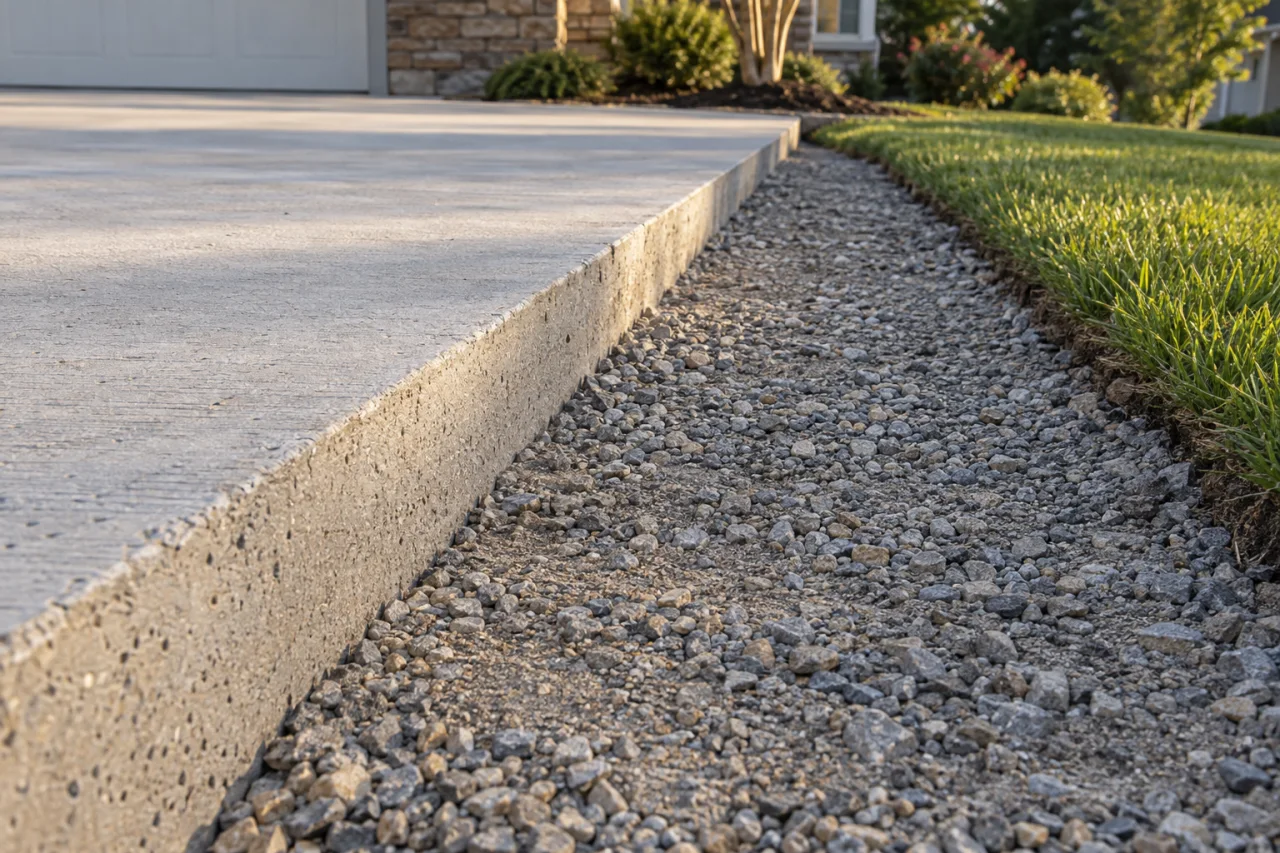
For a driveway crossing, clarify the proposed cut area, pavement replacement limits and who handles the finished surface. Do not assume a small pipe opening will produce an equally small or visually seamless pavement repair.
Moore County’s utility construction standards distinguish pipe bedding, backfill and compaction, including different considerations for traffic areas. Those standards apply to facilities within the manual’s scope, not automatically every private repair, but they illustrate why filling a trench is a separate task from restoring the surface above it.
Account for permits and possible scope changes
Moore County publishes a water/sewer line permit application stating that a plumbing permit is required before installation work. Its guidance also directs properties in certain municipal jurisdictions to the municipality for permitting information. Confirm the authority serving your address rather than assuming the county handles every project.
Ask who obtains required permits, which inspections apply, when the work may be covered and whether work near a road or utility connection needs additional authorization. Include these responsibilities in the written scope.
Hidden conditions remain possible even after assessment. Ask how additional damaged pipe, an unexpected utility conflict or unsuitable ground would be documented and priced. A clear approval procedure is more useful than an unexplained allowance or a verbal promise that nothing will change.
Choose a complete scope, not just a lower total
Compare proposals against the same endpoints and finish level—not just the bottom-line total. Ask which costs are included, which are allowances and which remain the owner’s responsibility. Also discuss how bathroom use or business operations would be affected while the line is out of service.
Afterward, retain the work description, available inspection findings and permit records. Ask whether any remaining pipe condition warrants monitoring or maintenance; do not assume every sewer needs the same cleaning schedule. Keep grease and inappropriate solids out of drains, while recognizing that maintenance cannot reverse structural damage.
The Plumbing Knight provides Main Sewer Line service for West End and Moore County homes and businesses. Begin the conversation with what you have observed, arrange an appropriate assessment and review the proposed work before proceeding.
- Identify the defect, proposed repair endpoints and any uninspected portion.
- Confirm utility responsibility and any connection approvals.
- List locating, access, excavation, pipe materials and connections.
- Separate bedding and backfill from finished surface restoration.
- Identify permit, inspection, disposal and service-interruption responsibilities.
- Agree on how additional work will be documented and approved.
Questions & answers
Does one cracked section mean the entire sewer line must be replaced?
Not necessarily. Ask whether the damage is isolated and whether the adjoining pipe is suitable for a reliable connection. Multiple defects, widespread deterioration or an alignment problem can support a broader scope. The recommendation should explain both what needs correction and what would remain.
Why can a short sewer repair still involve substantial work?
Pipe length is only one factor. A short repair beneath pavement, near other utilities or at greater depth may require significant access, excavation protection and restoration. Compare the complete work area and inclusions rather than the length of replacement pipe alone.
Will calling 811 locate my private sewer line?
Do not assume so. NC811 explains that private water and sewer lines are not marked through the standard utility notification process. Separate private locating may be necessary. Utility markings also should not be treated as confirmation of repair ownership.
Can cleaning solve a structurally damaged sewer?
Cleaning can remove roots, grease or debris and improve visibility for inspection. It cannot rebuild missing pipe, close a crack or correct a displaced joint. Restored drainage after cleaning does not establish that the pipe is structurally sound.
Who determines whether the homeowner or utility pays for a repair?
Start by asking the serving sewer utility to confirm its ownership and maintenance boundary for that address. Do not infer responsibility from the curb, property line or cleanout alone. Then make sure the proposed repair endpoints match the confirmed boundary.
Sources & further reading
- Optimizing Operation, Maintenance, and Rehabilitation of Sanitary Sewer Collection Systems
Cleaning removes accumulated material; structural defects can contribute to recurring blockages. Inspection findings and actual conditions should inform rehabilitation and maintenance decisions. The manual addresses collection systems, so its maintenance examples are not presented as household schedules. ([epa.gov](https://www.epa.gov/sites/default/files/2015-10/documents/sso_optimizing_enitre_doc.pdf))
- EPA Report to Congress, Appendix L: Sewer Rehabilitation
Removing and replacing part or all of defective sewer piping, structural rehabilitation, preparation through debris removal and reduced surface interruption from trenchless technologies. Supports the comparison table without establishing company method availability. ([www3.epa.gov](https://www3.epa.gov/npdes/pubs/csossoRTC2004_AppendixL.pdf?utm_source=openai))
- NC811: Private Lines
Private sewer and other private utility lines are not marked through the standard NC811 notification process and may require a private locator. Locating guidance is not treated as a definitive repair-ownership rule. ([nc811.org](https://www.nc811.org/education/private-lines.html))
- OSHA: Trenching and Excavation Safety
Excavation protection depends on depth, soil, water and other site conditions; underground utilities must be identified before digging. Supports the depth and safety discussion, not an exact cost estimate. ([osha.gov](https://www.osha.gov/sites/default/files/publications/TRENCH_EXCAVATION_FS.pdf))
- Federal Highway Administration: Reducing Pavement Cuts by Integrating Technology
Method selection and cost considerations include site investigation, ground conditions, existing utilities, access excavations, equipment and connections. Sharp bends and unexpected obstructions can require excavation during pipe bursting. Historical numerical costs are not used. ([fhwa.dot.gov](https://www.fhwa.dot.gov/utilities/utilitycuts/man04.cfm?device=c))
- Moore County: Wastewater Gravity System Standards and Specifications Manual
Within the manual’s stated utility-facility scope, pipe installation includes bedding, suitable backfill, compaction and material-transition considerations. The article does not apply these specifications universally to private repairs. ([moorecountync.gov](https://www.moorecountync.gov/DocumentCenter/View/172/Wastewater-Gravity-System-PDF))
- Moore County: Irrigation, Water/Sewer Line Permit Application
The application states that permits are required before water/sewer line installation and directs properties within listed municipal jurisdictions to their municipality for permitting information. ([moorecountync.gov](https://www.moorecountync.gov/DocumentCenter/View/553/Irrigation-Water-Sewer-Line-Permit-Application-PDF))
- Fairfax County: Residential Wastewater Management
Provides an example of a utility assigning owner responsibility through the connection to the public main, including portions outside private property. Used to illustrate why boundaries must be confirmed, not as a Moore County rule. ([fairfaxcounty.gov](https://www.fairfaxcounty.gov/publicworks/wastewater/residential?utm_source=openai))
Prepared and automatically checked on . Conditions, costs and requirements can change. Ask about the details that apply to your situation.
Continue reading
Helpful next reads
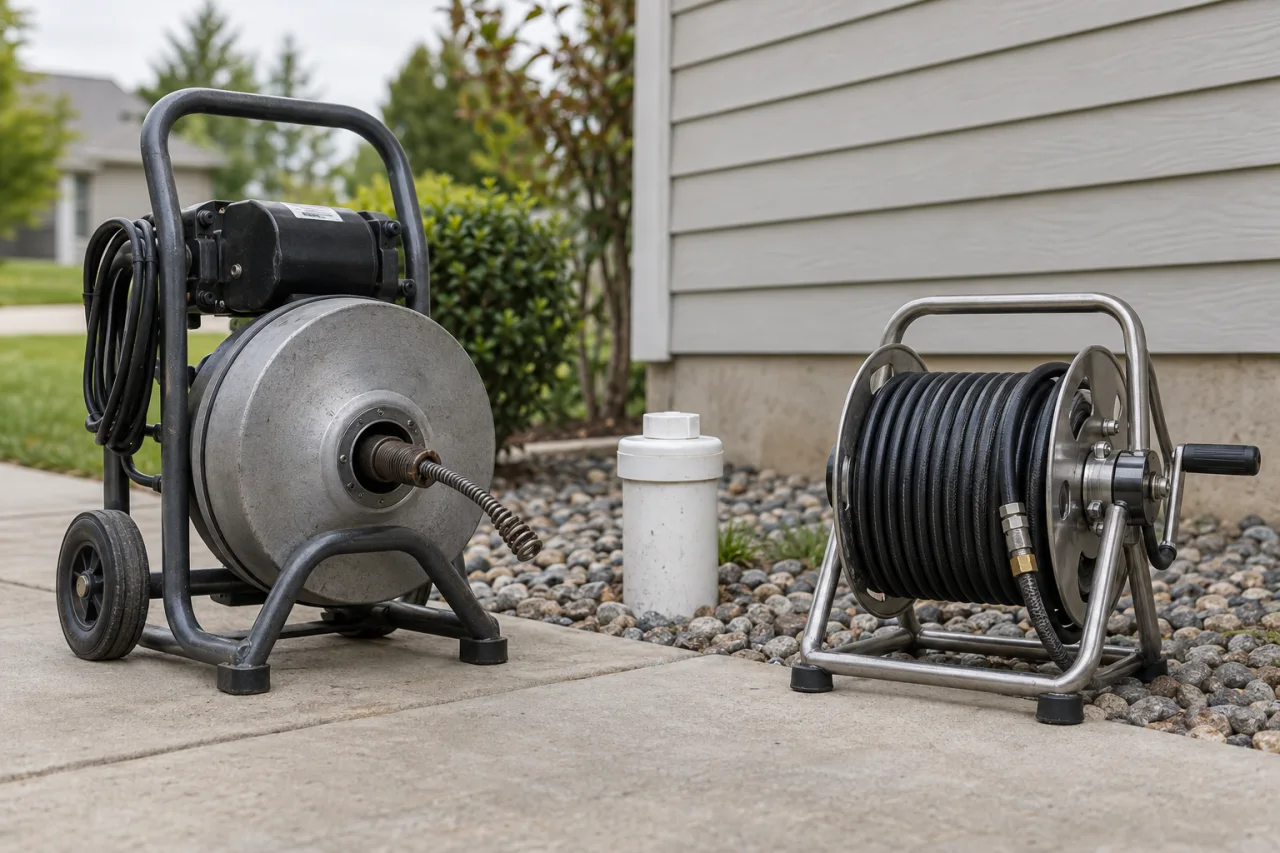
Drain Snaking vs. High Pressure Drain Cleaning: Which Fits the Problem?
A drain that flows again is not necessarily fully cleaned. Compare cable cleaning, cutting attachments, and water jetting—and learn why pipe condition matters more than pressure alone.
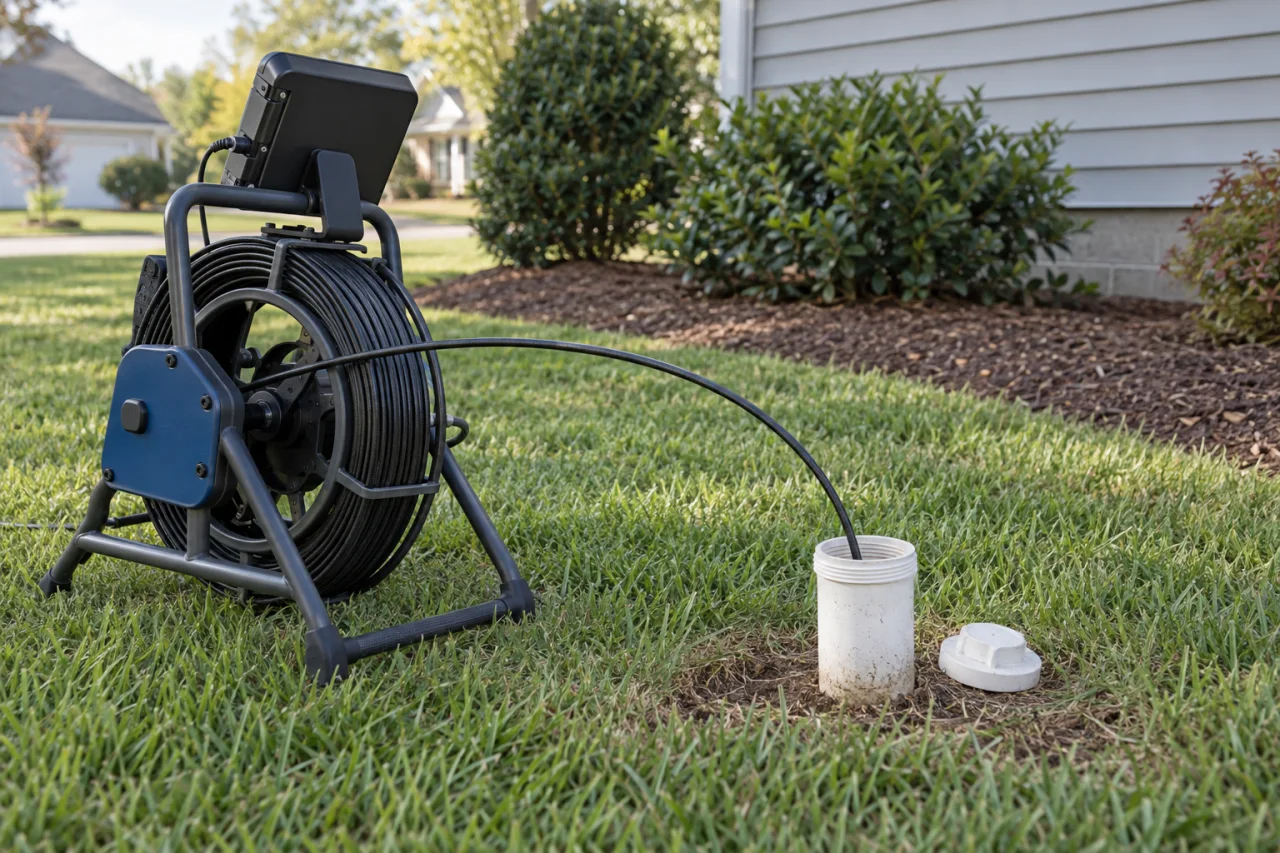
What a Sewer Camera Inspection Can—and Cannot—Tell You
A camera can reveal roots, buildup and visible pipe damage—but blind spots matter. Learn what evidence to request before approving sewer repairs.