Practical guides · process
Planning a Commercial Plumbing Repair Without Overlooking Business Operations
A plumbing repair plan should account for people, sanitation and business continuity—not just the damaged pipe. Use this framework to prepare for service interruptions and reopening.
What you’ll learn
- Identify every affected service and business activity before selecting the shutdown window.
- Verify isolation and access rather than assuming one fixture means one small interruption.
- Plan offices, lodging and food-service operations differently; regulated businesses should consult the relevant authority.
- Define restoration, equipment restart and reopening responsibilities before work begins.
Before scheduling a commercial plumbing repair, answer a second question alongside “What needs fixing?”: “What can the business safely keep doing while the work happens?” Workplace sanitation requirements and food-service operating rules make that an operational decision, not simply a scheduling preference. (osha.gov)
For businesses in West End and Moore County, this framework can help prepare a useful Commercial Plumbing discussion with The Plumbing Knight. It separates repair planning from tenant coordination and regulatory decisions, without assuming that an office, hotel and restaurant can follow the same shutdown procedure.
1. Define the interruption before choosing a work window
Start with a planning question: what will become unavailable—cold water, hot water, drainage, one restroom or a shared building service? Trace the affected area beyond the visible fixture. EPA’s building-water checklist recommends reviewing how water moves from the supply to each point of use; that same mapping principle helps structure a repair discussion. Include sinks, toilets, showers, water heaters and connected equipment. (epa.gov)
Ask the plumber whether the problem can be isolated locally and what uncertainty remains until assessment. Separately, identify which business activities depend on the affected fixtures. For food service, that includes handwashing, preparation, warewashing and sanitation—not merely drinking water. (dph.ncdhhs.gov)
If the situation is developing unexpectedly, review plumbing emergency warning signs before treating it as routine scheduling. Keep emergency response separate from the later decision about when normal operations can resume.
2. Match the plan to the business using the building
An office, hotel and restaurant may occupy similar buildings but need different interruption plans. Use this comparison to identify questions, not as permission to remain open. OSHA’s workplace requirements and North Carolina’s food-service guidance address different obligations; one does not replace the other. (osha.gov)
Planning priorities by occupancy; actual operating restrictions depend on the affected services and applicable authority.
| Setting | Priority | Applicability and limitation |
|---|---|---|
| Office or retail workplace | Employee drinking water, handwashing and prompt restroom access | Unaffected facilities may help, but bottled water or hand sanitizer alone does not replace all sanitation requirements. |
| Lodging | Guest bathrooms, affected rooms and water management in low-use areas | Consider room availability and water-system recovery separately; taking rooms out of service can reduce water use and increase stagnation concerns. |
| Food service | Handwashing, food preparation, warewashing, ice and sanitation | Modified operations require an appropriate, approved emergency plan; a reduced menu is not automatic authorization to operate. |
3. Resolve isolation and access questions early
Before committing to a narrow shutdown, ask whether the intended isolation point is accessible and whether its operation needs assessment. Treat drawings and remembered valve locations as information to verify, not proof that only one suite will lose service. Reviewing the building’s water pathways is a useful starting point. (epa.gov)
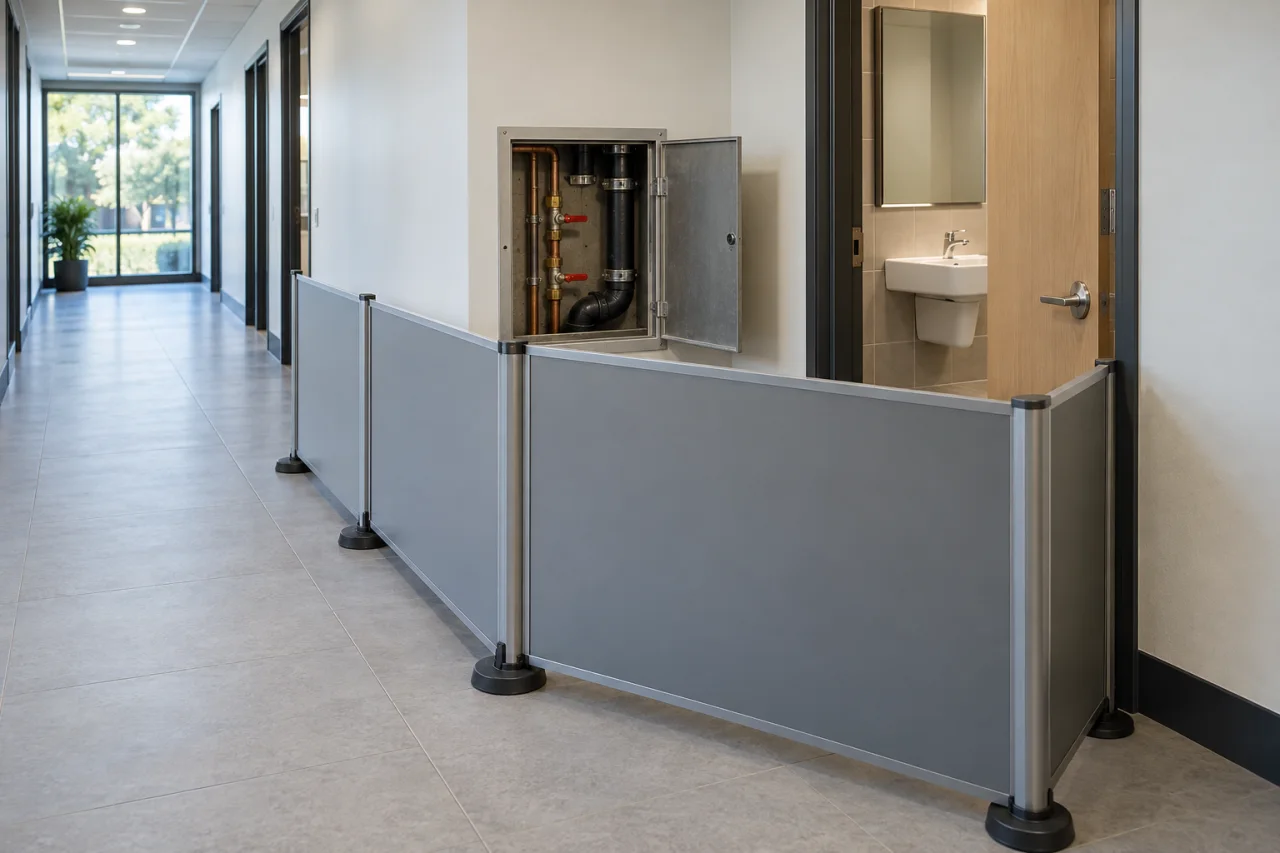
Assign someone to coordinate keys, tenant permissions and building access. Ask where tools, removed materials and protective barriers can go without obstructing normal circulation. OSHA’s sanitation standard calls for workplaces and passageways to remain free of unnecessary openings and obstructions and for floors to be kept dry where practicable. (osha.gov)
- Ask which valve or isolation point controls the proposed repair area.
- Identify shared fixtures and neighboring tenant spaces that could be affected.
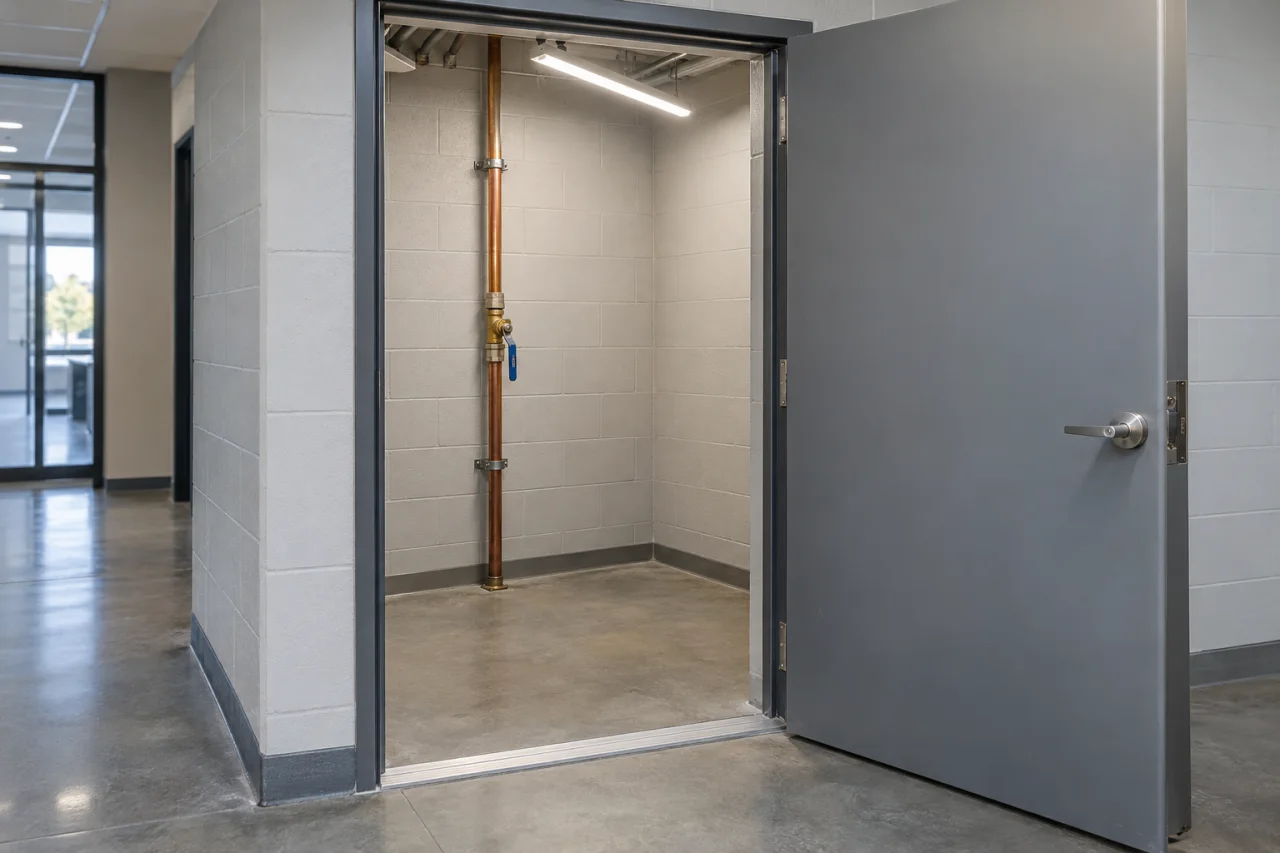
- Arrange authorized access to utility rooms, service corridors and work areas.
- Ask what could expand the shutdown if isolation is unsuccessful.
- Keep passageways clear and agree how occupants will be separated from work.
4. Give tenants and staff an actionable notice
Prepare a short notice explaining the affected areas, unavailable services, planned start, next update and person responsible for questions. Describe the finish as an estimate until restoration is confirmed. Tell occupants what remains available and what must not be used. EPA specifically recommends communicating water-system status and flushing activity to building occupants. (epa.gov)
For a workplace, evaluate alternate restrooms for prompt access, adequate capacity and handwashing—not simply proximity on a map. OSHA says waterless hand cleaner is not an adequate replacement for soap and water. If suitable arrangements are unavailable, consider relocating staff, remote work where feasible or pausing affected operations. (osha.gov)
For food service, include managers, employees and the regulatory authority in the communication plan. North Carolina’s emergency checklist calls for current critical contacts and regulatory notification when implementing an emergency plan. (ehs.dph.ncdhhs.gov)
5. Treat wastewater and food-service continuity separately
Plan for two different questions: can water be supplied safely, and can wastewater leave safely? Bottled drinking water addresses neither a blocked sewer nor all sanitation needs. North Carolina identifies handwashing, warewashing and cleaning among the essential water-dependent functions in food establishments. If hygienic operations cannot be maintained, operations may need to stop. (dph.ncdhhs.gov)
Before a food-service interruption, ask Moore County Environmental Health which restrictions, emergency-plan approvals and reopening requirements apply. The county provides local foodservice guidance and regulatory resources; the plumber’s repair scope is not a substitute for that determination. (moorecountync.gov)
If recurring kitchen drainage problems are involved, review grease trap and interceptor maintenance as a related planning issue. Keep the immediate repair, any needed cleanup and longer-term maintenance as separate items in the discussion so none is assumed to be included.
6. Give lodging and low-use areas a separate recovery plan
Lodging plans should identify affected rooms, shared bathrooms and water-connected amenities. Ask how rooms will be held out of service and how housekeeping and front-desk staff will receive the release decision. CDC warns that low occupancy reduces water flow and can increase Legionella risk; extended room closures therefore deserve attention within the property’s water management program. (cdc.gov)
Do not apply CDC’s prolonged-shutdown guidance indiscriminately to every brief repair. Its reopening framework addresses extended inactivity or reduced operation, with risks depending on building and water-system conditions. A short localized interruption and a long-unused guest wing need different assessments. (cdc.gov)
For regulated lodging questions, consult Moore County Environmental Health. Properties with food service, pools or spas also have distinct regulatory considerations; a single plumbing repair discussion should not be treated as clearance for every amenity. (moorecountync.gov)
7. Define what “ready to reopen” means
Agree on reopening responsibilities before the shutdown begins. Restored pressure alone does not establish that every fixture, appliance or business activity is ready. North Carolina’s recovery guidance includes checking water notices, flushing affected systems and addressing equipment and sanitation needs. A food establishment ordered to cease operations must obtain regulatory authorization before reopening. (dph.ncdhhs.gov)
Ask for a scope-appropriate plan rather than a universal flushing duration. CDC notes that water-using devices can need additional cleaning beyond flushing, and manufacturer instructions matter. Avoid improvised temperature changes or disinfection procedures. (cdc.gov)
If the repair affects a backflow assembly, raise restoration and any applicable testing questions when discussing Backflow Services, rather than leaving them until occupants return.
- Confirm the repair area is ready for restoration and identify any remaining restrictions.
- Check current utility notices and applicable health-authority directions.
- Agree who will assess affected fixtures after service returns.
- Identify equipment requiring manufacturer-specific restart attention.
- Confirm whether regulatory authorization is required before reopening.
- Notify occupants only after the responsible parties confirm the available services.
8. Bring operational constraints to the repair discussion
Bring The Plumbing Knight a concise description of observed symptoms, affected fixtures, occupancy needs and access constraints. Its supplied Commercial Plumbing planning steps are to discuss observations, arrange an appropriate assessment and review the proposed work before proceeding.
When comparing proposals, ask what is included in isolation, access, repair and restoration, and what remains the property manager’s responsibility. Condition and scope, access, and required parts and equipment are the supplied pricing factors. Keep business-continuity arrangements separate from the repair estimate unless expressly included.
Afterward, retain the agreed repair scope and update building information or occupant instructions as needed. For properties managing extended low use, EPA recommends ongoing water management rather than treating reopening as a one-time task. (epa.gov)
Questions & answers
Can an office stay open while its water is shut off?
Not automatically. Evaluate drinking water, handwashing and prompt access to sanitary toilets, not just whether employees can continue desk work. OSHA requires these facilities and services. Confirm acceptable arrangements before keeping an affected workplace occupied. (osha.gov)
Does bottled water let a restaurant continue operating?
Bottled water alone does not resolve handwashing, warewashing, cleaning or wastewater needs. North Carolina guidance calls for regulatory review and approval of emergency operating arrangements. Contact the local environmental health authority before relying on a modified menu or alternate water supply. (dph.ncdhhs.gov)
Does every plumbing repair require whole-building flushing?
No single flushing procedure fits every repair. CDC reopening guidance addresses prolonged shutdown or reduced use, while a localized repair needs a scope-specific restart plan. Follow applicable utility, regulatory and equipment-manufacturer instructions rather than choosing an arbitrary flushing time. (cdc.gov)
Can ice machines and beverage dispensers restart as soon as water returns?
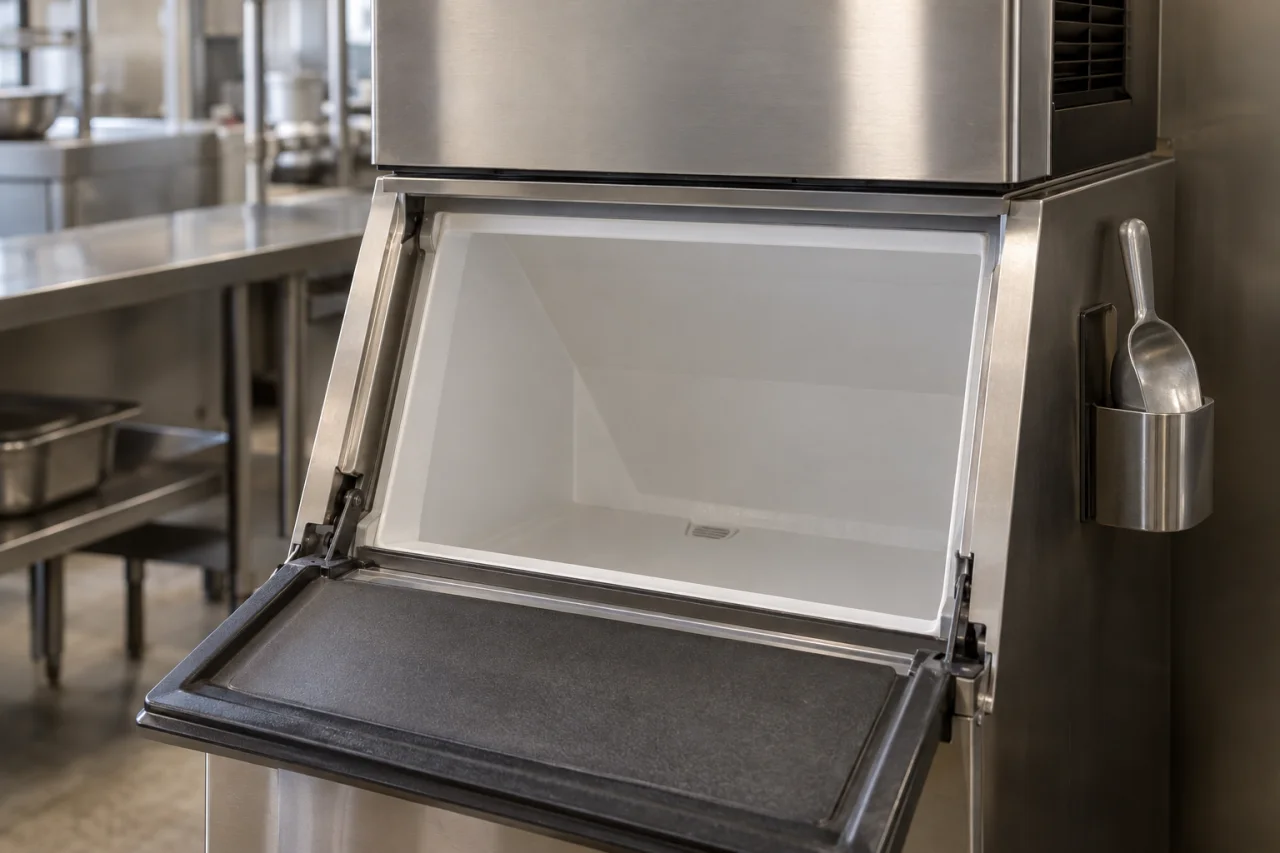
Do not assume so. Depending on the interruption and water conditions, connected equipment may require flushing, cleaning, sanitizing or disposal of affected ice and beverages. Follow manufacturer instructions and applicable health-authority directions before returning equipment to use. (cdc.gov)
Sources & further reading
- OSHA: 29 CFR 1910.141 — Sanitation
Workplace potable water, toilet, washing, housekeeping and passageway requirements.
- OSHA: Restrooms and Sanitation Requirements
Prompt restroom access, adequate facilities and the limitations of waterless hand cleaner.
- EPA: Restoring Water Quality in Buildings for Reopening
Water-pathway review, utility coordination, occupant communication and recovery after extended building inactivity.
- CDC: Reopening Buildings Guidance
Distinguishing prolonged inactivity from localized repairs, flushing considerations and manufacturer-specific equipment cleaning.
- NCDHHS: Emergency Operation Checklist for Food Service Establishments
Food-service emergency planning, critical contacts, approved alternative arrangements and connected-equipment precautions.
- NCDHHS: Understanding Emergency Water Issues
Food-service water needs, operational suspension considerations and regulatory review of emergency arrangements.
- NCDHHS: Emergency Water Plan Guidance
Water-status communication, recovery considerations and authorization to reopen establishments ordered closed.
- CDC: Hotel Owners and Managers
Hotel water management, low occupancy, stagnation and water-supply interruption concerns.
- https://moorecountync.gov/541/Foodservice-Facilities
Guidance referenced in this article on Planning a Commercial Plumbing Repair Without Overlooking Business Operations.
- https://www.moorecountync.gov/545/Lodging-Facilities
Guidance referenced in this article on Planning a Commercial Plumbing Repair Without Overlooking Business Operations.
Prepared and automatically checked on . Conditions, costs and requirements can change. Ask about the details that apply to your situation.
Continue reading
Helpful next reads
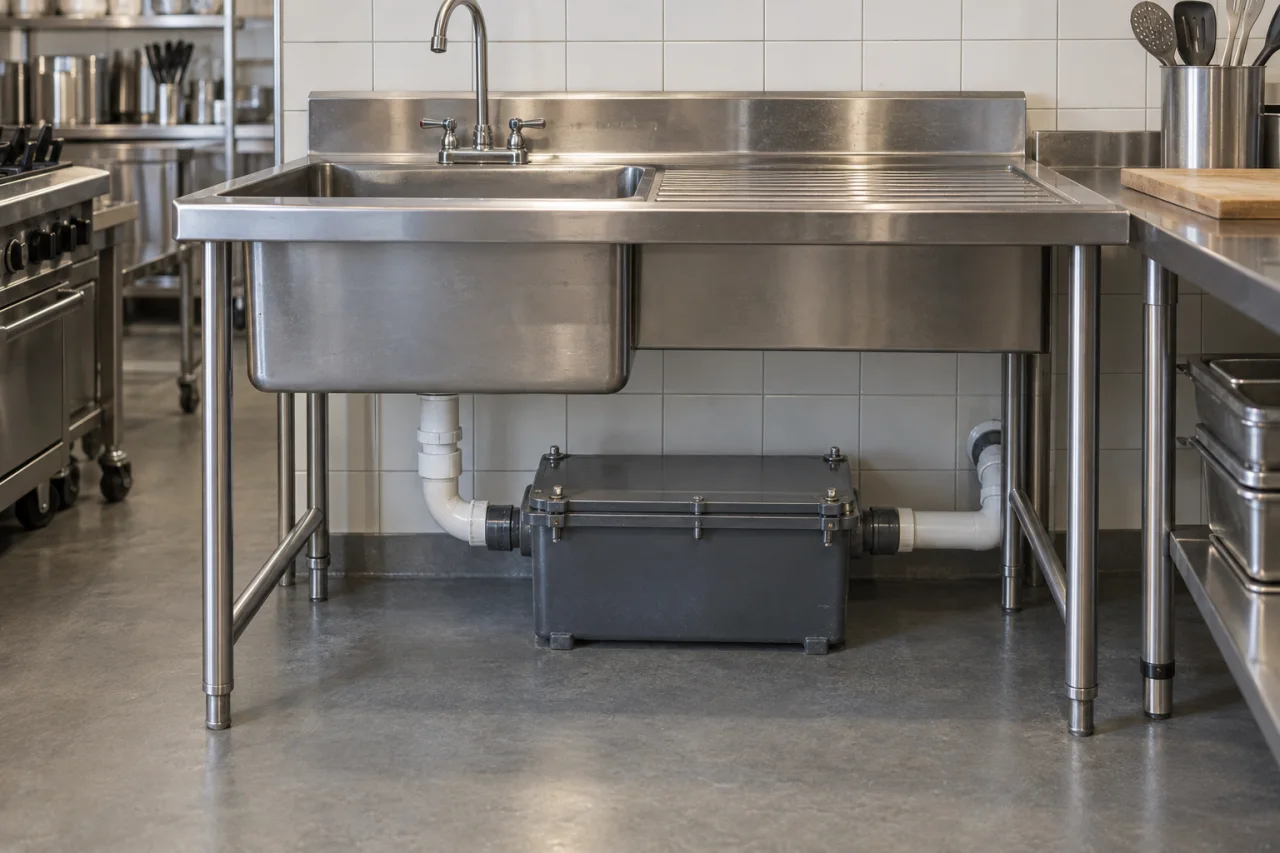
Grease Trap and Interceptor Maintenance for Food-Service Properties
A practical grease-control plan connects kitchen habits, equipment instructions, utility requirements and useful records—before slow drainage becomes a backup.
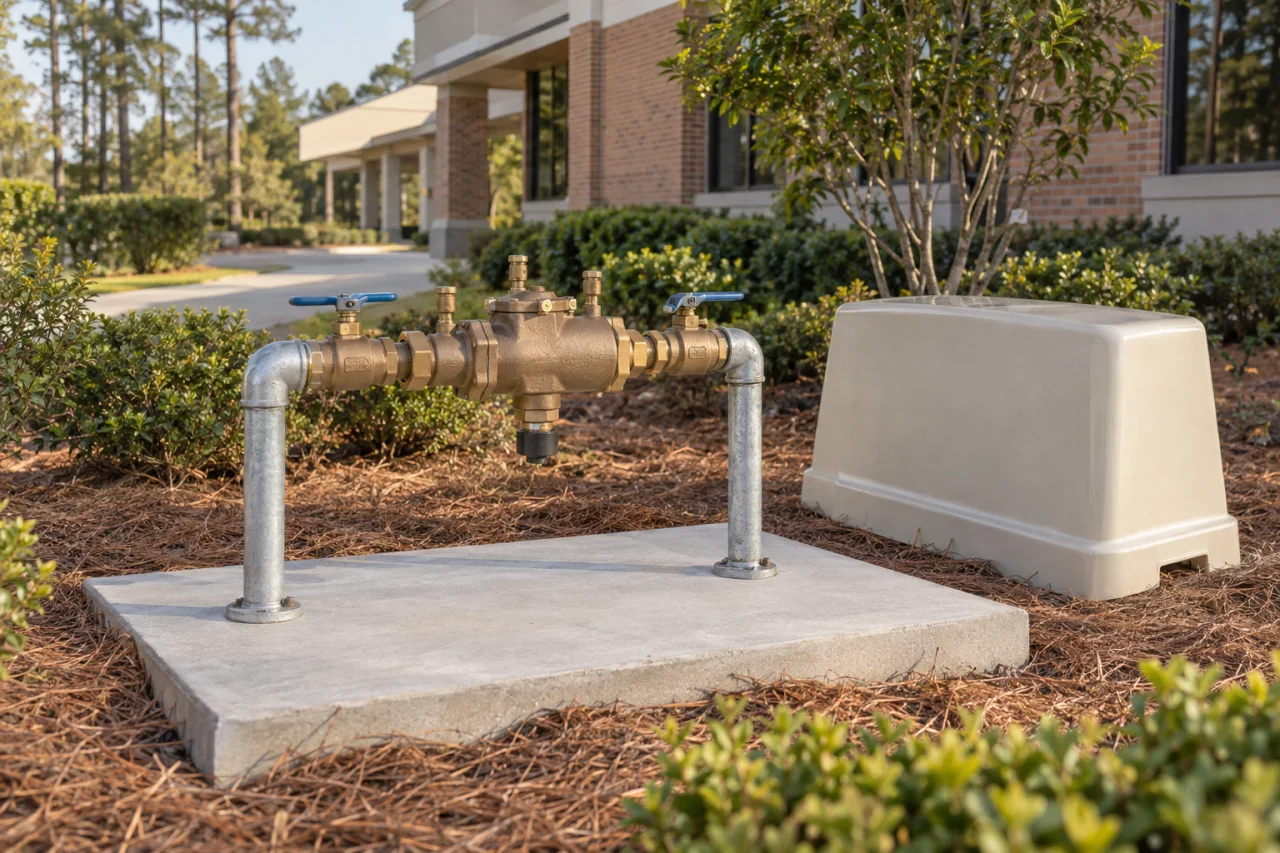
Backflow Testing in Moore County: Which Requirements Apply to Your Property?
Backflow requirements start with the water provider serving your connection. Learn what to confirm about equipment, test schedules, tester qualifications and reporting before arranging service.