Practical guides · decision
Is This a Plumbing Emergency? Warning Signs and Safe First Steps
Uncontrolled leaks, sewage backups and overflowing fixtures call for different responses. Learn when to stop water use, when to stay away and what to tell emergency dispatch.
What you’ll learn
- Uncontrolled water, sewage entering living space and leaking water heaters warrant prompt assessment.
- Stay away from wet electrical equipment, contaminated water and suspected gas leakage.
- Shut off a known water valve only when it is safely accessible; stop household water use during a suspected sewer backup.
- Do not repeatedly flush an overflowing toilet or block a water heater's safety discharge.
- 24/7 emergency dispatch is a way to request help, not a guaranteed arrival time.
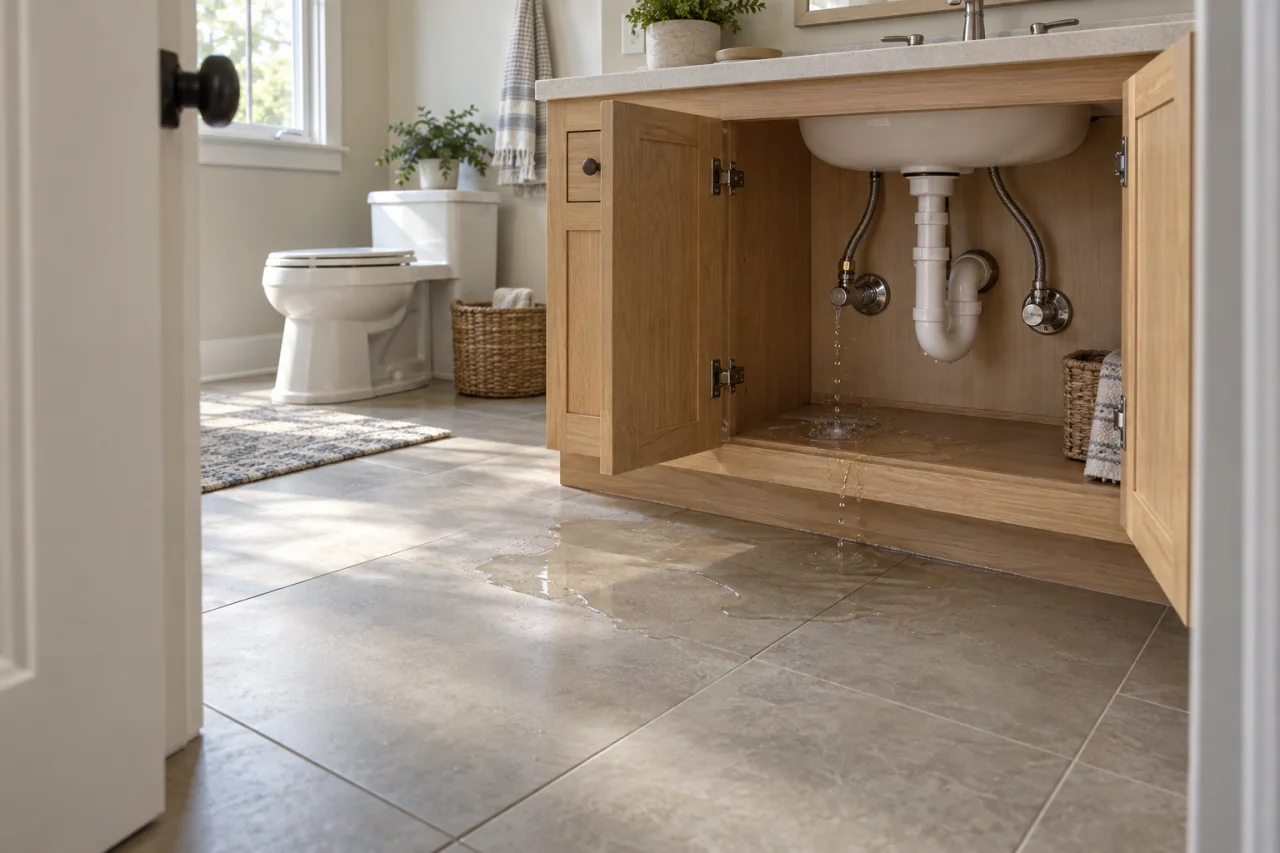
Water spreading across a floor can make every decision feel urgent. Start with three questions: Is anyone in danger? Is water still entering the space? Could it be sewage? The safest first step may be shutting off a known water valve, stopping household water use or leaving the area—not attempting a repair. This guide helps West End and Moore County homeowners describe the symptoms and decide what help to request. (redcross.org)
1. First decide whether the space is safe
Begin with personal safety, not a repair attempt. If water is near outlets, submerged cords or electrical equipment, stay out of the affected area. Do not touch wet electrical equipment or operate switches while standing in water. A shutoff is not safely accessible if reaching it requires crossing a flooded floor. CDC guidance calls for an electrician when standing water blocks access to the main power switch. (cdc.gov)
If you smell gas or suspect a gas leak, leave immediately without operating lights or anything that could spark. Call the gas utility or emergency services from outside. For fire, immediate danger or a medical emergency, call 911 rather than waiting for plumbing dispatch. Do not reenter until authorities say it is safe. (cdc.gov)
2. Match the warning sign to the next step
Use the symptoms below to describe the problem, not to diagnose it. These categories are practical triage guidance: a small leak can become urgent when it reaches electrical equipment, spreads into concealed areas or cannot be isolated. If you cannot tell whether the situation is controlled, explain that uncertainty when calling. (redcross.org)
Match the visible symptom to a cautious first response. This guide does not establish the cause or replace an on-site assessment.
| What you notice | How to treat it | Safe first step | Important limitation |
|---|---|---|---|
| Water spraying or spreading continuously | Seek urgent plumbing assessment | Close the known water shutoff only if safely accessible | Stopping supply does not remove electrical or building hazards |
| Sewage entering a tub, shower or floor drain | Seek urgent help and avoid contact | Stop household water use and keep people and pets away | The source may involve household drains, a public sewer or a septic system |
| Toilet bowl rising or overflowing | Act now to prevent more overflow | Do not flush again; close the fixture supply valve if safe | The supply valve does not clear a blockage or stop sewer inflow |
| Water heater leaking with hissing or sizzling | Request immediate professional assessment | Avoid use; isolate energy only through safe, model-appropriate controls | Do not approach wet electrical equipment or suspected gas leakage |
| Contained drip with no spreading water or safety hazard | Discuss repair scheduling | Keep the affected fixture out of use and report any change | Containment is temporary and does not establish the leak's cause |
3. Uncontrolled leaks: limit incoming water without taking risks
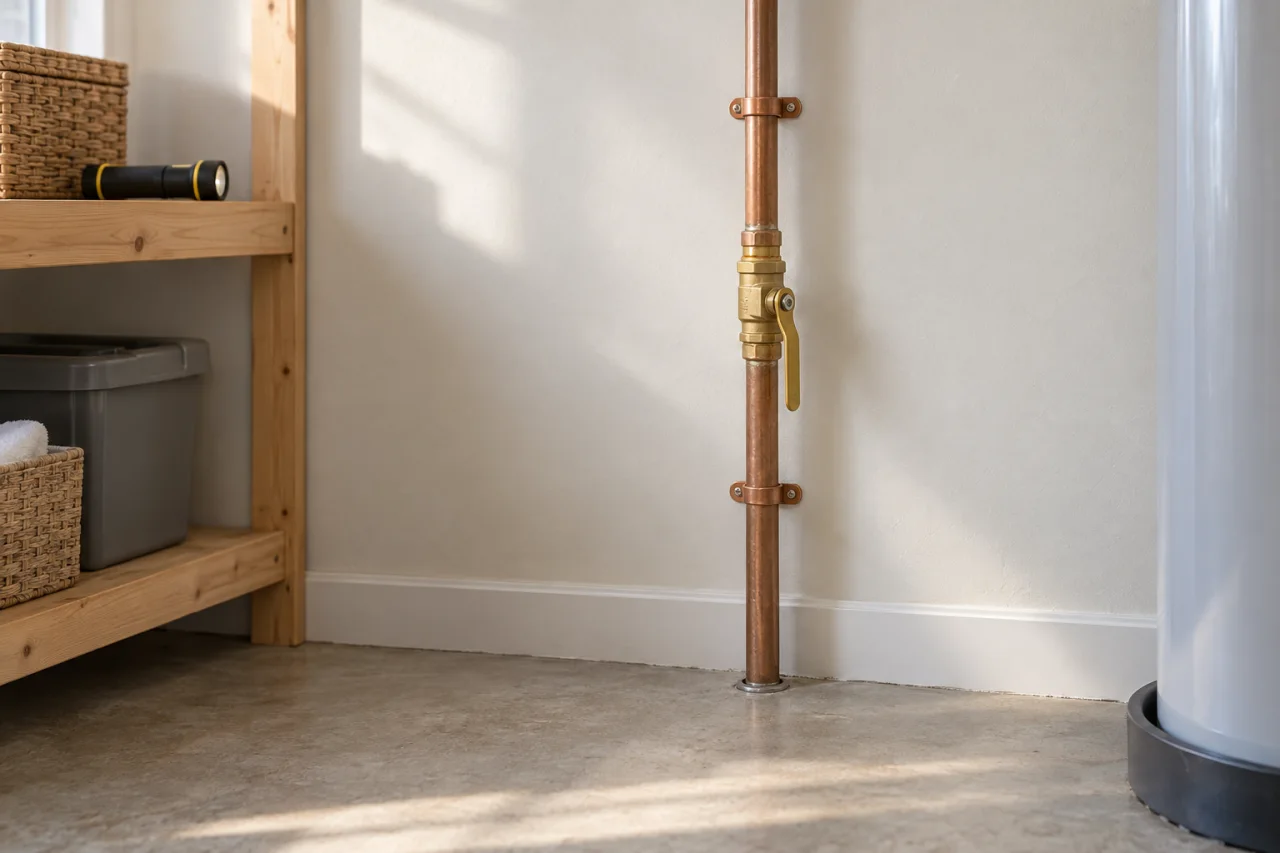
For a broken supply pipe or uncontrolled leak, turn off the household main water valve if you know where it is and can reach it safely. The American Red Cross recommends shutting off the main when water pipes are damaged and calling a plumber. Do not force a stuck valve or enter a wet crawlspace to search for one. Tell dispatch if you cannot safely isolate the supply. (redcross.org)
A fixture valve may isolate a problem at one toilet, but the main is the broader option when the source is uncertain. Neither action repairs the damage. Report whether the flow stopped, slowed or continued after shutoff; do not reopen the supply simply to demonstrate the leak. Leave electrical equipment alone if water has reached it. (bric.org.au)
4. Sewage backups: stop water use and protect the area
If wastewater is backing up, stop flushing and stop using sinks, showers, laundry and the dishwasher. The Red Cross advises avoiding sinks, showers and toilets when sewage lines may be damaged. Keep children and pets away from contaminated rooms, and do not walk through sewage to inspect another drain. EPA warns that backed-up sewage can contain harmful pathogens. (redcross.org)
Tell the plumber whether one fixture or several are affected and whether the property uses a public sewer or septic system. With public sewer service, also report a suspected system backup to the sewer utility. For septic-related sewage flooding, EPA recommends contacting the local health department or regulatory agency for guidance. (portal.ct.gov)
Clearing the obstruction and making the room safe again are separate needs. Contaminated flooring, furnishings and other porous materials may require professional remediation. Ask who will handle cleanup; do not assume plumbing repair includes it or that insurance will pay for it. (portal.ct.gov)
5. Overflowing fixtures: resist the test flush
When a toilet bowl is rising, do not flush again to see whether it clears. If the supply valve behind the toilet is safely reachable, closing it can stop additional tank refill. That is a containment step, not a blockage repair. If wastewater is rising elsewhere too, stop household water use rather than treating the toilet as an isolated problem. (bric.org.au)
Explain whether water is entering the bowl from the tank or returning through the drain, if you can observe that without contact. Keep people away from any overflow. Once the immediate problem is controlled, A Running Toilet: Simple Checks and Signs of a Larger Problem can help you distinguish persistent tank-to-bowl flow from an overflowing bowl. Do not resume use merely because the water level has temporarily fallen. (bric.org.au)
6. Leaking water heaters: avoid use and preserve safety devices
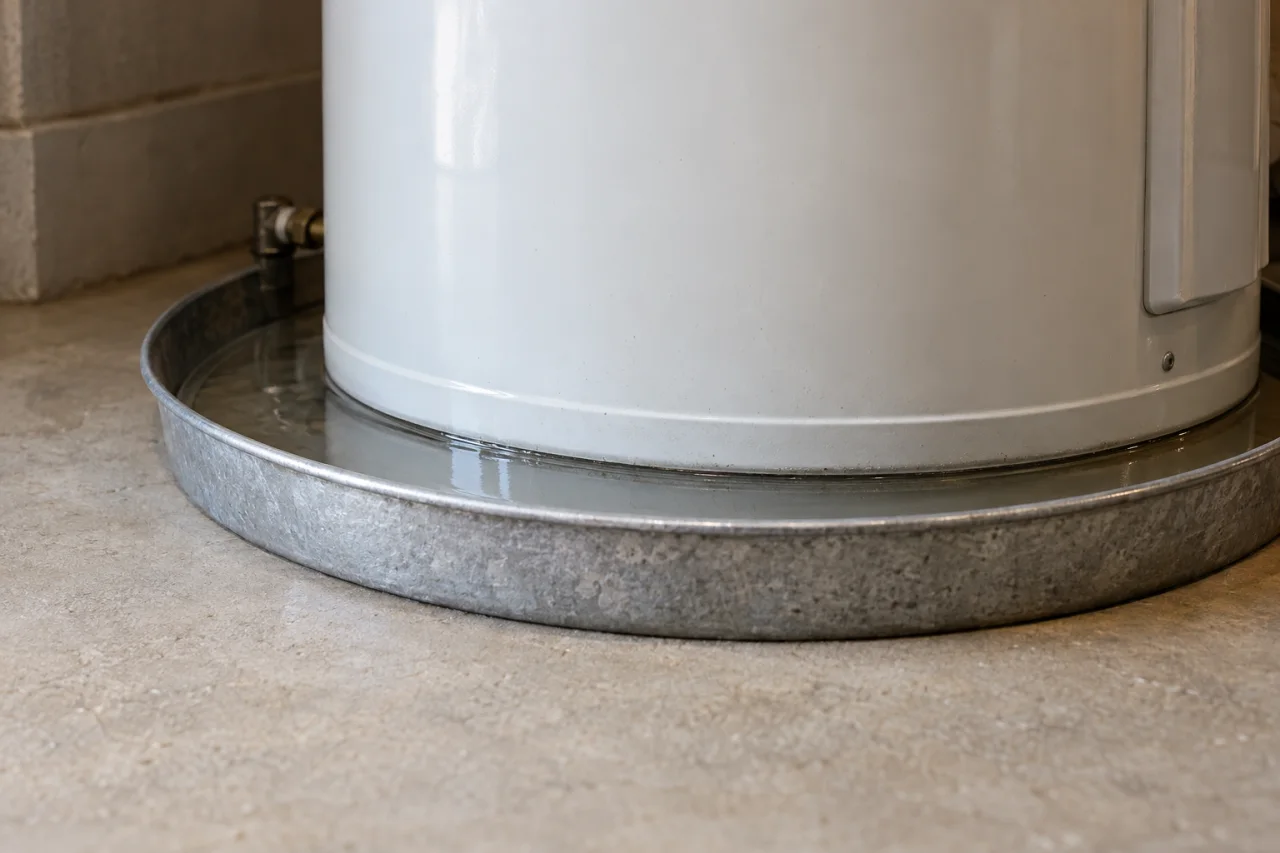
A puddle near a water heater deserves assessment, but it does not prove the tank itself has failed. Water may come from piping or the heater body. Describe the location from a dry position without removing covers or touching hot components. Rheem advises avoiding use and arranging immediate inspection for concerning hissing, sizzling or dripping associated with leakage. (files.myrheem.com) (rheem.com)
Follow the unit's instructions for shutting down its energy supply only when the correct control is known and safely accessible. If you are unsure, ask for guidance instead of opening panels or manipulating unfamiliar gas controls. Wet electrical equipment or suspected gas leakage means keeping away, not completing a shutdown yourself. (rheem.com)
Never cap, plug or obstruct a temperature-and-pressure relief valve or its discharge pipe to stop dripping. It is a safety outlet, and discharged water can be dangerously hot. After the immediate hazard is controlled, Repair or Replace a Water Heater? A Practical Decision Guide can help organize questions about the diagnosis and options. (files.myrheem.com)
7. Make the emergency call useful
For West End and Moore County properties, The Plumbing Knight provides Emergency Plumbing Services. Emergency plumbing dispatch is available 24/7: call (910) 639-5555 and press 2. After-hours calls are evaluated case by case for safety. Dispatch availability does not promise an immediate arrival or a fixed repair completion time.
Describe observations rather than guessing the cause. Ask what charges apply to assessment, what proposed work requires approval and whether additional parts or access work may be needed. Scope, access, condition and required equipment can affect the work. Also ask whether temporary containment is possible or whether the affected plumbing must remain out of use until repair.
- State the address and where the water or wastewater is appearing.
- Explain whether the flow is ongoing and whether a shutoff changed it.
- Report electrical hazards, suspected gas leakage and unsafe access before discussing repairs.
- Ask for the current arrival estimate and what to do if conditions worsen.
- Ask what assessment, repair and cleanup work would be separate.
8. After containment, plan cleanup and prevention
Once it is safe, photograph the affected area without entering contaminated or electrically hazardous spaces. Discuss damage documentation and policy questions with your insurer without assuming coverage. Arrange appropriate drying and cleanup promptly: repairing the pipe does not dry the building, and the Red Cross recommends drying flood-wetted areas quickly to reduce mold risk. (fema.gov) (redcross.org)
Before another problem occurs, identify the household main shutoff and ask for help if its location or operation is unclear. Make sure other responsible adults know where it is. If freezing conditions are a concern, Preparing Moore County Plumbing for a Freeze is a useful next planning topic. The aim is a safer, clearer response—not an expectation that every emergency can be prevented. (readync.gov)
Questions & answers
Can a plumbing problem wait until morning?
A contained problem with the affected fixture out of use may be less urgent than uncontrolled water or sewage entering the home. Ask dispatch to assess the symptoms rather than deciding by the hour alone. Electrical danger, suspected gas leakage and unsafe building conditions take priority over a plumbing appointment. (redcross.org)
Will shutting off the main water valve stop a sewer backup?
Not necessarily. It limits incoming household supply water but does not isolate the home from wastewater arriving through a backed-up sewer. Stop using sinks, showers, toilets and water-using appliances, keep away from sewage and seek help. (redcross.org)
Should I keep flushing an overflowing toilet?
No. Repeated flushing can add water to an already blocked bowl. If safely accessible, the toilet's supply valve can stop additional tank refill, but it does not clear the blockage or stop a sewer backup. (bric.org.au)
Does a puddle beneath a water heater mean it needs replacement?
Not by itself. Leaking piping and a leaking tank body are different problems. Arrange an assessment rather than assuming the tank has failed, and avoid using a heater with active leakage or concerning hissing or sizzling. (files.myrheem.com) (rheem.com)
Does 24/7 emergency dispatch guarantee an immediate arrival?
No. The Plumbing Knight offers emergency plumbing dispatch 24/7; call (910) 639-5555 and press 2. After-hours calls are evaluated case by case for safety. Ask for the current assessment and arrival estimate; dispatch availability is not a guaranteed arrival time.
Sources & further reading
- CDC: Safety Guidelines—Reentering Your Flooded Home
Electrical precautions around standing water, safe access to power controls, evacuation for suspected gas leakage and restrictions on reentry.
- American Red Cross: Checking Your Home—Utilities, Systems & Household Items
Shutting off the main water valve for damaged pipes and avoiding sinks, showers and toilets when sewage lines may be damaged.
- EPA: Resolving Septic System Malfunctions
Health precautions for sewage backups, septic malfunction symptoms and contacting health or regulatory agencies.
- Connecticut Department of Public Health: Sewage Back-Ups—Information for Residents
Keeping children and pets away from sewage, avoiding flushing, notifying sewer authorities and considering professional remediation and insurance questions.
- Bric Housing: Common Maintenance Issues with Toilets
Avoiding repeated flushing of a blocked toilet and using its supply valve as a containment measure.
- Rheem: The Ultimate Guide to Water Heater Noises—What's Normal and What Isn't
Avoiding water heater use and seeking immediate inspection for hissing, sizzling or dripping associated with leakage; energy isolation guidance.
- Rheem: Why Water Heater Leaking?
Distinguishing leaking water piping from leakage at a water heater's body without assuming every puddle proves tank failure.
- Rheem: Indirect Water Heater Installation and Operating Instructions
Warnings against capping, plugging or obstructing temperature-and-pressure relief discharge and the risk of hot water or steam.
- https://www.fema.gov/ht/print/pdf/node/639163
Guidance referenced in this article on Is This a Plumbing Emergency? Warning Signs and Safe First Steps.
- www.redcross.org
Guidance referenced in this article on Is This a Plumbing Emergency? Warning Signs and Safe First Steps.
- www.readync.gov
Guidance referenced in this article on Is This a Plumbing Emergency? Warning Signs and Safe First Steps.
Prepared and automatically checked on . Conditions, costs and requirements can change. Ask about the details that apply to your situation.
Continue reading
Helpful next reads
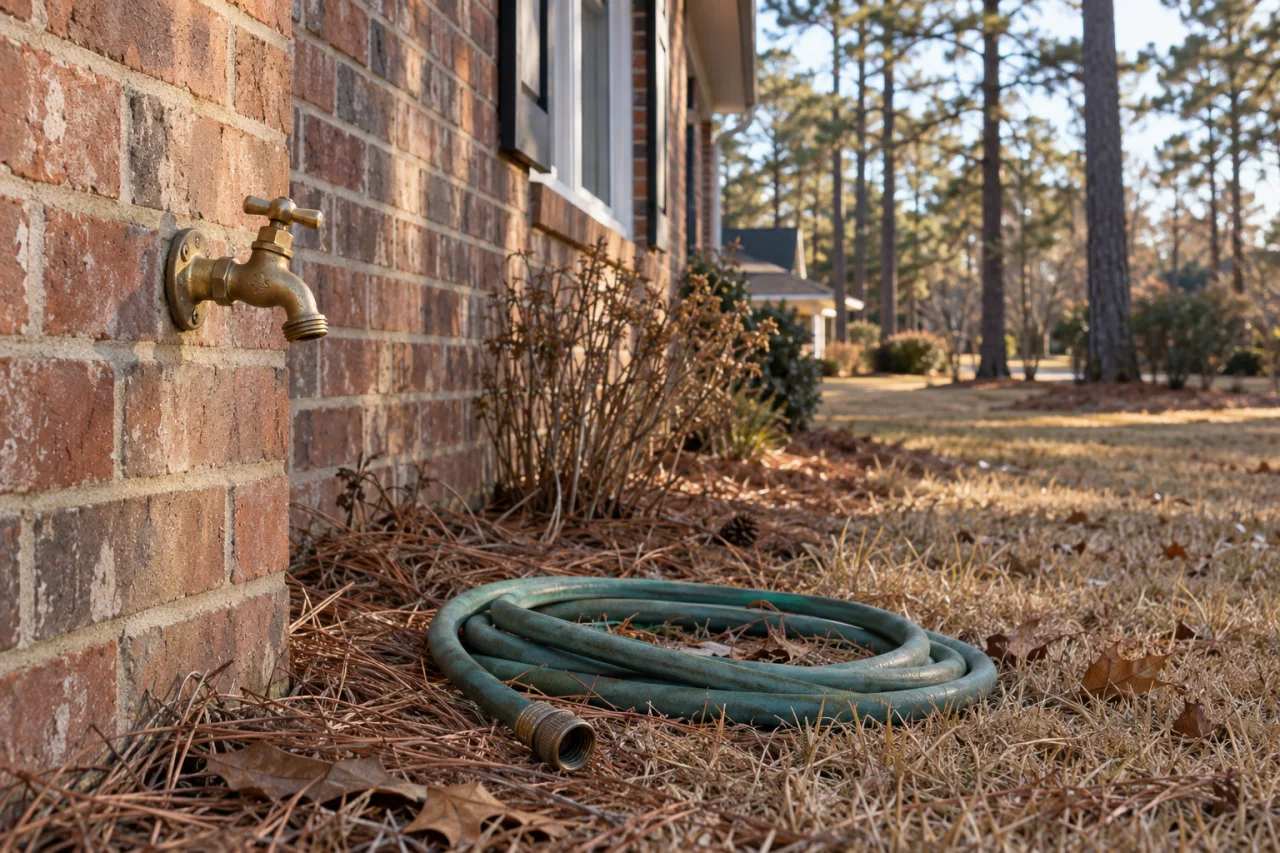
Preparing Moore County Plumbing for a Freeze
A practical freeze-preparation guide for Moore County homes: disconnect hoses, protect exposed supply lines, locate the water shutoff and recognize when suspected frozen pipes need professional help.
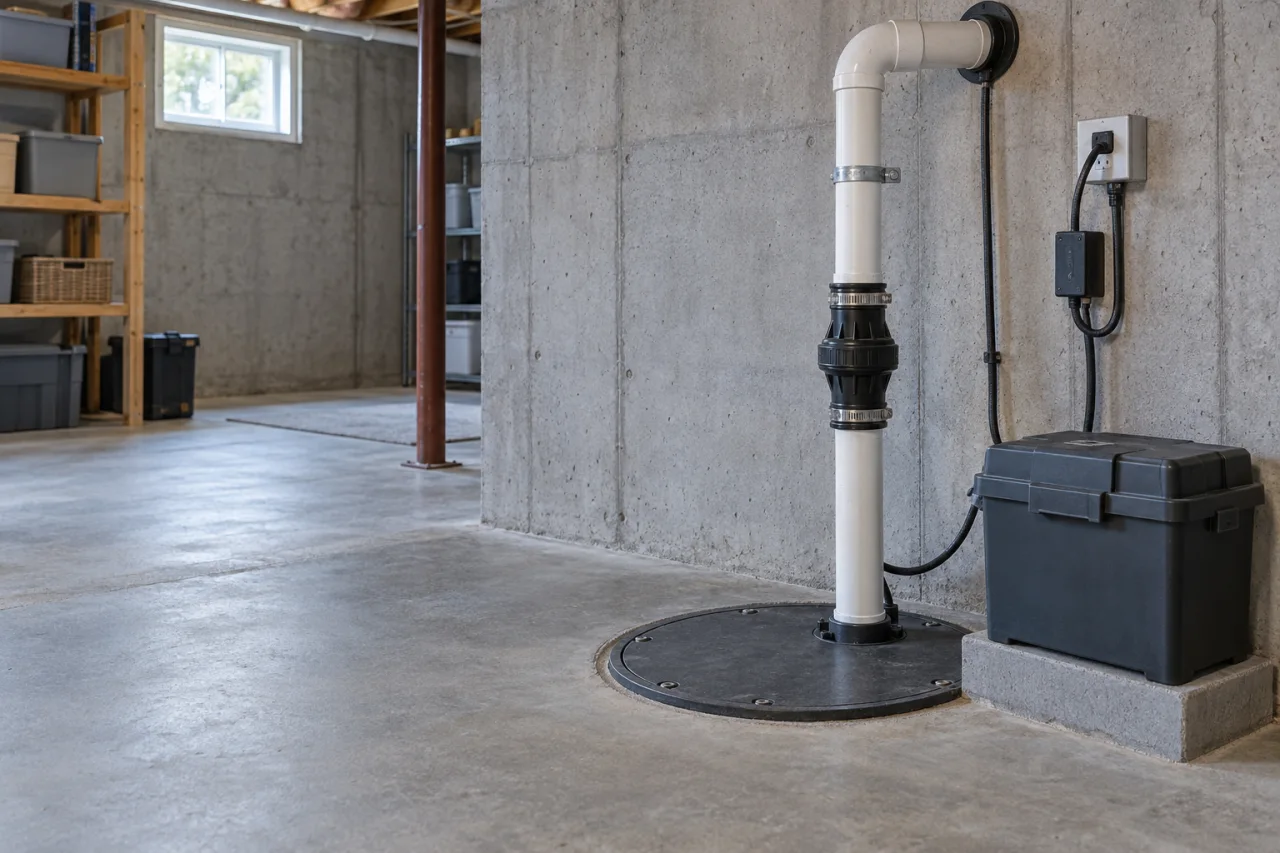
Before Heavy Rain: A Sump Pump Readiness Checklist
A pre-storm sump check starts with dry, safe access. Review debris, float clearance, discharge routing, alarms and backup power—and recognize when to stay out.