Practical guides · maintenance
A Running Toilet: Simple Checks and Signs of a Larger Problem
A toilet that refills on its own may be losing tank water. Learn what a dye test can reveal, why compatible parts matter and when to stop troubleshooting.
What you’ll learn
- Occasional refilling can mean the tank is losing water; the sound alone does not identify a failed part. (assist.kohler.com)
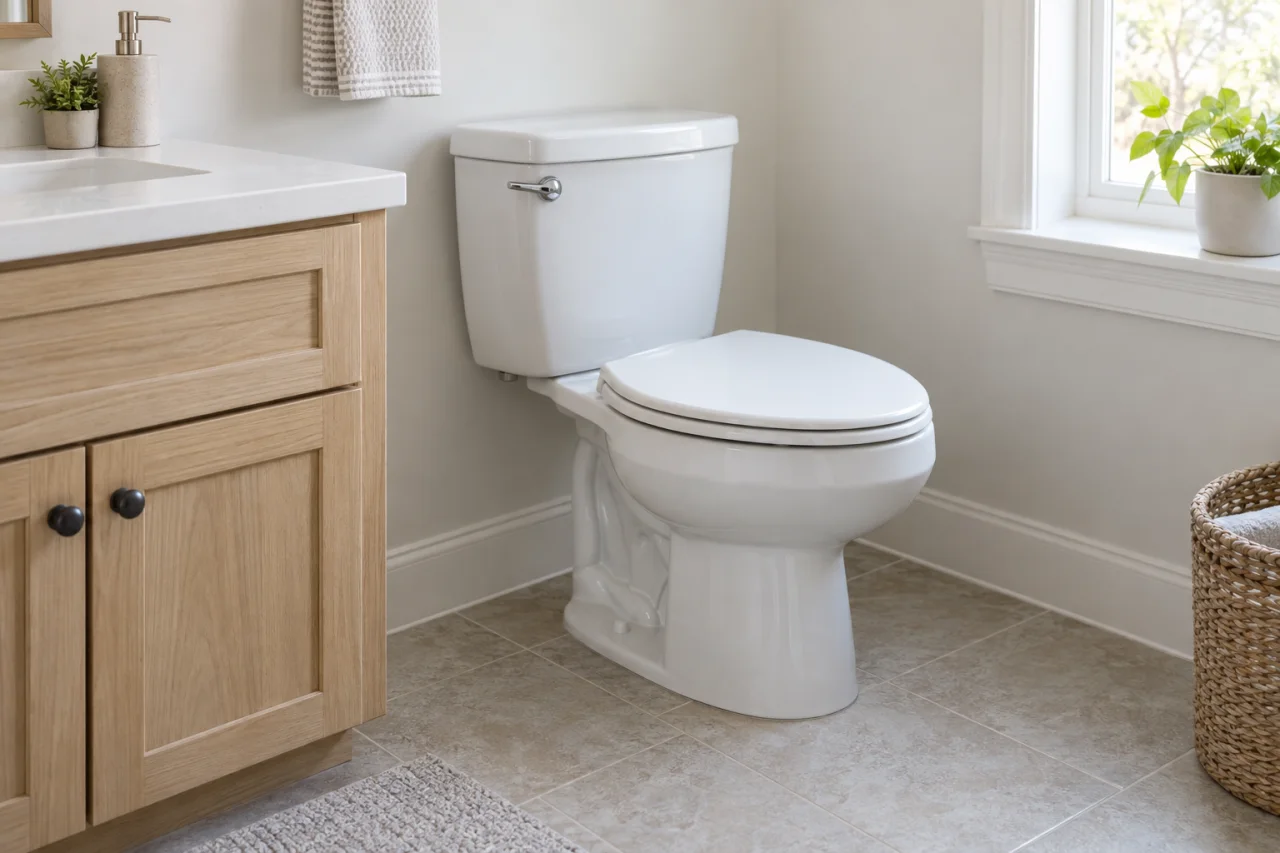
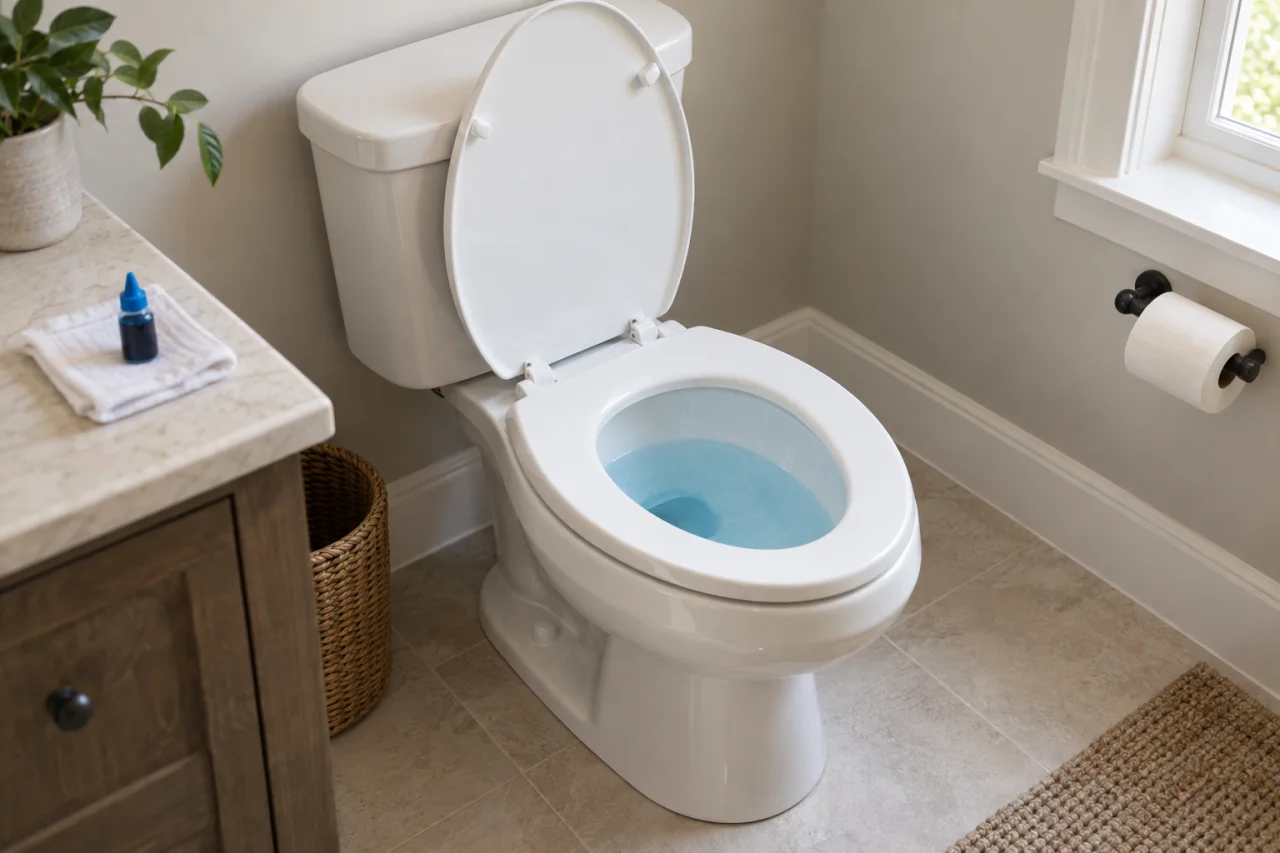
- A 10-minute dye test can reveal tank-to-bowl leakage, but it does not pinpoint the component responsible. (epa.gov)
- Match replacement parts and refill-hose routing to the toilet's model and mechanism. (assist.kohler.com)
- Treat external water, damaged shutoffs and recurring clogs as reasons to stop routine tank troubleshooting and arrange assessment.
A toilet that briefly refills when nobody has used it may be replacing water leaking out of its tank. The fill valve makes the noise, but the underlying problem may be a flapper, canister seal, linkage or water-level issue. Persistent running needs investigation rather than repeated handle-jiggling. (assist.kohler.com)
For a conventional gravity-fed toilet, a few careful observations and a dye test can help you decide what to do next. The aim is not to dismantle the toilet: it is to separate an internal tank leak from external water, an unreliable shutoff or a drainage problem that warrants assessment.
Start with the pattern, not a replacement part
An occasional burst of filling usually means the tank has lost enough water to trigger a refill. That is different from a steady hiss that never stops. Kohler identifies worn flush seals, binding trip levers and water entering the overflow as possible causes of intermittent running—not just a faulty fill valve. (assist.kohler.com)
Observe before adjusting anything. Does the noise begin immediately after flushing, continue indefinitely, or return after the toilet has been quiet? Is the floor dry? The comparison below applies to conventional gravity-fed tanks; it is a starting point, not a diagnosis.
Common running-toilet patterns and what they can—and cannot—tell you.
| What you notice | Possible explanation | Useful next check | Limitation |
|---|---|---|---|
| Brief refills between uses | Water escaping from the tank | Observe the water level and consider a dye test | Does not prove the fill valve or flapper has failed |
| Tank water continuously spills over the overflow opening | Water-level setting or fill-valve trouble | Compare the level with the model's instructions | Adjustment alone will not correct every valve problem |
| Running changes when the handle returns to rest | Binding lever or chain tension | Observe whether the linkage prevents the seal from closing | A worn seal may still leak after the linkage is corrected |
| Refilling persists after a recent repair | Seal fit, adjustment or refill-hose routing | Compare the installation with the exact model instructions | A new part is not proof of correct fit or installation |
Set safe limits before opening the tank
These checks are for an ordinary gravity-fed toilet with accessible tank water. If you find a sealed pressure vessel instead, do not open or dismantle it. Pressure-assisted systems require their own service instructions; Kohler warns that their pressurized contents can cause serious injury. (resources.kohler.com)
Lift a loose ceramic lid carefully and place it flat on a stable, padded surface—not balanced on the toilet seat. EPA notes that tank lids can be heavy and awkward. If lifting it is difficult, leave it in place and request help. (epa.gov)
Before attempting a repair, locate the toilet's water shutoff. If it is damaged, corroded, leaking or resistant to gentle hand operation, stop rather than applying more force. Treat an unreliable shutoff as a reason to arrange assessment before disconnecting parts.
- Keep checks observational if the tank design is unfamiliar.
- Do not force a stuck lid, shutoff or adjustment.
- Do not loosen supply connections while investigating a running sound.
- Stop if you find cracked porcelain or unexplained external water.
Look for a seal that cannot close properly
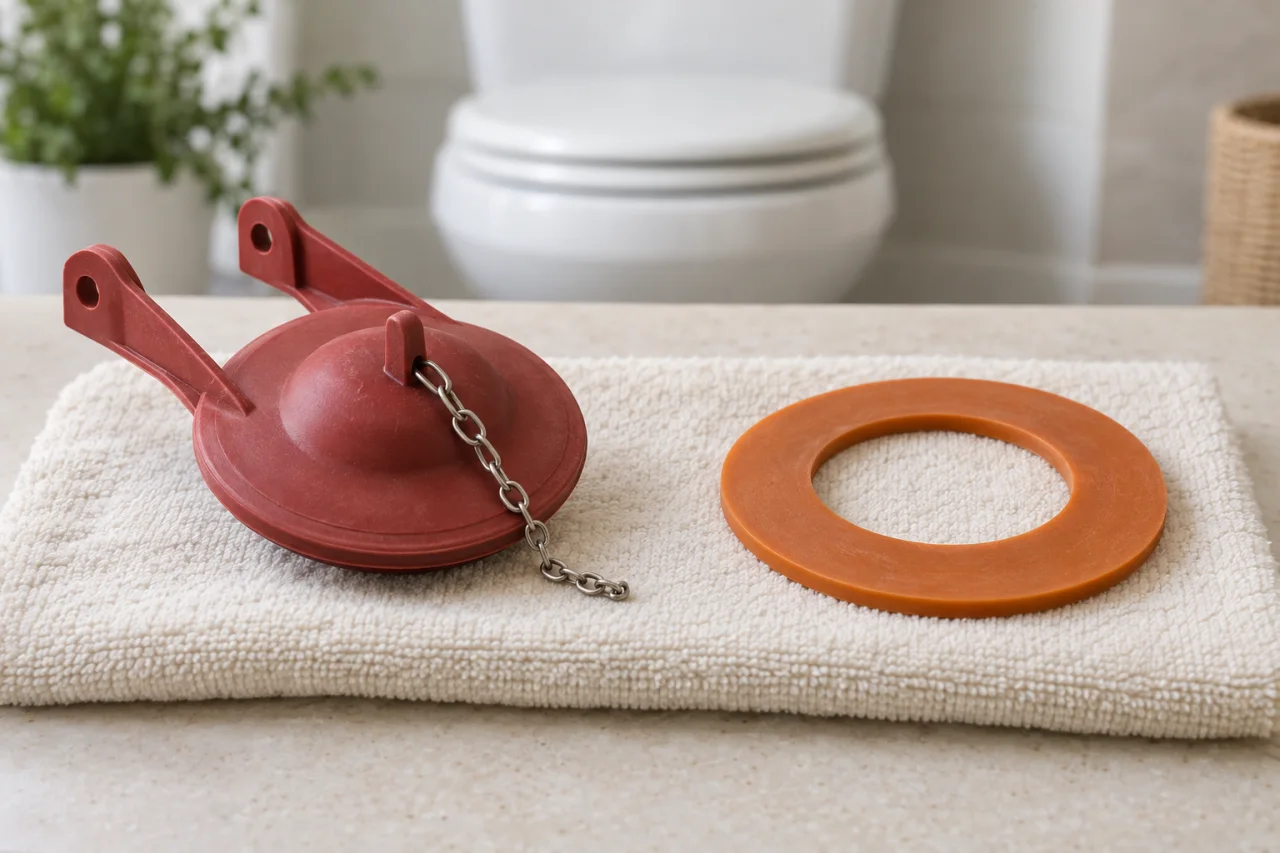
In a flapper-style tank, watch whether the rubber flapper settles fully after a flush. A chain pulled too tight can keep it off its seat; excess chain can interfere with closure. Canister-style toilets use a different sealing arrangement, so do not apply flapper instructions automatically. Follow the model's specified linkage adjustment. (assist.kohler.com)
A dirty or distorted sealing surface is another possibility. Fluidmaster describes wiping debris from the flapper underside and valve seat with a clean cloth. Any hands-on cleaning should follow the applicable instructions with the water safely isolated; do not scrape or modify the seat. A damaged seat may require more than another rubber seal. (m.media-amazon.com)
If moving the handle stops the sound, consider that a clue—not a completed repair. Recheck after normal flushing rather than making handle-jiggling part of everyday use.
Distinguish overflow from a refill-hose problem
Watch where the water goes after the tank should have finished filling. Tank water spilling over the overflow opening differs from water delivered through the small refill hose during a normal refill. Persistent overflow can involve a high water-level setting, debris in the fill valve or a valve that does not shut off. Use the toilet's specified water level, not an arbitrary setting intended to save water. (assist.kohler.com)
The refill hose deserves attention too. Kohler explains that an incorrectly positioned hose can siphon water from the tank. However, routing differs: some non-canister models use a clip, while certain canister models connect the hose to a port on top of the flush valve. Do not push the hose farther into a tube or reroute it by guesswork. (assist.kohler.com)
Cleaning inside a fill valve goes beyond observation. Find the exact instructions first, and leave disassembly to a plumber if the shutoff or procedure is uncertain.
Choose compatible parts and protect the seals
Before buying anything, identify the toilet model and existing flush mechanism. Kohler notes that replacement fill-valve part numbers vary by toilet model. Fluidmaster distinguishes flappers by frame, size and type, including flushing capacity. Similar appearance—or a universal label—is not enough to establish compatibility. (assist.kohler.com)
For a targeted repair, ask whether the problem is limited to a replaceable seal or involves the valve body, seat or another connection. A full repair kit is not automatically the better option if only one compatible component needs attention. For broader fixture decisions, read Choosing Bathroom Fixtures: Materials, Valve Options and Repairability.
Avoid creating another leak through cleaning products. Kohler warns against in-tank cleaners containing chlorine because they can damage fittings and cause leakage. Follow the care instructions for your particular toilet and keep bowl-cleaning products where the manufacturer directs. (resources.kohler.com)
Know when the problem is outside the tank
Water around the toilet base is not the same problem as a silent tank-to-bowl leak. Water may originate from tank fittings, connections or damaged porcelain, so its location on the floor does not establish the source. Stop using the toilet and arrange assessment rather than tightening hardware at random. Porcelain can chip or break when bolts are overtightened. (m.media-amazon.com)
Repeated clogs also deserve a separate investigation. Manufacturer troubleshooting distinguishes poor-flush and blockage issues from running-water symptoms. Do not assume replacing a flapper will resolve recurring drainage trouble; Drain Cleaning may be the more relevant service discussion. (resources.kohler.com)
If the bowl rises instead of draining, do not keep flushing. Stop routine testing and seek help. For active leakage or an uncertain shutoff, consult the guide to plumbing emergency warning signs and safe first steps.
Make the repair conversation specific
For homeowners in West End and Moore County, The Plumbing Knight offers Bathroom Plumbing, including toilet repairs and bathroom plumbing valves. Start the conversation with what you observed, then discuss an appropriate assessment and the proposed work before proceeding.
Ask whether the scope is a seal replacement, valve repair, external leak repair or a drainage investigation. Also ask whether the estimate includes necessary parts and adjustment, and how the repair will be checked afterward. These are planning questions, not reasons to authorize every possible replacement.
Once the issue is resolved, keep the toilet's model information and care instructions handy. EPA recommends checking for silent leaks at least annually; investigate sooner if refilling or persistent running returns. (epa.gov)
- Describe whether running is constant or intermittent.
- Share the dye-test result and any photographs of the tank.
- Mention floor water, shutoff problems, recent repairs and repeated clogs.
- Ask which component is implicated and how replacement compatibility will be confirmed.
- Ask what the proposed work includes before authorizing it.
Questions & answers
Why does my toilet refill when nobody has flushed it?
The tank may be losing water, causing the fill valve to replace it. Possible causes include a worn flapper or canister seal, a binding lever, an incorrect water level or a refill-hose problem. The refill noise alone does not identify which part needs repair. (assist.kohler.com)
Does a positive dye test mean I need a new flapper?
Not necessarily. Color reaching the bowl without flushing confirms water movement from the tank, but it does not pinpoint the failed component. Fluidmaster also cautions that dye testing may miss slow leaks. Match further troubleshooting to the toilet's design. (m.media-amazon.com)
Can I use a universal replacement part?
Only if the part's compatibility information includes your toilet and flush mechanism. Flapper size, frame, attachment and flush-volume settings matter; canister systems use different seals. Check the manufacturer's model-specific parts information before purchasing. (m.media-amazon.com)
Should I tighten the bolts if water appears around the toilet?
Do not tighten bolts blindly. Water can originate above the floor, and excessive tightening can damage porcelain. Stop using a toilet with unexplained external leakage and arrange an assessment rather than assuming the floor seal is the cause. (m.media-amazon.com)
How often should I check for a silent toilet leak?
EPA recommends checking at least annually. Check sooner if you notice unexplained refilling, persistent running or other changes. Follow the toilet manufacturer's cleaning guidance; Kohler warns that chlorine-containing in-tank cleaners can damage fittings and cause leakage. (epa.gov)
Sources & further reading
- U.S. EPA WaterSense: Fix a Leak Week
EPA's food-coloring leak test: wait 10 minutes without flushing, check the bowl for color and flush afterward to avoid staining.
- U.S. EPA WaterSense: Home Maintenance
Annual silent-leak checks and the need to investigate persistent running or overflow symptoms.
- U.S. EPA: Fix a Leak Week Teacher's Guide
Care when removing heavy, awkward toilet tank lids.
- Kohler Assist: Toilet Occasionally Leaking or Running
Intermittent refilling, binding levers, chain adjustment and flapper versus canister sealing arrangements. Guidance applies to the manufacturer's relevant toilet designs.
- Kohler Assist: Toilet Constantly Leaking or Running
Constant-running symptoms, overflow, fill-valve debris, water-level adjustment and model-dependent replacement parts.
- Kohler Assist: Tank Leak—Fill Valve Hose Position
Refill-hose siphoning and different routing arrangements for certain canister and non-canister models.
- Fluidmaster: Flapper Selection and Leak Troubleshooting Guide
Manufacturer-authored flapper selection guidance, dye-test limitations, sealing-surface cleaning and potential internal and external leak locations.
- Kohler: Pressure Assisted Toilets Homeowners Guide
Pressure-assisted vessel safety, porcelain overtightening warnings, chlorine-containing in-tank cleaner risks and the distinction between blockage and running-water troubleshooting. Pressure-assisted service instructions are not presented as gravity-fed repair steps.
Prepared and automatically checked on . Conditions, costs and requirements can change. Ask about the details that apply to your situation.
Continue reading
Helpful next reads
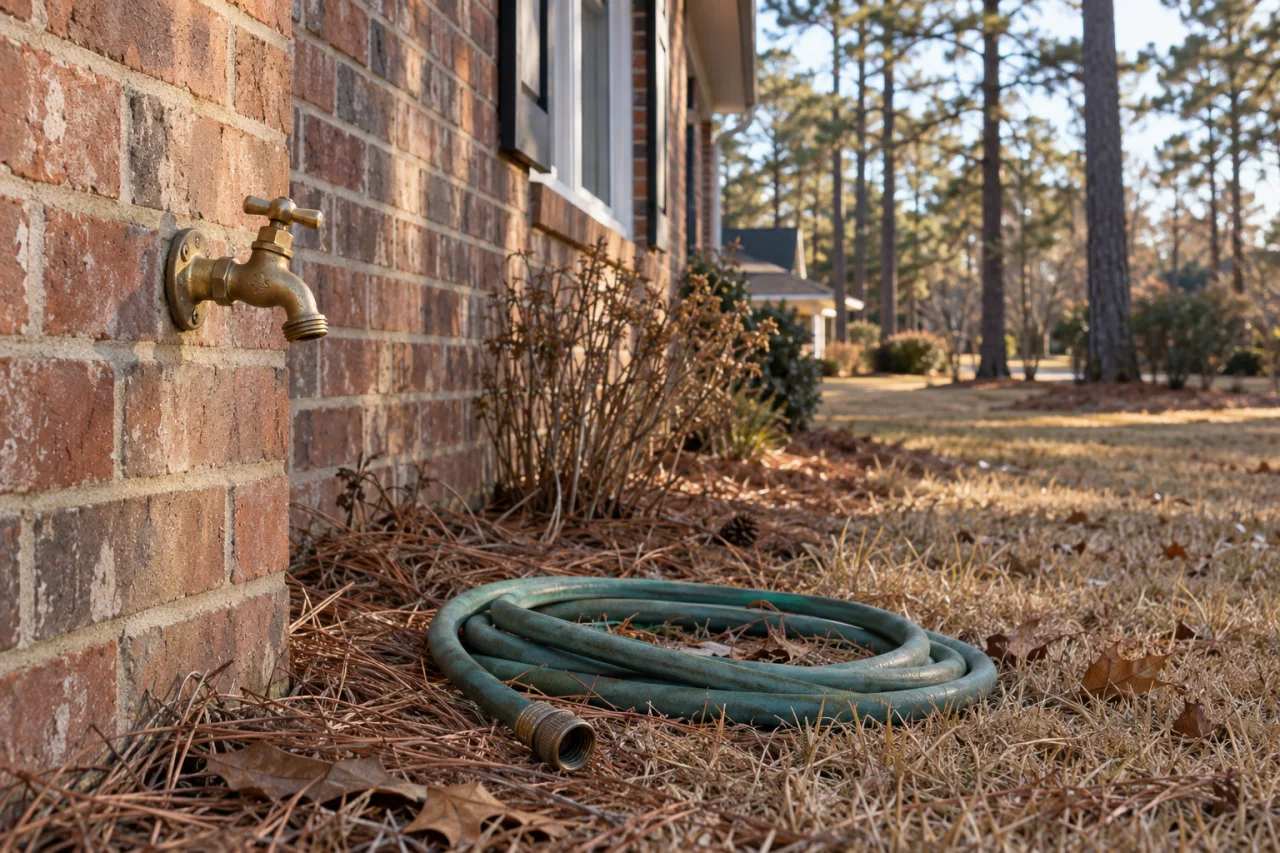
Preparing Moore County Plumbing for a Freeze
A practical freeze-preparation guide for Moore County homes: disconnect hoses, protect exposed supply lines, locate the water shutoff and recognize when suspected frozen pipes need professional help.
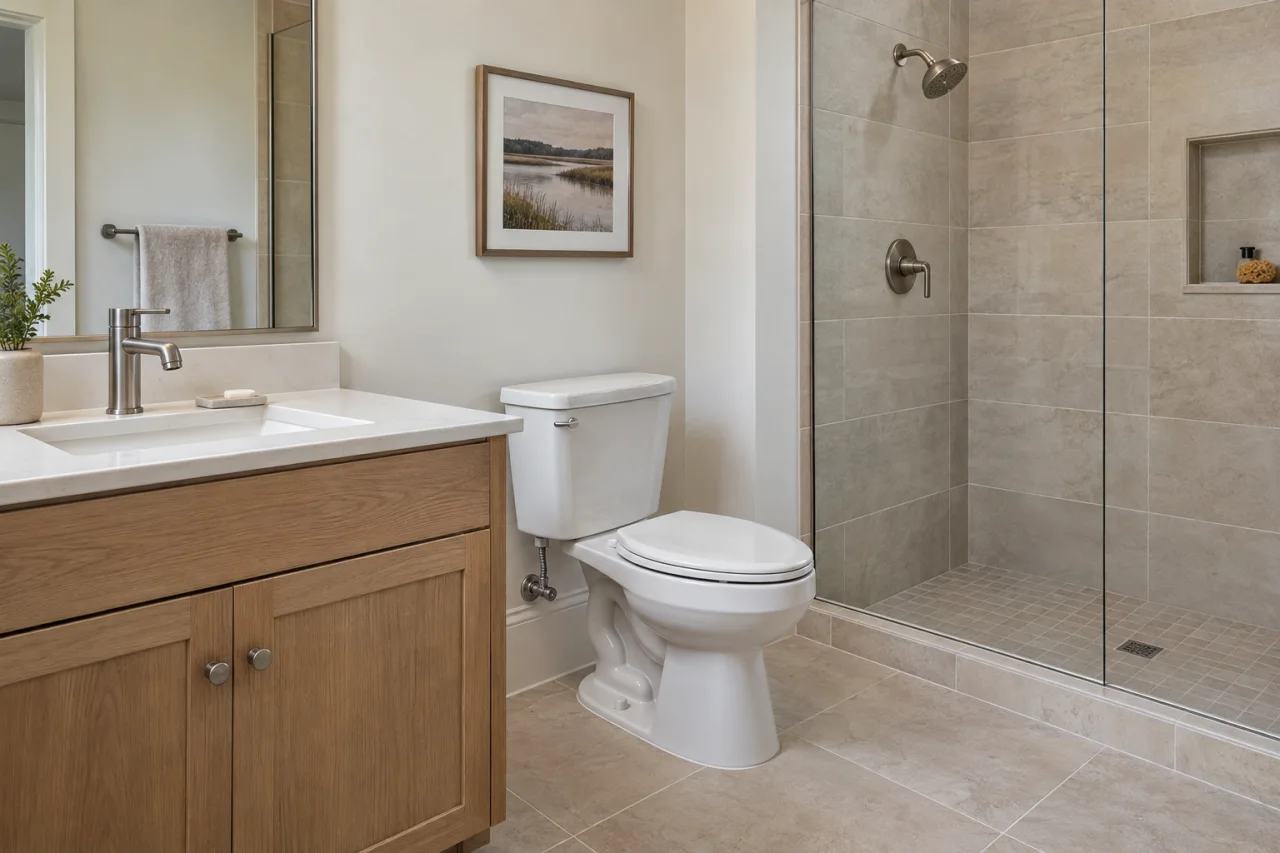
Choosing Bathroom Fixtures: Materials, Valve Options and Repairability
A practical guide to bathroom finishes, toilet construction and valve choices—with the compatibility, cleaning and replacement-part questions worth asking before you buy.
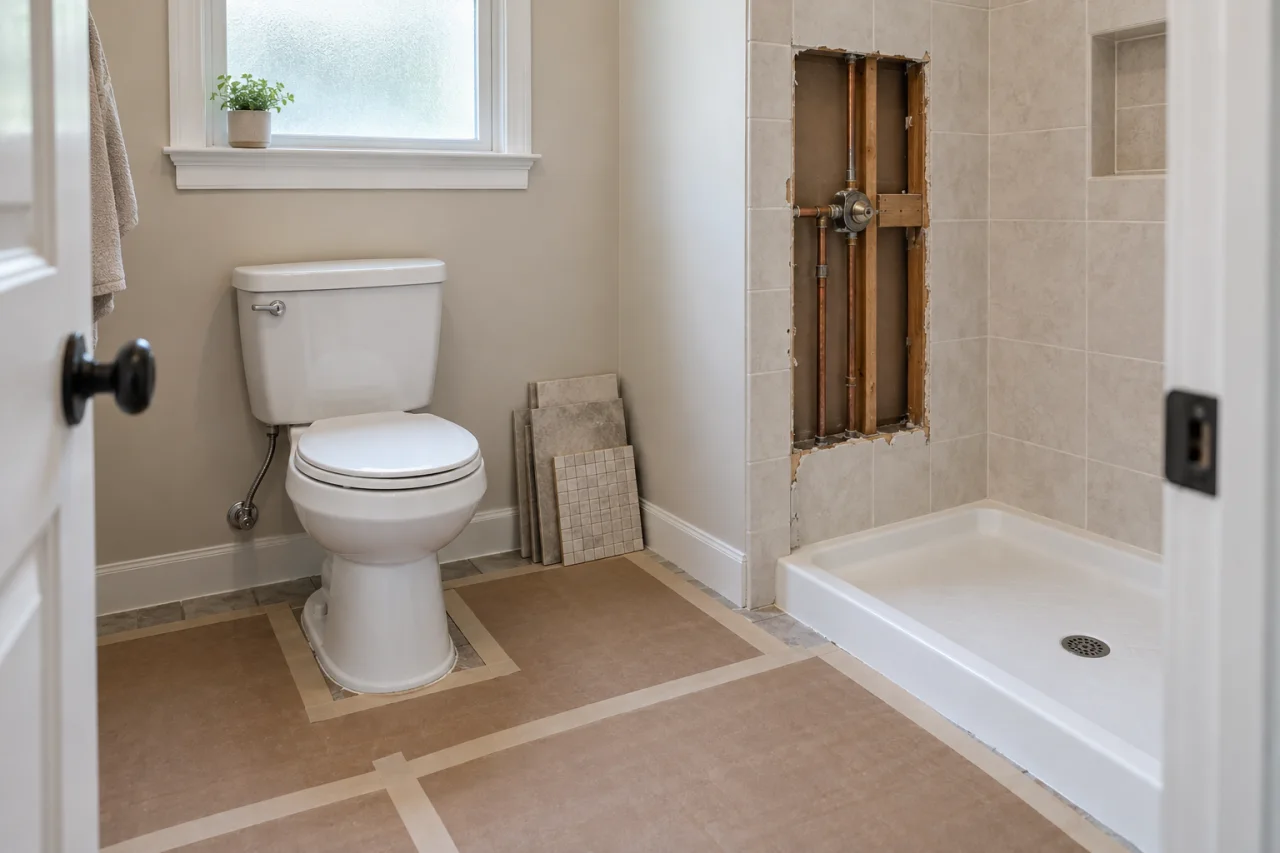
What Changes the Plumbing Cost of a Bathroom Remodel?
Moving a toilet or shower changes more than its position. Learn how drains, vents, valve access, existing piping and finish responsibilities shape a bathroom plumbing estimate.