Practical guides · decision
Repair or Replace a Water Heater? A Practical Decision Guide
A failed control or leaking connection is a different problem from a leaking tank. Learn what to ask before choosing repair or replacement.
What you’ll learn
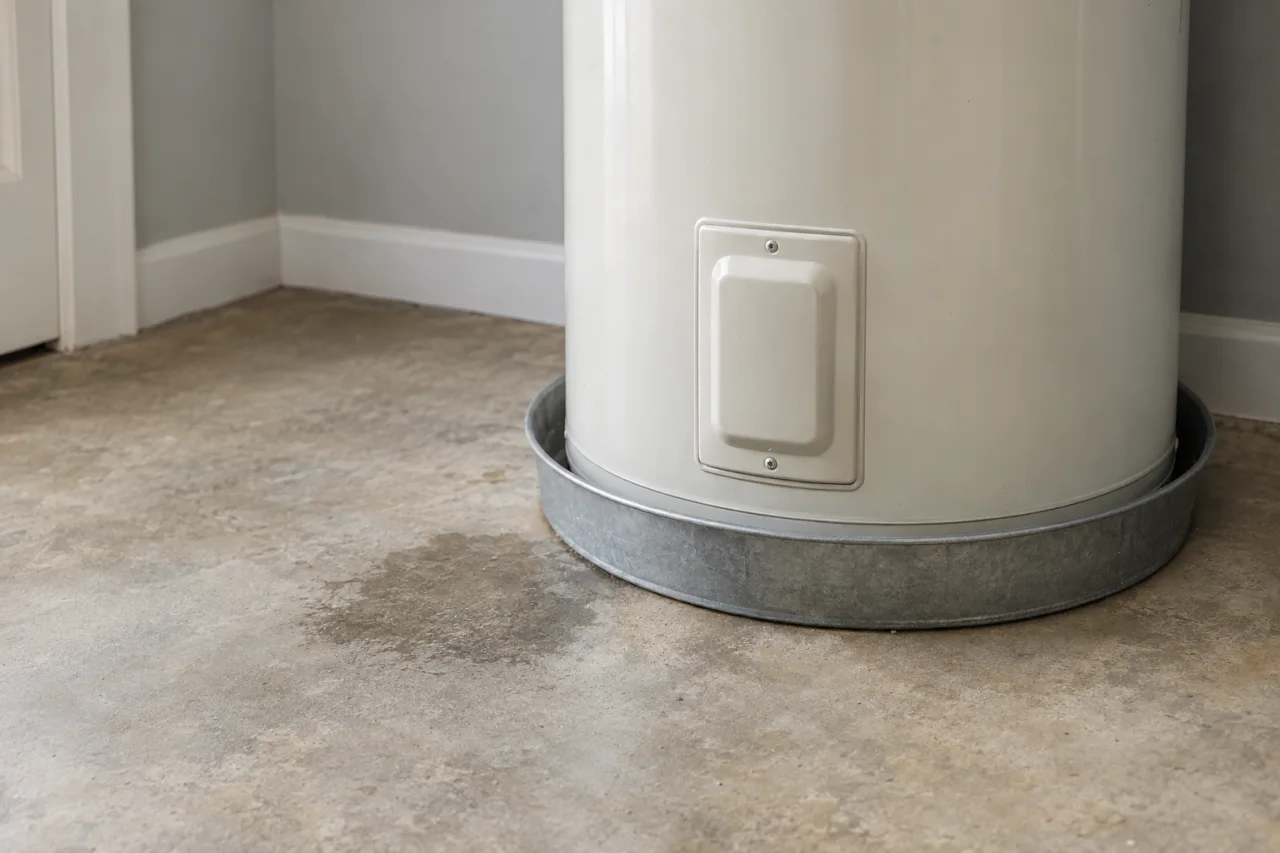
- A puddle does not prove tank failure; connections, valves, gaskets and condensation can produce similar clues.
- Confirmed storage-tank leakage generally points toward replacement, while some control and component faults may be repairable.
- Weigh age with condition, repair history and household demand rather than using a birthday as the diagnosis.
- Verify warranty terms and compare the complete installed scope, including work that coverage may exclude.
- Gas odor, a carbon monoxide alarm, unusual heat or combustion concerns take priority over repair-versus-replacement calculations.
A cold shower or water beside the heater can make replacement feel inevitable. Neither symptom, by itself, tells you what failed. The practical decision starts with identifying the fault, then weighing the heater’s condition, repair history, warranty and ability to meet your household’s needs. For homeowners in West End and across Moore County, this guide separates potentially serviceable problems from tank failure and explains what to ask before approving either option.
First, separate a safety concern from a shopping decision
Some symptoms need attention before any discussion of repair value. If you smell gas, leave immediately and call 911 or the gas supplier from a safe location. Do not operate electrical switches, use a phone inside or try to relight the heater. If a carbon monoxide alarm sounds, move everyone outside, call 911 and stay out until responders permit reentry.
Unexpectedly scalding water, steam, substantial hot discharge from the relief pipe, soot or a damaged vent also call for prompt professional assessment. Do not open electrical compartments, adjust combustion equipment or cap a relief discharge pipe. A safety valve may be responding to excessive heat or pressure rather than simply needing replacement.
Keep clear of standing water near electrical equipment. For broader guidance on urgency, see plumbing emergency warning signs. Safety comes before collecting model numbers or comparing estimates.
Find out what failed before deciding what to replace
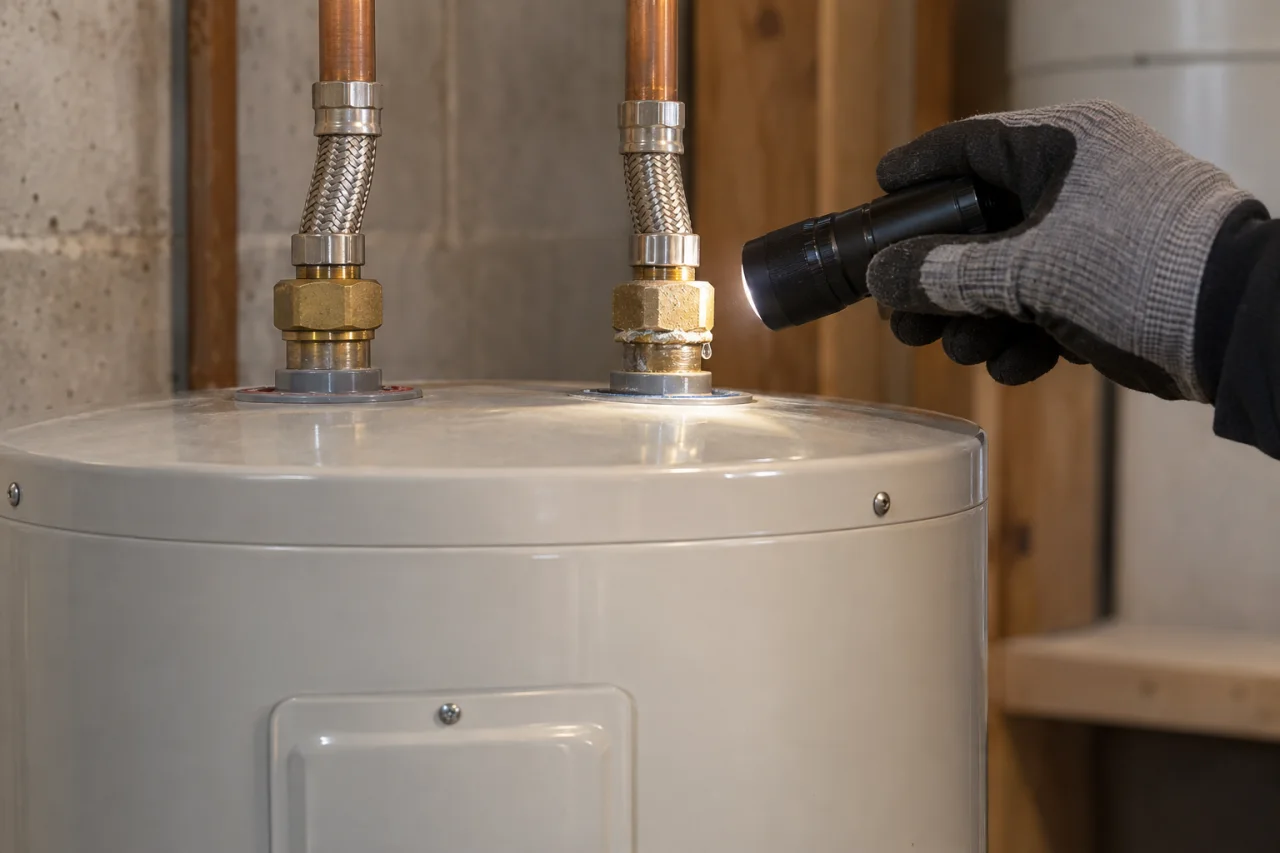
The key distinction is between water escaping from a serviceable component and water escaping from the storage tank itself. A connection, drain valve or electric-element gasket may be repairable. A confirmed tank leak generally means replacing the heater.
Water can run down the jacket before reaching the floor. That makes the wettest spot an unreliable guide to the starting point. Condensation is another possibility, but it should not be assumed without assessment.
This comparison describes possible explanations, not a diagnosis or permission to keep operating a leaking heater.
What common symptoms can—and cannot—tell you
| Observation | Possible direction | Important limitation |
|---|---|---|
| Moisture at a pipe connection or element gasket | A connection or gasket repair may be possible. | Water can travel; confirm its origin and the surrounding condition. |
| Water from the relief discharge pipe | Pressure, thermal expansion, excessive temperature or a valve issue needs assessment. | Replacing the valve alone may not address the cause; never cap the outlet. |
| Reduced hot water from an electric tank | A thermostat, heating element or dip tube may be involved. | Performance testing is needed; the symptom does not prove tank failure. |
| Popping or rumbling | Mineral buildup may be contributing. | Noise does not establish tank integrity or whether maintenance will resolve the problem. |
| Confirmed leak in the storage tank | Replacement is generally indicated. | Distinguish the tank from nearby fittings, valves and condensation first. |
Use age alongside condition and repair history
Age is useful background, not a diagnosis. A newer heater can have a failed component, and an older heater can have a repairable fault. Neither its birthday nor an expired warranty tells you where a leak originates.
Ask what evidence supports the recommendation: a leaking tank, a failed control, a damaged connection or a performance problem? Then consider the broader condition and repair history. One isolated failure presents a different decision from repeated interruptions or several unresolved problems.
A repair is worth discussing when it addresses an identified fault in an otherwise serviceable heater. Replacement deserves a closer comparison when the tank has failed, repairs keep accumulating or the existing equipment no longer meets your needs. These are decision considerations—not a promise of additional years from a repaired unit.
Check whether the problem is performance or demand
Running out of hot water does not automatically mean the heater is worn out. On an electric storage model, thermostat, element or dip-tube problems can reduce delivery. Household demand may also have changed: overlapping showers, laundry and dishwashing create a different load from those uses spread throughout the day.
Before choosing a larger replacement, describe when hot water runs short and whether performance changed suddenly or gradually. For storage heaters, first-hour rating describes delivery over an hour starting with a fully heated tank; tank volume alone is not the whole story.
Tankless selection instead requires attention to simultaneous flow and the temperature rise needed. If you are considering a technology change, start by comparing tank, tankless and heat pump water heaters rather than assuming one format fits every household.
Check the warranty before approving the work
Warranty coverage can change the economics, but “under warranty” does not mean the whole job is covered. Tank and component provisions may differ, and eligibility depends on the specific terms.
Manufacturers may use the serial number and installation documentation to establish coverage. Rheem, for example, provides warranty verification and advises having the serial number ready for service.
Ask separately about labor, removal, disposal, permits, installation materials and necessary modifications. Some manufacturer policies exclude these expenses even when an eligible tank or part is covered. Also verify whether replacement equipment receives a new term or only the remainder of the original coverage. Do not assume either outcome.
- Gather the manufacturer, model and serial number without removing covers.
- Locate the purchase receipt, installation record and previous repair invoices.
- Ask which tank, parts and labor provisions remain applicable.
- Confirm claim requirements before equipment or parts are discarded.
- Request a written explanation of charges that coverage will not pay.
Compare the complete installation, not just the heater
Compare a defined repair with a complete installed replacement—not a repair invoice with a bare equipment price. Ask each proposal to identify the fault or equipment, included labor, removal, connection work and any separate charges or unresolved conditions.
Changing fuel or technology can add scope. A conversion may require electrical work, gas-supply changes or different venting. Heat pump models need a suitable location, adequate air access and condensate disposal; sound and physical dimensions also matter. An existing enclosure should not be assumed suitable for a different heater.
Include expected operating costs and maintenance obligations in the comparison, without treating projected savings as guaranteed. For Moore County households considering a switch, review tankless conversion costs before deciding that a smaller wall-mounted unit necessarily means a simpler installation.
Make maintenance part of either choice
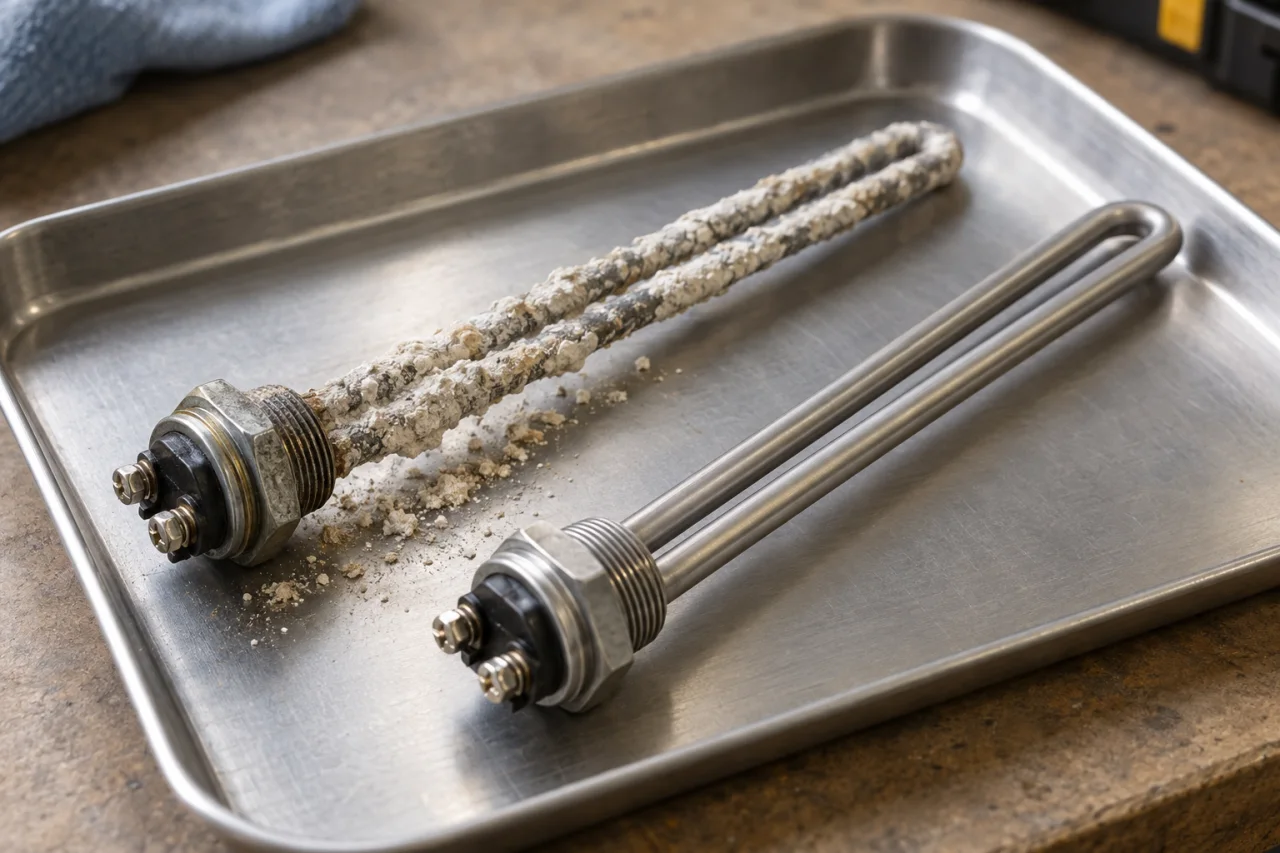
Whether you repair or replace, ask for a maintenance plan tied to the actual model and water conditions. Mineral buildup can contribute to noise and affect heating components. Flushing or deliming is maintenance, not a cure for a perforated tank, and a generic schedule may not match the manufacturer’s instructions.
For fuel-burning equipment, include professional attention to combustion and venting. Do not attempt burner adjustments or treat repeated shutdowns as something to bypass.
Keep the manual, installation date, warranty information and service records together. Ask which maintenance tasks belong to a qualified professional and what changes should prompt another call. That record helps make the next decision based on evidence rather than memory.
Ask for a recommendation you can understand
A useful recommendation should explain the fault, the available remedy and the limitations of each option. If the tank is sound and the problem is isolated, repair may be reasonable. If tank failure is confirmed, the conversation shifts to replacement scope and equipment selection.
The Plumbing Knight provides Water Heaters repair, replacement and installation for West End and Moore County. Start with what you have observed, arrange an appropriate assessment and review the proposed work before proceeding. Bring your symptom notes and service records so the discussion addresses both the immediate problem and how your household uses hot water.
- What component has failed, and how was that established?
- Is the storage tank itself leaking, or is water coming from elsewhere?
- What would the repair address, and what concerns would remain?
- Does the proposed replacement meet our busiest hot-water demand?
- What installation changes, maintenance duties and warranty exclusions should we understand?
Questions & answers
Does water around the bottom always mean the tank has failed?
No. Water can travel down from a pipe connection, valve or element gasket, and condensation can also collect nearby. A confirmed leak in the storage tank points toward replacement, but the puddle alone does not identify its source.
Can an older water heater still be worth repairing?
Yes, when the tank is sound, the fault is isolated and the repair makes sense alongside its condition, history and household demand. Age helps with planning and warranty verification; it does not reveal which component has failed or guarantee remaining service.
Will a warranty make replacement free?
Do not assume so. Coverage depends on the specific warranty and claim eligibility. Equipment or parts coverage may leave charges for labor, removal, permits, installation materials or modifications. Verify coverage and ask for the remaining out-of-pocket scope before authorizing work.
Does popping mean I need a new water heater?
Not necessarily. Mineral buildup can cause popping, crackling or rumbling. The sound warrants assessment, especially if it is new or worsening, but does not by itself establish tank failure. Maintenance should follow the particular model’s instructions.
Should I switch to tankless instead of repairing?
Compare the full conversion scope first. Tankless performance depends on simultaneous flow and required temperature rise, while installation can involve fuel, electrical or venting changes. It is an option to evaluate, not an automatic improvement for every home.
Sources & further reading
- A. O. Smith Technical Bulletin 51: Puddle on Floor
Supports the distinction between condensation, leaking piping, drain valves, element gaskets and tank leakage; states that a confirmed leaking tank should be replaced. Supports the leak discussion, comparison table and leak FAQ. ([hotwater.com](https://www.hotwater.com/info-center/technical-bulletins/bulletin-51.html))
- A. O. Smith Technical Bulletin 52: Leaking Temperature and Pressure Relief Valve
Explains the temperature-and-pressure relief valve’s safety function, pressure-related weeping, excessive-temperature discharge and the difference between threaded-connection leakage and a nonrepairable tank connection. Supports prompt assessment rather than assuming the valve alone is faulty. ([hotwater.com](https://www.hotwater.com/info-center/technical-bulletins/bulletin-52.html))
- A. O. Smith Technical Bulletin 36: Not Enough Hot Water—Electric
Identifies thermostat, lower-element and dip-tube checks as part of assessing inadequate hot-water delivery from electric storage heaters. Supports the serviceable-component discussion and table; its technical test is not presented as homeowner instructions. ([hotwater.com](https://www.hotwater.com/info-center/technical-bulletins/bulletin-36.html))
- A. O. Smith Technical Bulletin 13: Mineral Build-Up
Connects mineral buildup with rumbling, crackling and popping, and describes model-relevant deliming considerations. Supports the maintenance discussion, noise FAQ and illustrative element photograph. ([hotwater.com](https://www.hotwater.com/info-center/technical-bulletins/bulletin-13.html))
- U.S. Consumer Product Safety Commission: Carbon Monoxide Questions and Answers
Supports immediate evacuation, calling emergency services and waiting for permission to reenter when a carbon monoxide alarm sounds. Also cautions against servicing fuel-burning appliances without appropriate knowledge, skills and tools. ([cpsc.gov](https://www.cpsc.gov/Safety-Education/Safety-Education-Centers/Carbon-Monoxide-Information-Center/Carbon-Monoxide-Questions-and-Answers))
- PHMSA: Recognizing and Responding to Pipeline Emergencies
Supports leaving a suspected natural-gas leak area, avoiding electrical switches and phone use within the area, and calling 911 from a safe location.
- Rheem: Warranty and Registration
Provides manufacturer warranty verification and instructs owners to have the product serial number ready when seeking service. Supports the documentation checklist.
- Rheem and Ruud: Summary of United States Residential Water Heater Warranty Policy
Supports model-specific warranty terms, installation-date documentation, exclusions such as permits, removal, disposal, materials and modifications, and circumstances where replacement coverage is limited to the original unexpired term. Used as a manufacturer-specific example, not a universal coverage promise.
Prepared and automatically checked on . Conditions, costs and requirements can change. Ask about the details that apply to your situation.
Continue reading
Helpful next reads
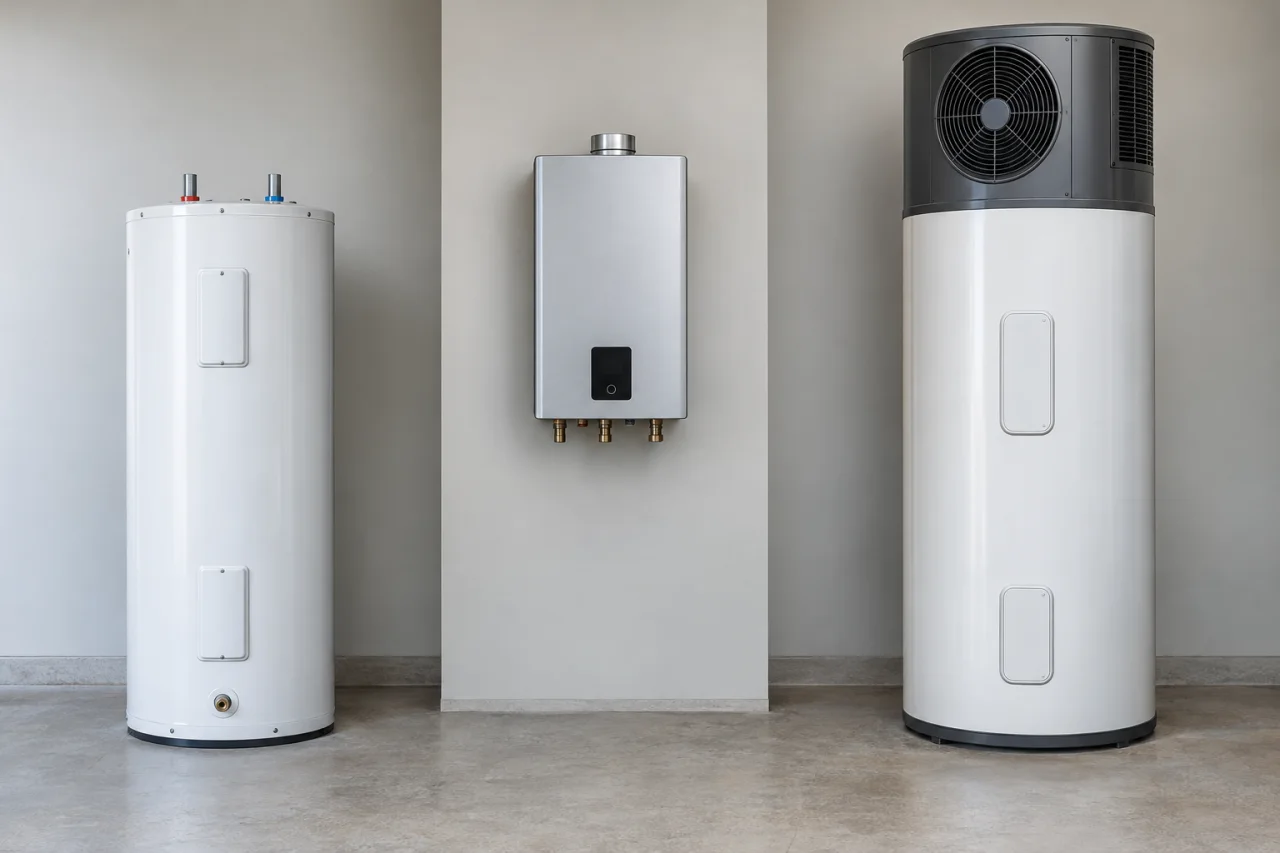
Tank, Tankless or Heat Pump: Comparing Water Heater Options
Choose a water heater around your busiest hot-water period, installation space and existing utilities—not a headline efficiency claim.
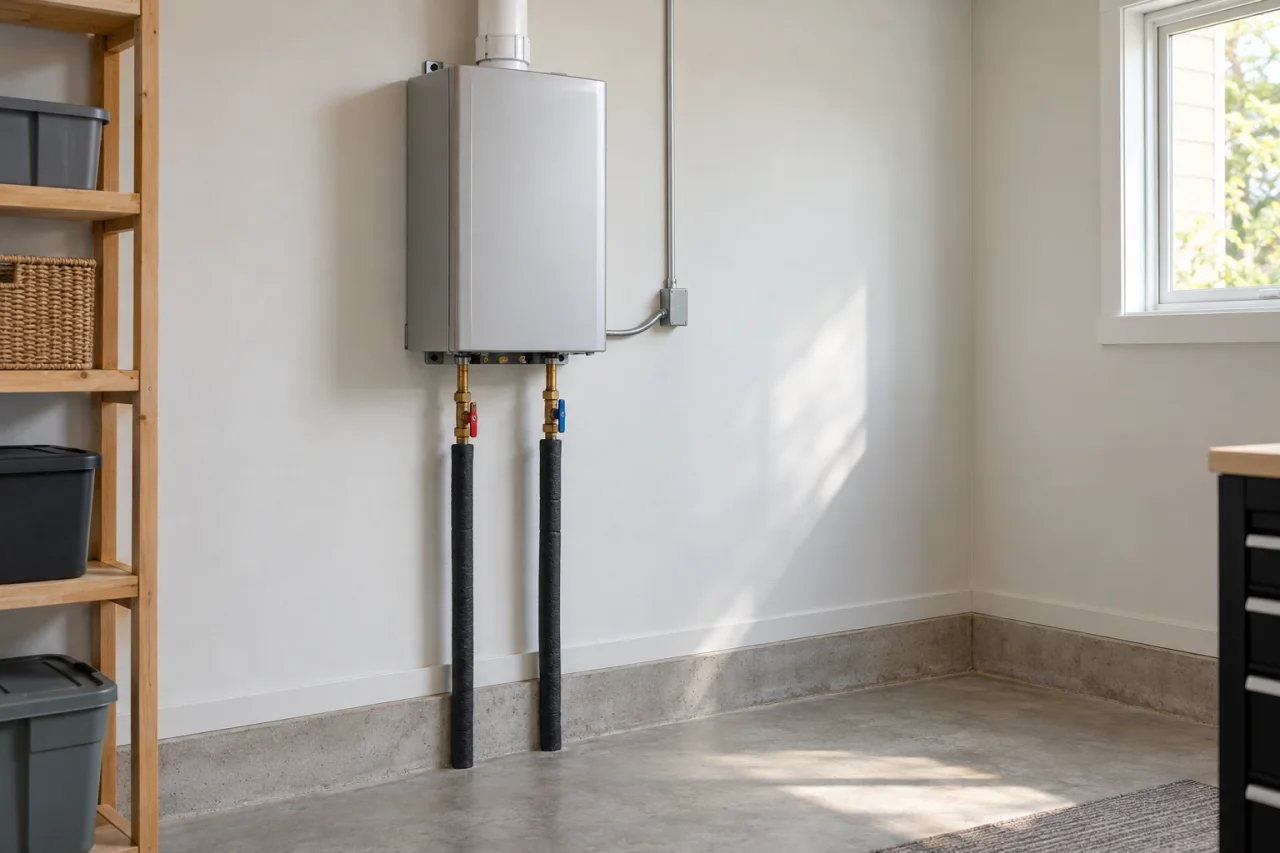
What Adds to the Cost of Converting to a Tankless Water Heater?
The tankless unit is only part of a conversion budget. Understand the supply, venting, drainage, location and comfort decisions that shape the complete installation.