Practical guides · cost
What Adds to the Cost of Converting to a Tankless Water Heater?
The tankless unit is only part of a conversion budget. Understand the supply, venting, drainage, location and comfort decisions that shape the complete installation.
What you’ll learn
- Evaluate the complete conversion, including utility supply, venting, drainage, access and permits—not just the heater.
- Capacity should match simultaneous demand at the required temperature rise, rather than the old tank's gallon size.
- Recirculation addresses delivery time and requires a compatible piping and control arrangement.
- Request exact model-specific warranty terms and include maintenance access in the installation discussion.
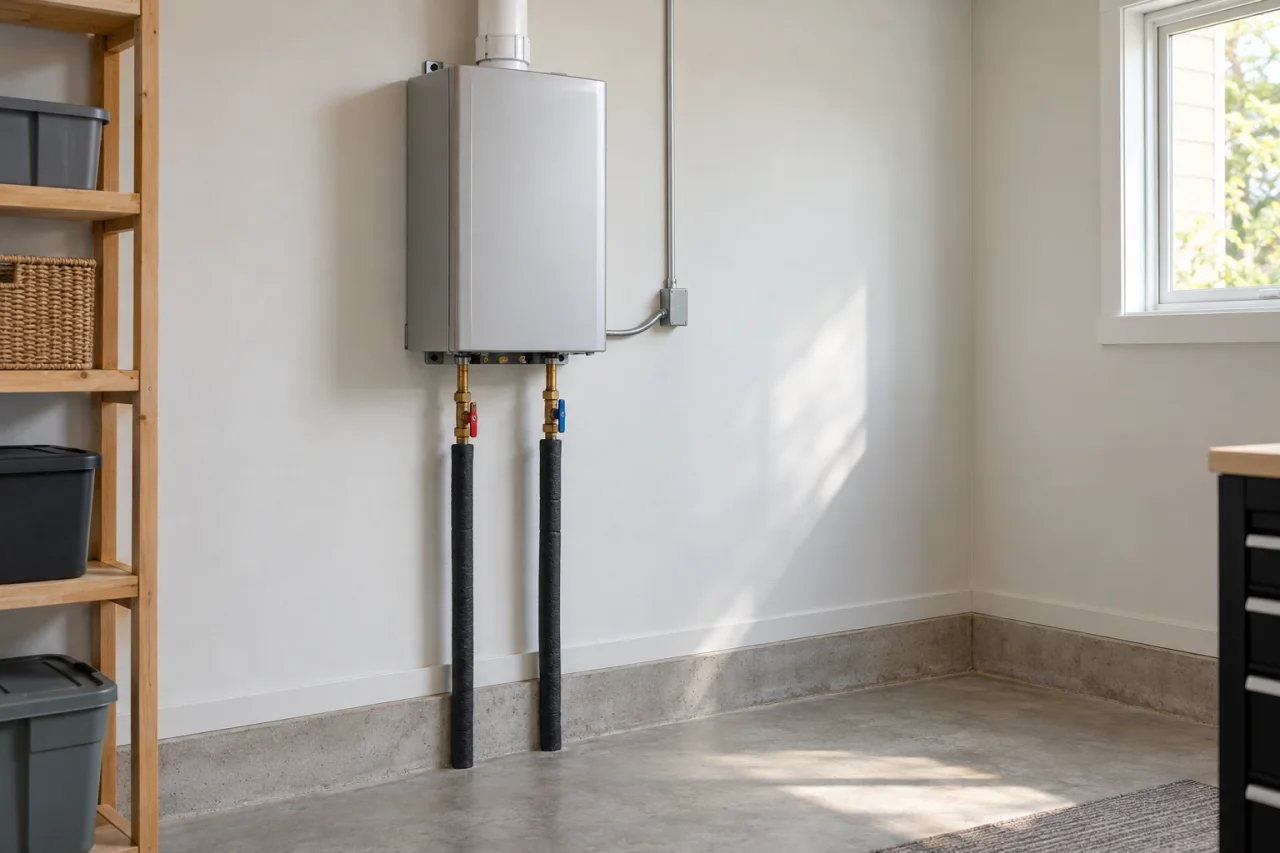
Converting to tankless means more than replacing a tank with a smaller appliance. The important cost question is what your home needs to support the selected heater: adequate energy supply, suitable capacity, approved venting where applicable, drainage and room for future service. For homeowners in West End and Moore County, a useful proposal should make those requirements clear before equipment is ordered. Here is what to evaluate beyond the unit itself—and what to ask when comparing the complete scope.
Start with the complete installation, not the appliance price
Before comparing equipment prices, define what you want to improve: longer showers, overlapping bathroom use, more floor space or a shorter wait at distant fixtures. These are different goals, and a conversion proposal should address the ones that matter to your household.
Ask for the exact model and a written description of what must change around it. A unit-only price is not comparable with a proposal that includes utility modifications, venting, drainage and removal of the old heater.
If the necessary infrastructure changes are substantial, compare tank, tankless and heat pump options before committing. The useful question is not simply which appliance costs less, but which complete installation fits your home and hot-water needs.
Size for overlapping demand and colder incoming water
Tankless capacity depends on simultaneous hot-water demand and temperature rise: the difference between incoming water temperature and the desired delivery temperature. Bedroom count or the old tank's gallon capacity is not enough to select a model.
Describe realistic overlapping uses, such as two showers during the morning routine. Ask which combinations the proposed unit can support under colder incoming-water conditions, not just its largest advertised flow figure. Also ask about minimum activation flow if low-flow fixtures are important.
A useful sizing discussion identifies both the household's priorities and any limits. If the proposed solution involves multiple heaters or changes to fixture use, request an explanation before accepting the added equipment or compromise.
Check the energy supply before choosing the fuel
For gas equipment, existing piping is neither automatically adequate nor automatically too small. Pipe diameter, run length and pressure drop affect delivery. Available supply must also accommodate other gas appliances. Ask whether the proposal includes any necessary piping changes and whether utility-side capacity needs confirmation.
Electric tankless equipment avoids combustion venting, but that does not make it a simple swap for an electric tank. Some whole-house models require multiple dedicated circuits. Have an electrician assess the proposed model's requirements and the home's electrical capacity before purchase.
The comparison below identifies evaluation points, not a ranking of fuels. Neither option can be priced responsibly from the heater alone.
Utility requirements depend on the selected model and existing infrastructure.
| Option | What needs evaluation | Important limitation |
|---|---|---|
| Gas tankless | Evaluate gas delivery and the proposed vent route. | Existing gas piping may be usable, but only when sizing and supply are adequate. |
| Electric tankless | Evaluate dedicated circuits, wiring and total electrical load. | No combustion vent is needed, but existing electrical capacity cannot be assumed sufficient. |

Resolve vent routing and location together
For a gas conversion, request a proposed vent route rather than assuming the old flue can stay. Approved materials, pipe diameter, total length and elbows are model-specific. A route with several turns can present different constraints from a short, direct run.
Location also affects service access, pipe routing and exposure to freezing. Moving the heater may simplify one part of the installation while complicating another. Ask what wall or roof openings, mounting work and finish repairs are included, and who handles anything excluded.
An exterior location is not simply a space-saving shortcut. The selected appliance must allow that installation, and the heater, exposed piping and drainage need an appropriate freeze-protection plan. Discuss how that plan depends on electrical power.
Give condensate a defined destination
A condensing gas tankless heater produces condensate that needs an approved disposal route. Its mildly acidic discharge makes drainage materials and neutralization part of the planning discussion—not an afterthought once the heater is mounted.
Ask where the condensate will go, whether it can drain by gravity and whether a suitable removal pump is needed. A location without convenient drainage can add equipment and routing work. The disposal arrangement must follow the appliance instructions and applicable local requirements.
If a neutralizer is specified, ask how its media will be inspected and replaced. If a pump is specified, ask about access and maintenance. These accessories become part of the system you will own, not just installation supplies.
Choose recirculation for a specific comfort problem
Tankless heating and fast delivery are separate issues. A heater does not eliminate the water sitting between it and a distant bathroom. If waiting at fixtures is your main complaint, discuss the distribution piping as well as the appliance.
Compatible recirculation systems may use a dedicated return pipe or, for certain models, a crossover arrangement. A dedicated return can involve additional piping; a crossover arrangement requires compatible equipment and valves. Ask which fixtures benefit, how the pump is controlled and what the proposed arrangement cannot solve.
Do not assume a built-in pump makes every layout suitable. Have the proposal identify required accessories and control settings. Recirculation configuration can also affect model-specific warranty terms, making it worth resolving before purchase.
Clarify permits and warranty conditions before approval
For a property in West End or elsewhere in Moore County, confirm the permitting authority for the address. The county's trade application lists water heater change-outs, fuel-gas piping and electrical work. That does not establish identical requirements for every conversion or municipality.
Ask who obtains the applicable permits, coordinates inspections and provides access to the work. A conversion involving fuel, input, wiring or vent changes should not be treated as an ordinary like-for-like replacement without confirmation.
Before buying equipment, obtain the exact model's warranty. Ask separately about heat-exchanger, other-parts and labor coverage; authorized purchase channels; maintenance exclusions; and controlled versus continuous recirculation. Keep purchase and installation records. A headline warranty duration is not a promise that every future service expense is covered.
Compare proposals with maintenance and exclusions in view
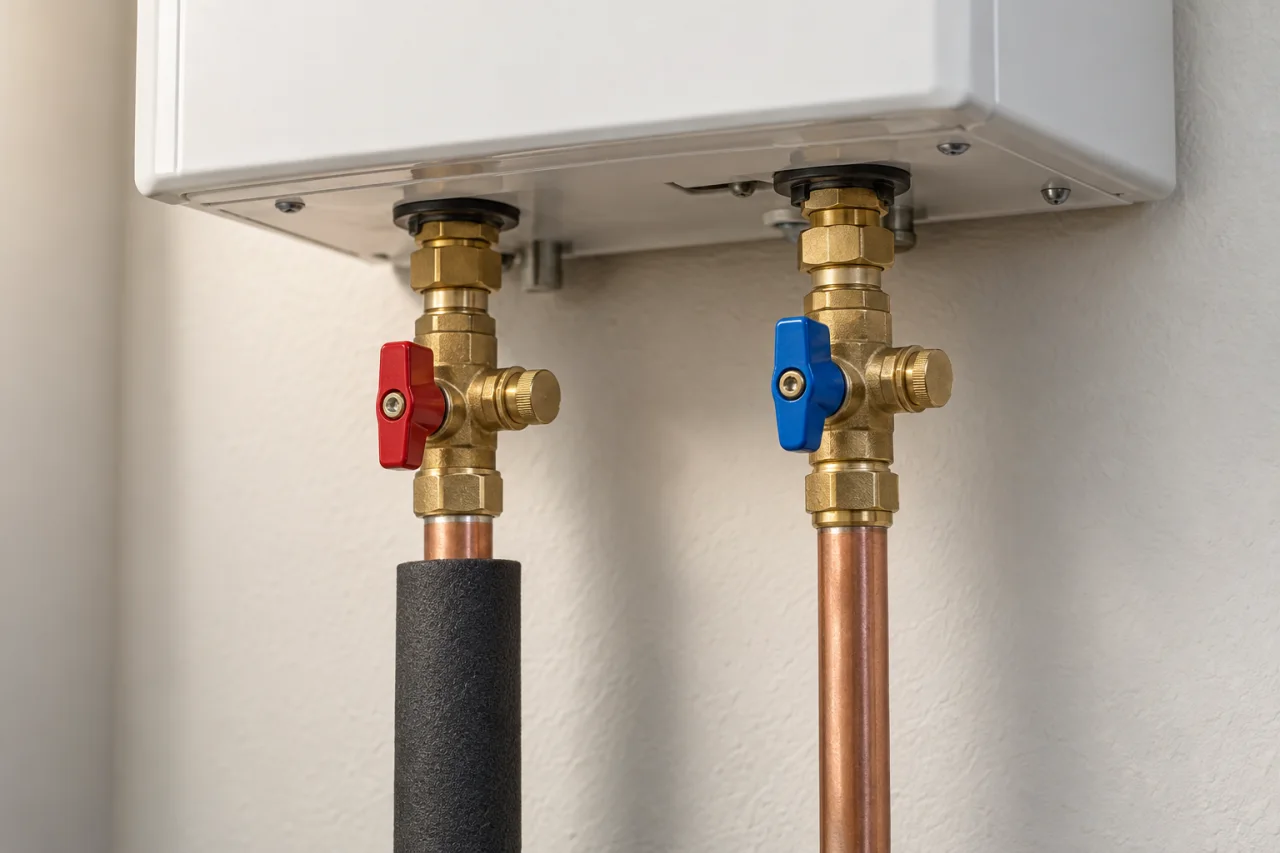
Maintenance access belongs in the initial scope. Ask whether isolation valves and service ports are included, whether filters remain accessible and what water-quality limits apply. Follow model-specific guidance rather than assuming every household needs the same flushing interval or treatment equipment. Our guide to tankless water heater maintenance explains why the manual and water conditions matter.
Use the checklist to compare written proposals on equal terms. Ask which items are confirmed, which remain allowances and what conditions could change the scope.
The Plumbing Knight offers Tankless Water Heaters and Water Heaters for West End and Moore County. When discussing a conversion, bring your current heater information, the comfort problem you want solved and your questions about the complete installed scope.
- Identify the exact model, fuel and expected simultaneous hot-water uses.
- Separate required utility, venting and drainage work from optional comfort upgrades.
- Confirm removal, disposal, mounting, pipe insulation and any finish-repair exclusions.
- Name the party responsible for applicable permits and inspections.
- Request the maintenance requirements, warranty documents and proposed startup scope.
Questions & answers
Does converting to tankless always require a larger gas line?
No. Pipe length, diameter, pressure drop and available supply determine suitability. Some models permit existing piping under specified conditions. Ask for an evaluation of the proposed appliance and the home's other gas loads rather than assuming either replacement or reuse.
Can an electric tankless heater use my existing water heater circuit?
Do not assume so. Some whole-house electric tankless models require multiple dedicated circuits. An electrician should evaluate the exact model, wiring requirements and available electrical capacity before equipment is purchased.
Will tankless give me instant hot water at every faucet?
Not by itself. Water already in the distribution pipes still has to move before newly heated water arrives. A compatible recirculation arrangement can reduce waiting, but its suitability depends on the piping layout, controls and appliance requirements.
Should a conversion quote include permits?
It should identify which permits and inspections apply, who obtains them and whether their costs are included. Moore County's trade application includes water heater change-outs and fuel-gas piping, but the correct requirements should be confirmed for the property's jurisdiction and complete conversion scope.
Does the longest advertised warranty cover the entire installation?
Not necessarily. Heat-exchanger, other-parts and labor coverage may have different terms. Ask about exclusions, purchase-channel restrictions, recirculation conditions, maintenance obligations and any costs outside the manufacturer's coverage.
Sources & further reading
- Building America Solution Center: Gas-Fired Tankless Water Heaters
Tankless sizing by simultaneous flow and temperature rise; minimum flow considerations; sufficient gas supply; electric equipment's lack of combustion venting; condensate disposal and neutralization; distribution piping and maintenance-access considerations. Historical prices and savings figures are not used.
- Navien: NPE-A2 Frequently Asked Questions
NPE-2 gas delivery depends on pipe sizing, length and pressure drop; existing infrastructure may be usable when adequate; vent materials, length and elbow limitations are model-specific; outdoor installation requires attention to manufacturer guidance.
- Stiebel Eltron: Tempra Trend and Tempra Plus Operation and Installation Manual
Dedicated electrical branch circuits, model-specific wiring requirements and multiple independent circuits for certain Tempra whole-house electric tankless models.
- Rinnai: Residential Condensing Tankless Water Heater Installation and Operation Manual
Model-specific dedicated-return and crossover recirculation arrangements; compatible valve and control requirements; location and service clearances; freeze protection's dependence on utilities; water quality, isolation valves and heat-exchanger maintenance.
- Navien: NPE-A2 Warranty Information
Separate limited-warranty treatment of labor, parts and heat exchanger; controlled versus uncontrolled recirculation; purchase-channel restrictions; installation and maintenance exclusions; proof-of-purchase and installation-date requirements.
- Moore County: Individual Trade Permit Application Packet
Moore County's trade-permit application categories include water heater change-outs, fuel-gas piping and electrical work; the packet addresses contractor information and inspection access. It does not establish permit requirements for every conversion.
- Axiom Industries: NT1-P Condensate Neutralization Tank With Pump
Condensate neutralization and removal pumps are available as combined equipment; accessory selection and replacement neutralizing media are relevant ownership considerations.
- Building America Solution Center: Gas Tankless Water Heater Checklist
Planning a gas tankless installation includes sizing, manufacturer-compliant installation, drainage protection, accessible pipe insulation and attention to an abandoned chimney connection.
Prepared and automatically checked on . Conditions, costs and requirements can change. Ask about the details that apply to your situation.
Continue reading
Helpful next reads
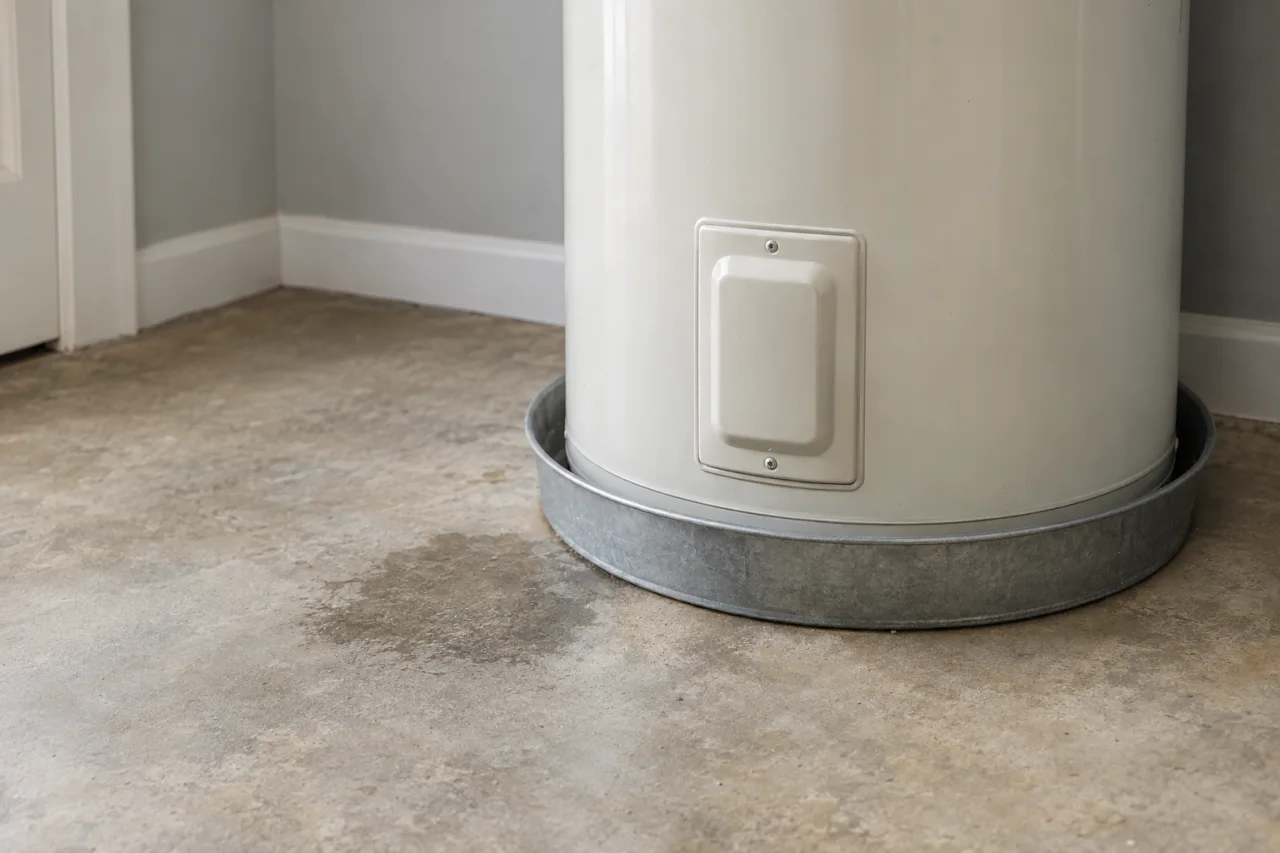
Repair or Replace a Water Heater? A Practical Decision Guide
A failed control or leaking connection is a different problem from a leaking tank. Learn what to ask before choosing repair or replacement.
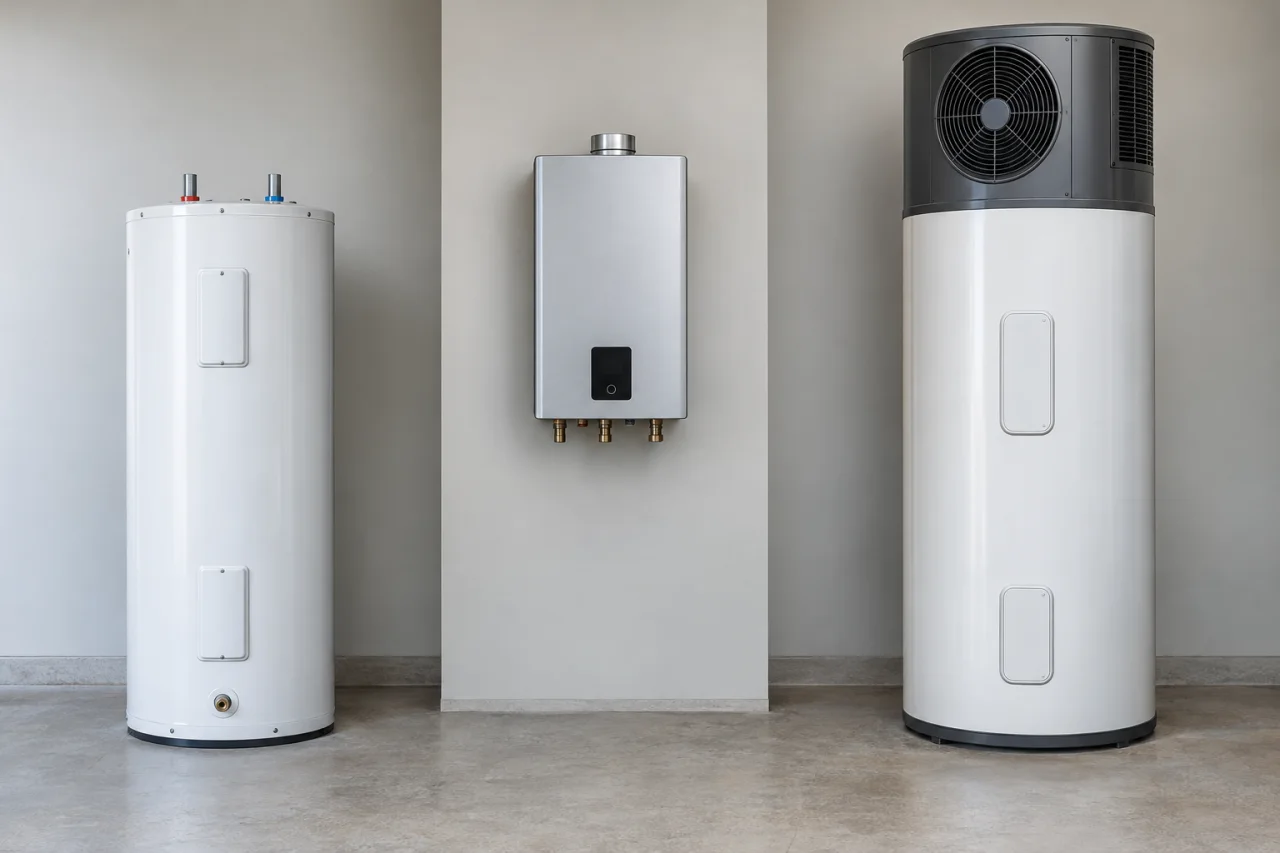
Tank, Tankless or Heat Pump: Comparing Water Heater Options
Choose a water heater around your busiest hot-water period, installation space and existing utilities—not a headline efficiency claim.
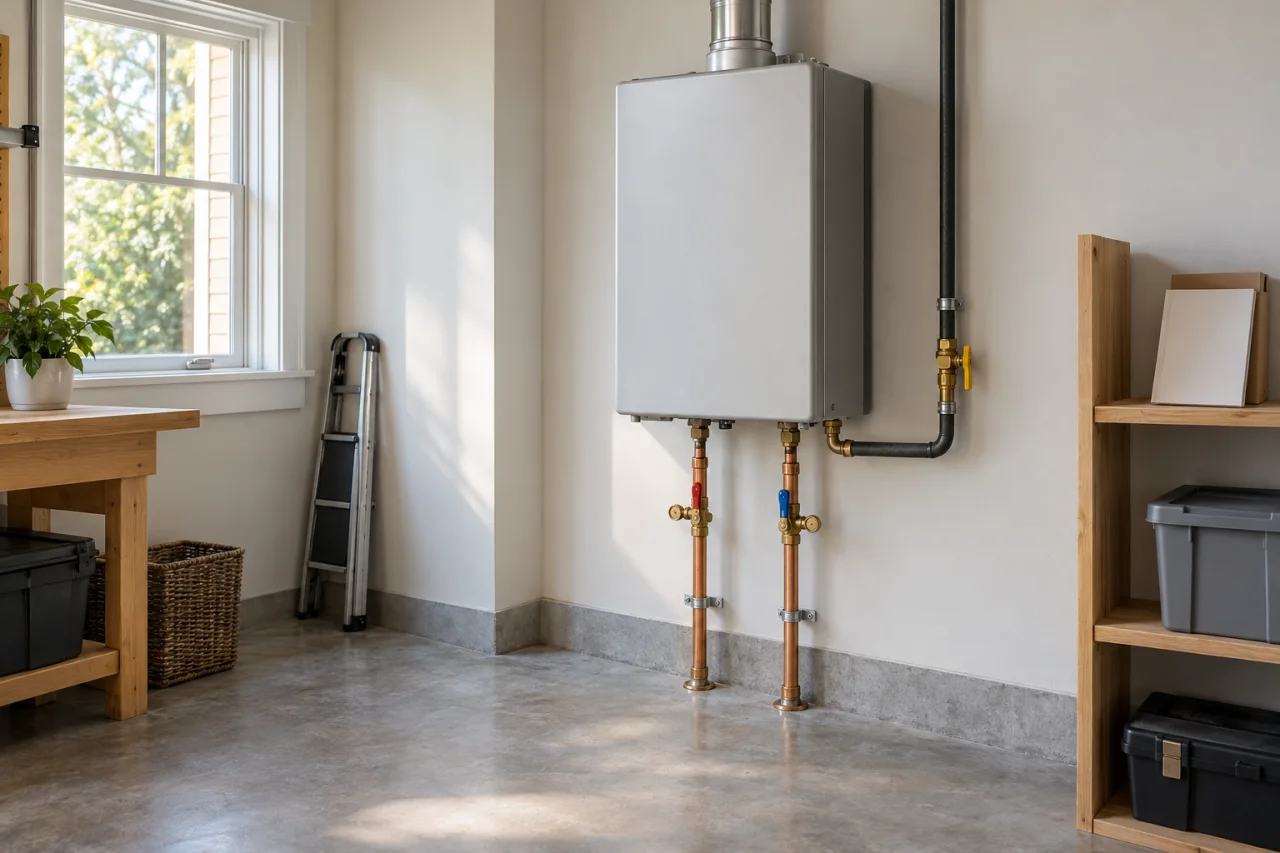
Tankless Water Heater Maintenance: Why Water Quality and the Manual Matter
The right tankless maintenance plan depends on the exact heater, the water entering it and its service history. Learn what to check, what to ask and where professional work begins.