Practical guides · comparison
Tank, Tankless or Heat Pump: Comparing Water Heater Options
Choose a water heater around your busiest hot-water period, installation space and existing utilities—not a headline efficiency claim.
What you’ll learn
- Conventional and heat pump storage heaters should be compared by first-hour rating and recovery, not tank volume alone.
- Tankless sizing depends on simultaneous flow and temperature rise; sustained supply does not mean unlimited output.
- Heat pump units need suitable airflow, temperatures, drainage and service access.
- Compare complete installation scope, household utility costs and model-specific maintenance before deciding.
The right water heater is the one that can meet your household’s demand in a location your home can support. A conventional tank, tankless heater and heat pump water heater solve that problem differently. For homeowners in West End and Moore County, the useful comparison starts with overlapping showers and appliances, available utilities and installation space—not a promise of endless hot water or automatic savings.
Understand what each option actually changes
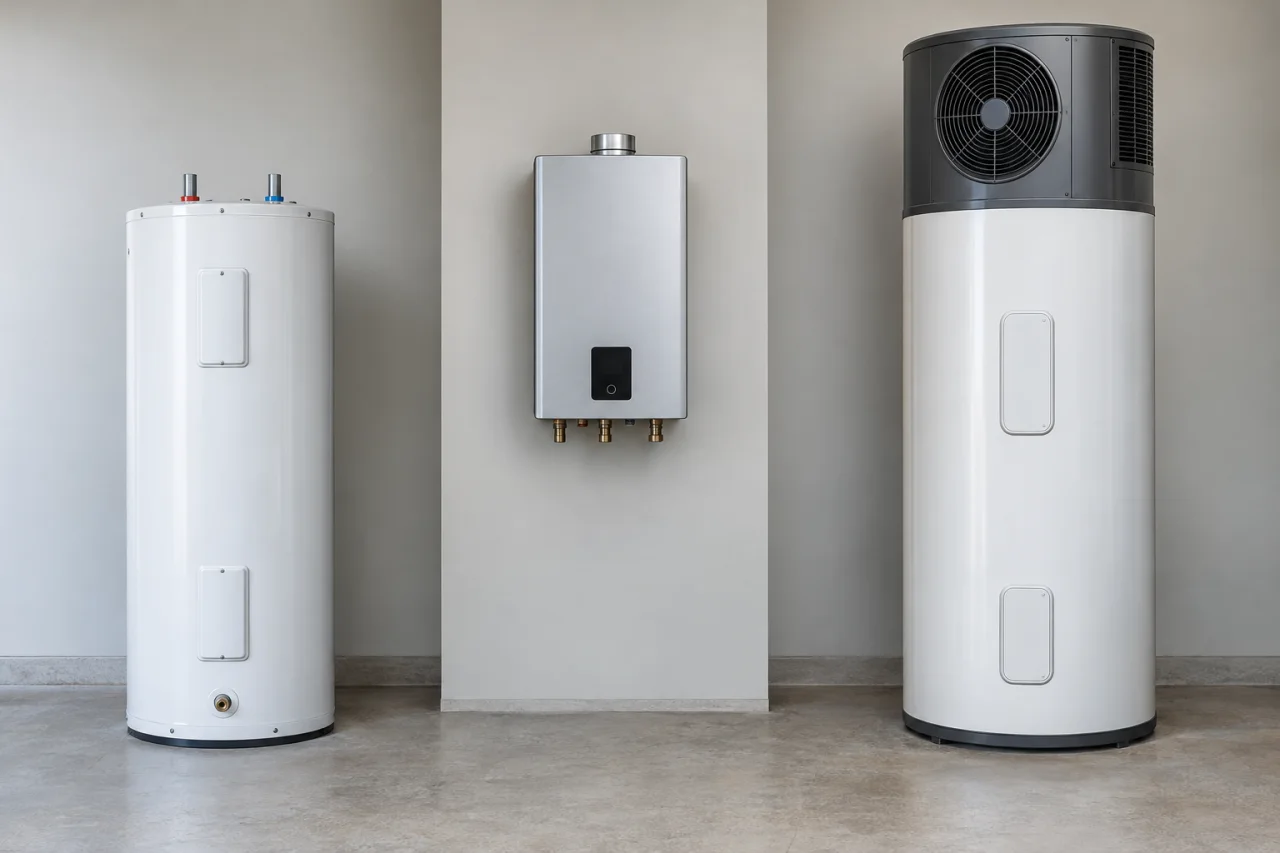
The first distinction is storage versus on-demand heating. Conventional gas and electric heaters keep a tank ready for use. Tankless equipment heats flowing water. Most residential heat pump water heaters also store water, but move heat from surrounding air into the tank rather than relying only on a burner or electric resistance elements.
Use this comparison to narrow your choices, not to select a model. Equipment capacity and the installation location can change which option makes sense. If replacement is not yet certain, first consider whether to repair or replace a water heater.
Water heater options: useful applications and important limitations
| Option | Benefits | Applicability and tradeoffs |
|---|---|---|
| Conventional storage: gas or electric resistance | Stored hot water supports short bursts of demand. | Useful when stored capacity suits the household. Supply is finite, recovery matters and stored water loses heat between uses. |
| Gas tankless | Heats on demand without maintaining a large hot-water tank. | Useful for extended use within its output limit. Gas capacity, venting and possibly condensate drainage affect installation scope. |
| Electric tankless | Compact equipment without combustion venting. | Worth considering when flow requirements and electrical capacity align. Required circuits and service capacity vary substantially by model. |
| Integrated heat pump storage | Uses surrounding heat to heat stored water efficiently. | Worth considering where airflow, temperature and drainage are suitable. Needs tank space; resistance backup can increase energy use. |
Start with your busiest hot-water period
Household size is a starting point, not a sizing calculation. Two households with the same number of people may have very different needs if one staggers showers while the other uses several bathrooms together.
Write down your busiest realistic hot-water period. Include laundry and dishwashing where they overlap with bathing. Separate insufficient hot-water supply from slow delivery through the pipes: replacing equipment does not automatically solve both problems.
Bring this description to the equipment discussion. It is more useful than asking for the same tank size as before or the largest tankless model available.
- Which showers, faucets and appliances normally overlap?
- Does the busiest period involve consecutive showers, simultaneous showers or filling a bath?
- Are guests or planned bathroom changes likely to increase demand?
- Does the current heater run short, or is the main complaint waiting at a distant faucet?
Size storage heaters by first-hour delivery and recovery
For conventional storage and heat pump tanks, compare first-hour rating, not just gallons on the nameplate. First-hour rating describes how much hot water a unit can deliver in one hour, starting with a fully heated tank. It accounts for both stored water and reheating during that hour.
Recovery describes replenishing heated water after a draw. A tank that handles one large use may still struggle with another immediately afterward. Ask how the proposed model matches your peak-hour demand and repeated draws.
For heat pump equipment, ask which operating mode supports the quoted performance. Many hybrid models use resistance elements to help meet high demand. Heat-pump-only operation is more efficient but generally recovers more slowly. Adequate storage can reduce reliance on resistance backup; it does not make capacity unlimited.
Size tankless heaters by flow at the required temperature rise
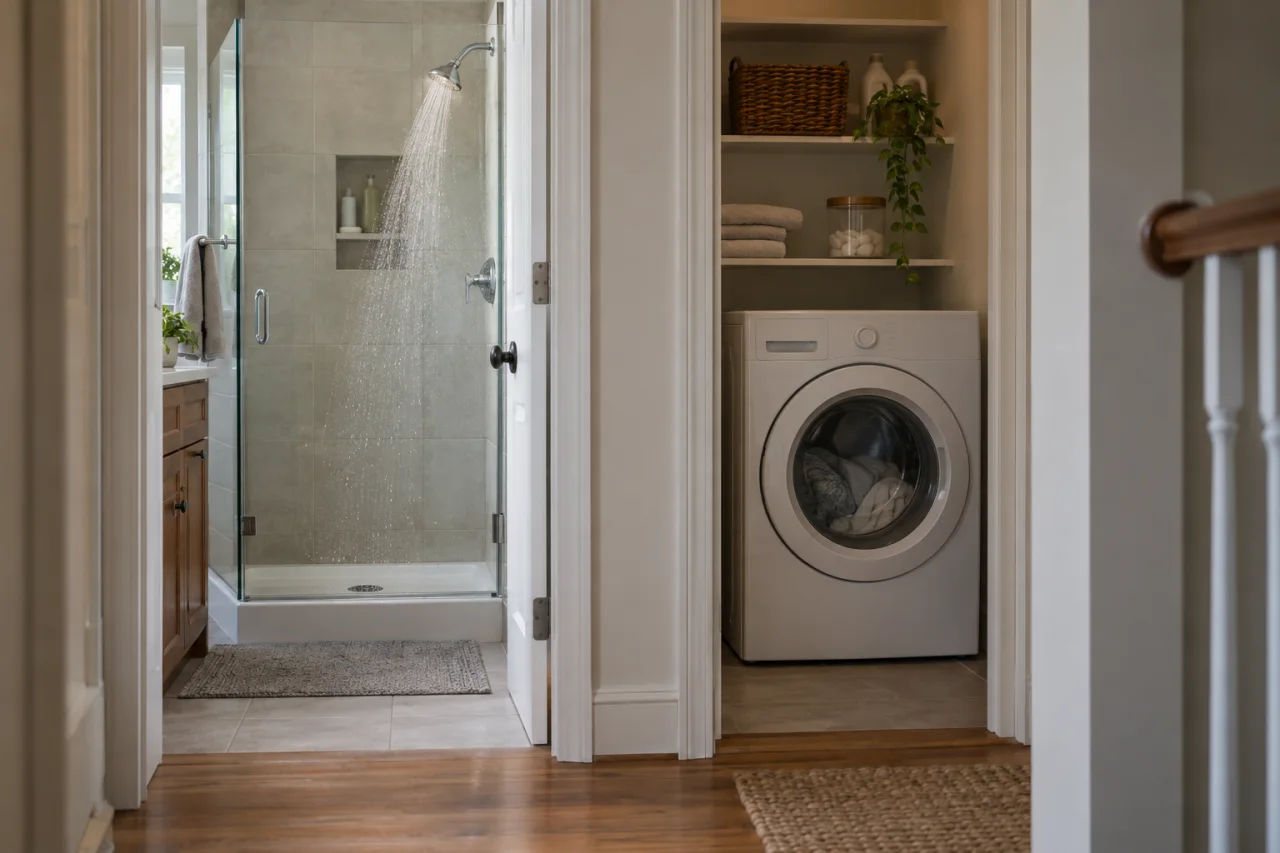
Tankless Water Heaters require a different calculation: simultaneous hot-water flow at the temperature rise the equipment must provide. Flow is measured in gallons per minute. Temperature rise is the difference between incoming water temperature and the required outlet temperature.
A headline maximum flow rate is incomplete without its temperature-rise condition. Colder incoming water requires more heating, so check the manufacturer’s performance data for winter conditions and the fixtures expected to run together.
Ask about minimum activation flow as well as maximum output. Very small draws may behave differently between models. Also distinguish sustained supply from instant delivery: tankless equipment does not remove the water sitting in a long pipe to a bathroom.
Give heat pump equipment a suitable location
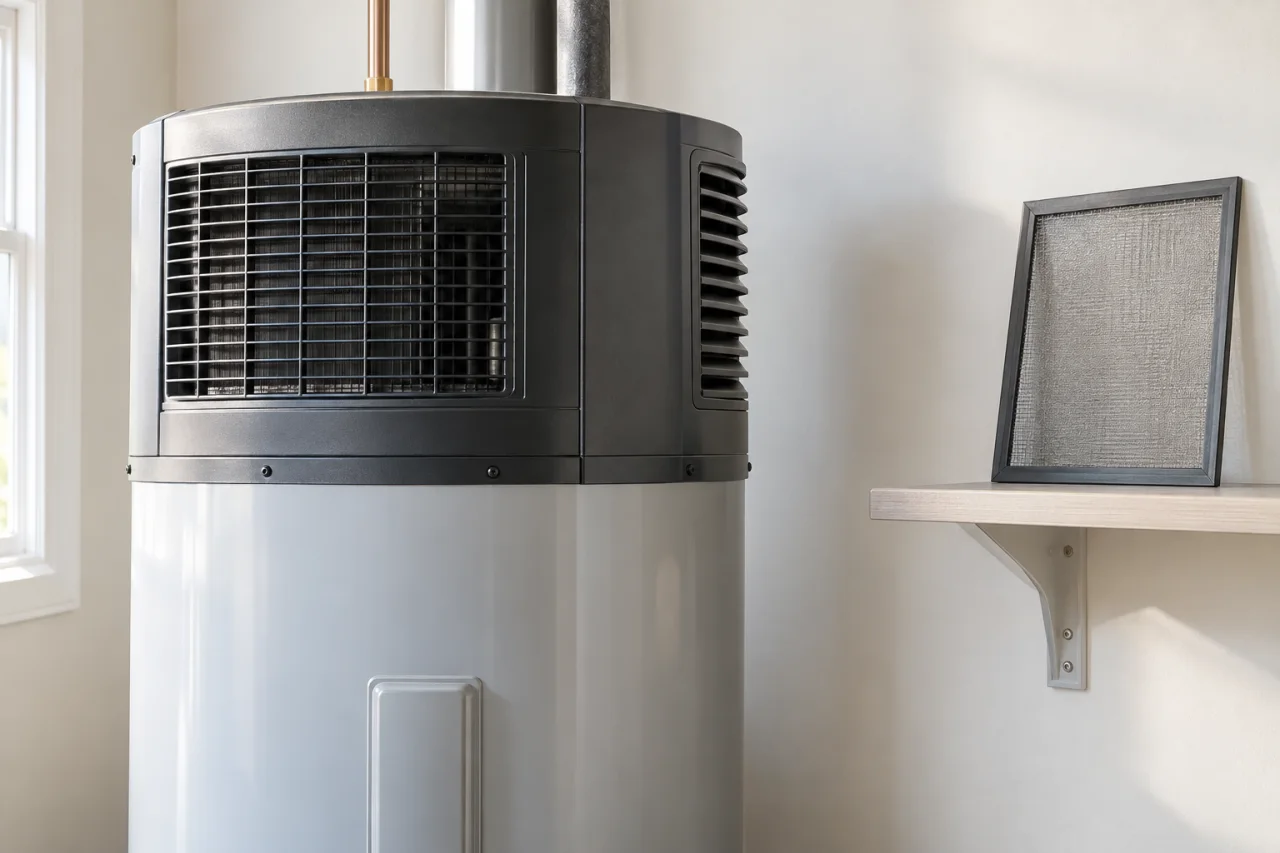
An integrated heat pump heater needs access to surrounding heat and air movement. An enclosed closet is not suitable simply because the tank fits. Check the selected model’s air-volume, clearance and temperature requirements; some locations need approved airflow modifications.
These units produce cooler, drier exhaust air and fan or compressor sound. Consider adjacent bedrooms, occupied rooms and the effect of a cool air stream. A garage or utility room deserves evaluation, not automatic approval: seasonal temperatures and freezing exposure still matter.
Plan condensate drainage and access to the filter, controls and tank. Measure height as well as width, including room for servicing. The practical question is whether the location supports efficient operation and maintenance throughout the year.
Compare the full installation, not just the appliance
Existing utilities can narrow the choices before efficiency does. Do not assume that having gas service proves adequate capacity for a gas tankless heater. The assessment should account for the selected unit and other gas appliances. Venting, combustion-air arrangements and electrical power for controls also need a compatible plan. Condensing gas equipment requires condensate management.
Electric tankless avoids combustion venting, but electrical requirements can be substantial. Have the proposed model’s circuit, wiring and service requirements evaluated rather than assuming an existing water-heater circuit will work.
These are meaningful contributors to the cost of converting to a tankless water heater. Request a written scope identifying equipment, removal, utility modifications, venting, drainage, access work and applicable permits. Ask which items are included, excluded or dependent on further assessment.
Compare household operating costs and ongoing care
Keep purchase and installation cost separate from operating cost. For an operating comparison, use your actual electricity, natural gas or propane rates, expected hot-water use and the proposed equipment’s performance assumptions. Different fuel prices can change the financial result even when one design uses energy more efficiently.
Heat pump estimates should account for location and likely resistance-backup use. Ask what happens to the comparison if demand increases or the unit spends more time outside heat pump mode. Treat an estimated annual cost as a planning tool, not a promised bill.
Maintenance belongs in the decision too. Discuss tankless water heater maintenance in relation to measured water quality and the selected manual. Scale can affect heat-exchanger performance. Heat pump units add filter and condensate-line care. Ask for model-specific maintenance tasks, access requirements and service costs before choosing.
Bring the right questions to your water heater discussion
For a West End or Moore County home, start with the property rather than a preferred technology. Gather the current heater’s model information, describe supply problems and identify the available installation space. Compare proposals that explain both capacity and site requirements.
The Plumbing Knight offers Water Heaters and tankless services in Moore County. Discuss what you have observed and review the proposed work before proceeding. The strongest choice is the one that fits your actual demand, utilities and space without relying on optimistic assumptions.
- What sizing calculation supports this model for our busiest period?
- Which utility, airflow, venting or drainage changes are necessary?
- What operating assumptions were used in the cost comparison?
- What maintenance does this model require, and can it be accessed easily?
- What work and permit responsibilities are included in the written proposal?
Questions & answers
Does tankless mean unlimited hot water?
It means there is no large storage tank to empty. Output is still limited by the heater’s capacity at the required temperature rise. Several fixtures running together can exceed that capacity, even when the unit can support consecutive showers.
Can a heat pump water heater replace a tank in a closet?
Sometimes, but fitting through the door is not enough. The selected model needs adequate airflow, suitable air temperatures, condensate drainage and service clearance. Manufacturer-approved louvers, transfer grilles or ducting may make some closets suitable; others need a different location or design.
Is first-hour rating the same as tank size?
No. Tank size describes stored volume. First-hour rating describes hot-water delivery during an hour that starts with a fully heated tank, including water reheated during that period. It is more useful than tank volume alone when comparing storage technologies.
Will switching water heater types lower my bills?
Possibly, but the answer depends on your existing heater, utility rates, water use and installation conditions. Heat pump operating modes also matter. Compare household-specific estimates and the complete installation cost rather than relying on a general savings percentage.
Will a tankless heater make hot water reach my bathroom faster?
Not necessarily. The water already sitting in the connecting pipes still has to move before hot water arrives. Heater location and pipe layout affect the wait; recirculation is a separate design decision.
Sources & further reading
- Pacific Northwest National Laboratory: Gas-Fired Tankless Water Heaters
Tankless simultaneous-flow and temperature-rise sizing, minimum activation flow, gas capacity, venting, scale maintenance, condensate management and the effect of distribution piping on delivery time.
- Pacific Northwest National Laboratory: Heat Pump Water Heaters for Single-Family Homes
Definition and use of first-hour rating, heat pump operation, hybrid resistance backup, capacity planning and installation-location considerations.
- ENERGY STAR: Heat Pump Water Heater Design Considerations
Model-specific airflow and clearance planning, cool exhaust air, sound, closet adaptations, tank sizing and condensate drainage.
- ENERGY STAR: Heat Pump Water Heater Installation Best Practices
Access to filters and controls, heat-pump-only versus hybrid recovery tradeoffs, filter cleaning and condensate-line maintenance.
- Pacific Northwest National Laboratory: Gas Tankless Water Heater Checklist
Gas tankless planning considerations including gas-line adequacy, electrical supply, measured water hardness, condensate disposal, applicable installation requirements and homeowner maintenance guidance.
- Stiebel Eltron: Tempra Plus Whole House Electric Tankless Water Heaters
A manufacturer example of compact electric tankless equipment without venting, temperature-rise-dependent sizing and flow limitations. Not evidence of The Plumbing Knight's product inventory.
- Stiebel Eltron: Tempra Trend and Plus Technical Specifications, June 2025
Model-specific electric tankless circuit, wiring and main-service requirements; minimum activation flow; and performance differences by flow rate and temperature rise.
- ENERGY STAR: Heat Pump Water Heaters Buying Guidance
Planning replacement before equipment failure, requesting written estimates, discussing permits, reviewing capacity and following manufacturer maintenance instructions.
Prepared and automatically checked on . Conditions, costs and requirements can change. Ask about the details that apply to your situation.
Continue reading
Helpful next reads
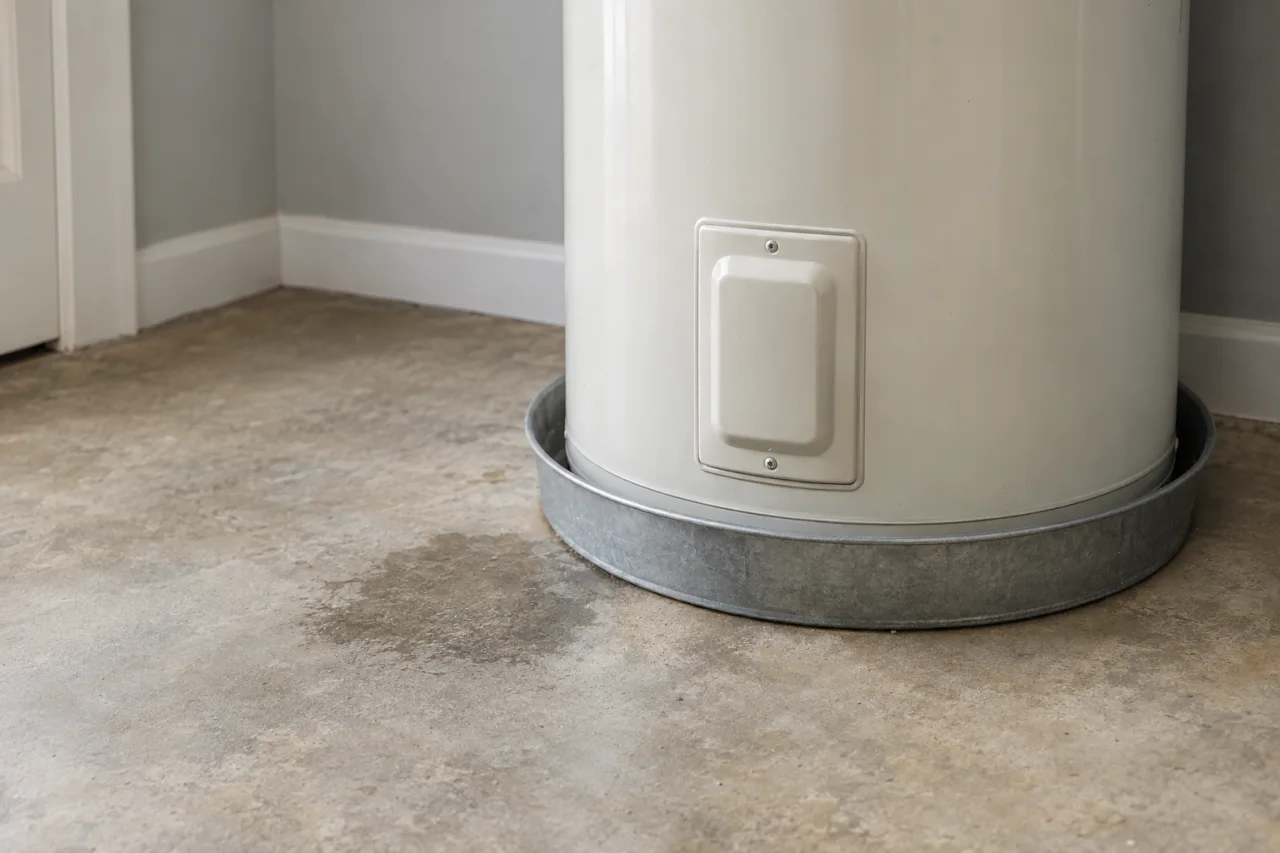
Repair or Replace a Water Heater? A Practical Decision Guide
A failed control or leaking connection is a different problem from a leaking tank. Learn what to ask before choosing repair or replacement.
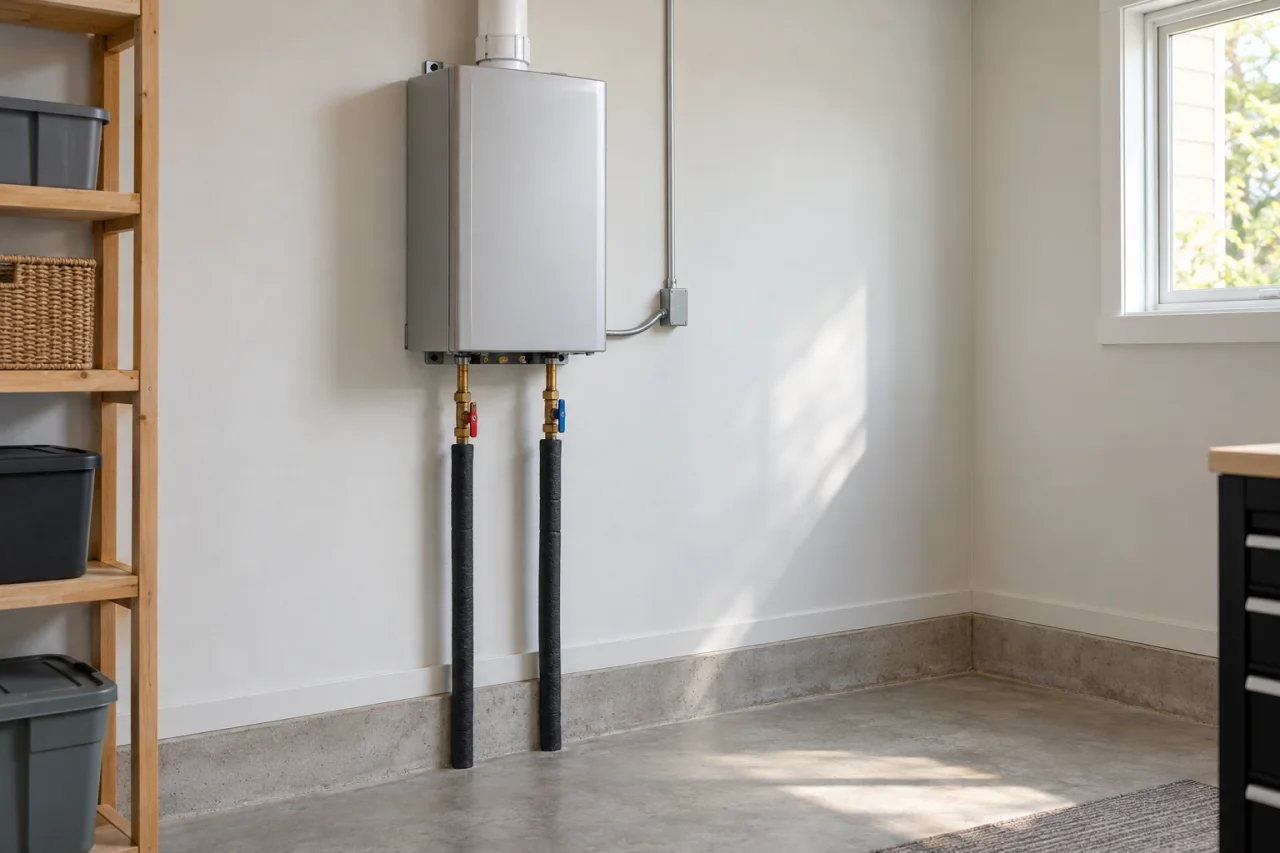
What Adds to the Cost of Converting to a Tankless Water Heater?
The tankless unit is only part of a conversion budget. Understand the supply, venting, drainage, location and comfort decisions that shape the complete installation.
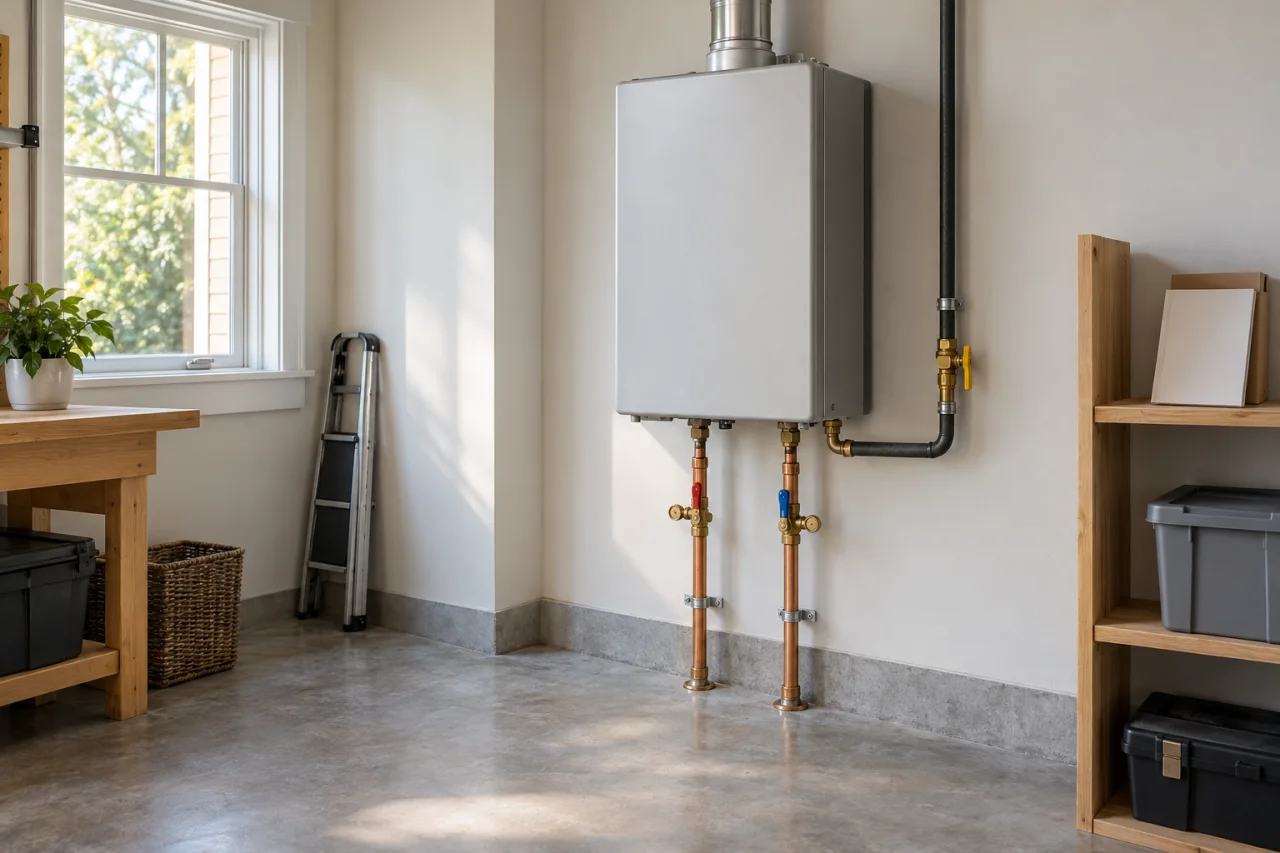
Tankless Water Heater Maintenance: Why Water Quality and the Manual Matter
The right tankless maintenance plan depends on the exact heater, the water entering it and its service history. Learn what to check, what to ask and where professional work begins.